Adjustable Chub Clamping System
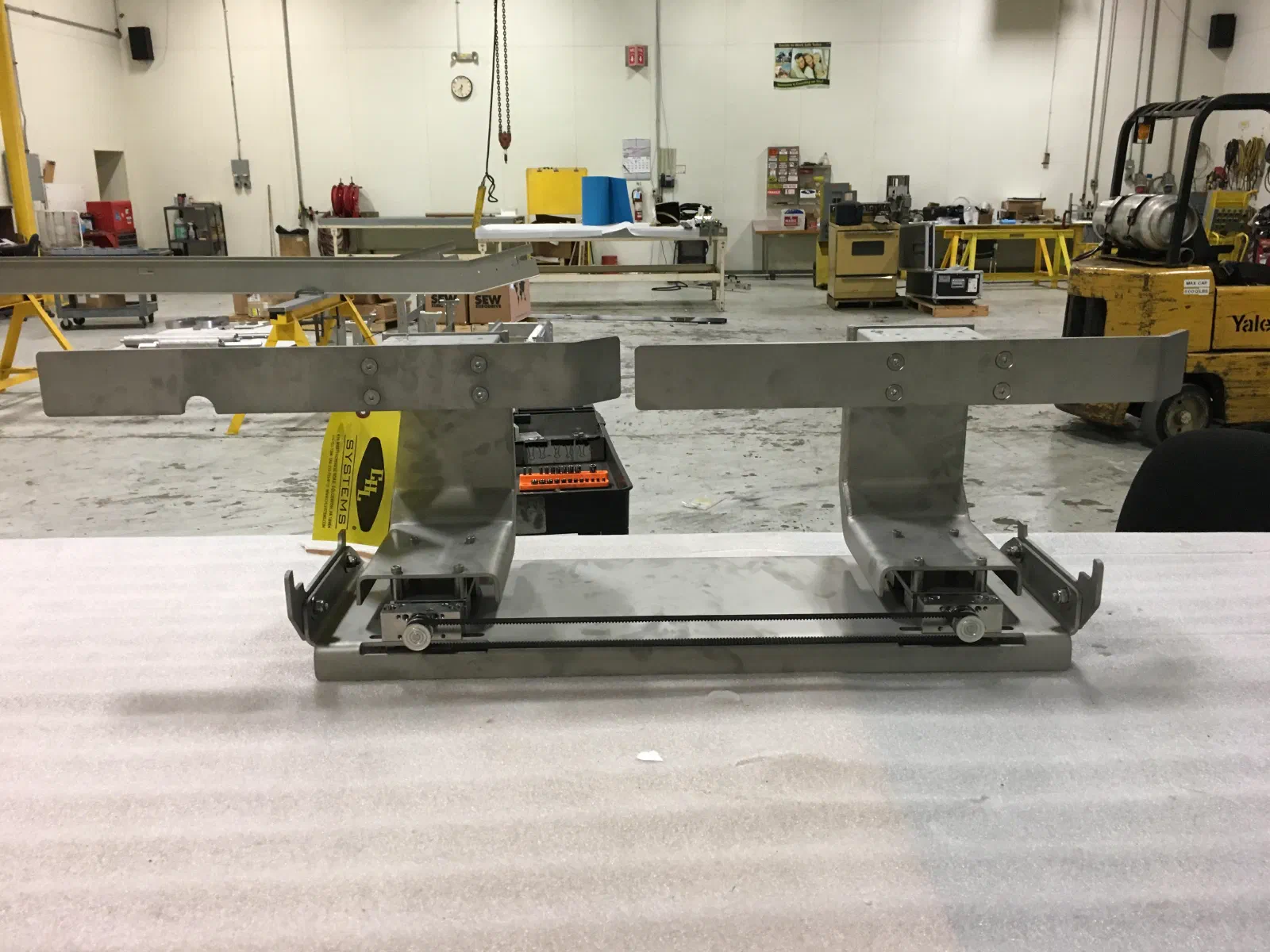
A continuously adjustable, dial-set clamp retrofit that let a single-product meat line run several chub diameters.
- Employer
- CHL Systems
- Role
- Design Engineer
- Industry
- Raw meat
- Period
- 2018 to 2019
- Scale
- Two synchronized clamps with 75 mm of adjustment travel, retrofit onto an existing conveyor
One product, then many
This line originally ran a single product, with clamps built to stop and hold one chub diameter. When the customer wanted to run several diameters on the same line, the clamps stopped working. A clamp set for one diameter holds a smaller chub too loosely and squeezes a larger one hard enough to damage it.
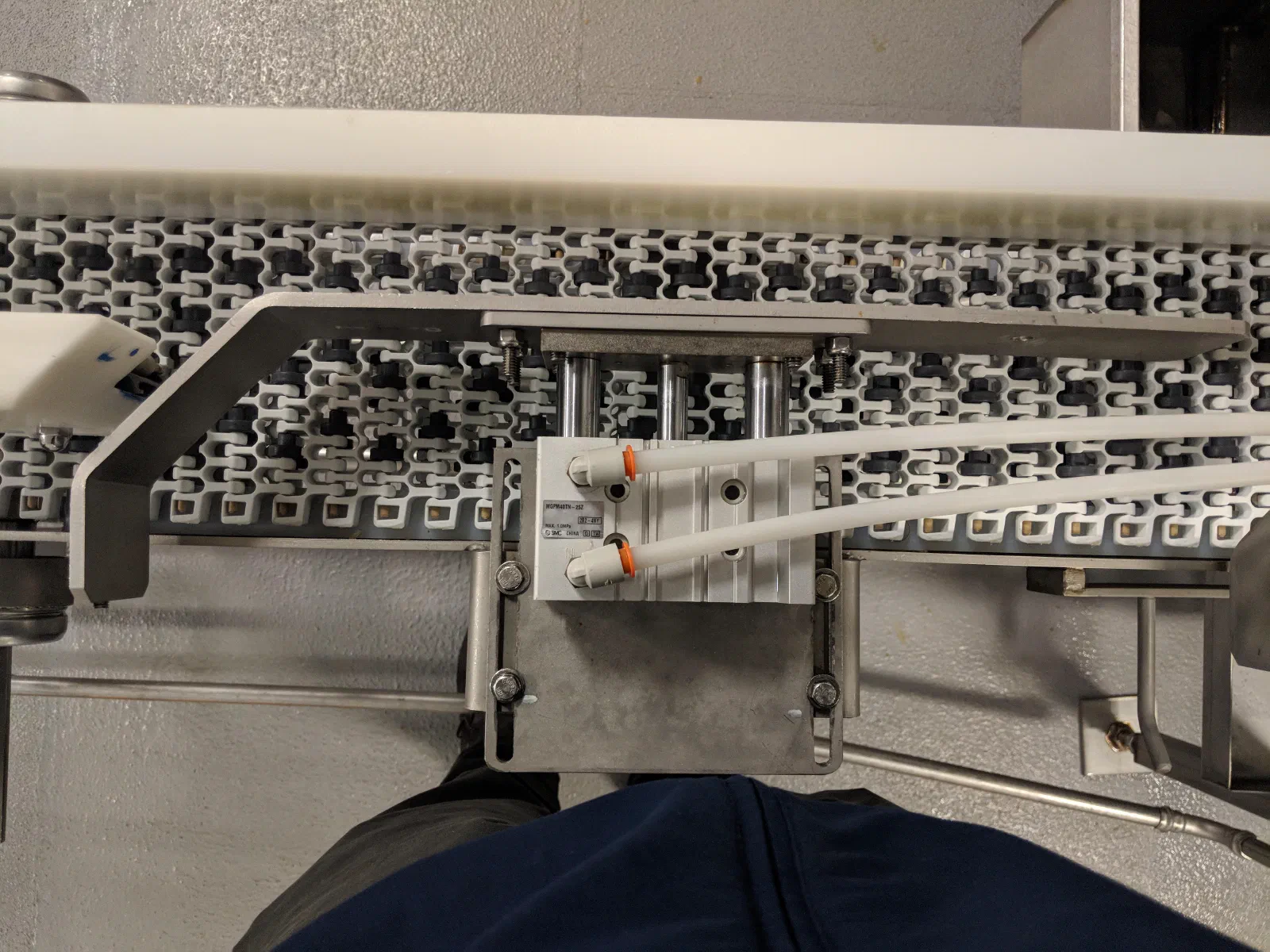
The clamp also has two jobs. It stops each chub in position, and it holds against the back pressure of all the product queued behind it. The grip has to be firm enough to hold that column without marking the chub, and those limits sit close together and shift with every diameter.
What was tried first
The customer had been using sleeves to change the clamp spacing. That worked, but only in fixed steps, and the right clamping pressure for a product rarely landed exactly on one of them.
The design
We proposed continuous adjustment instead. Two leadscrew slides carry the clamps, linked by a timing belt so one handwheel drives both symmetrically around the product centerline. A number dial on the leadscrew gives every product a known setting, so changeover is a matter of reading a number instead of going by feel, and the right pressure is repeatable across shifts and operators. The existing pneumatic cylinders still do the clamping. The leadscrew just sets the geometry they work within. The whole assembly is 304 stainless, retrofit onto the existing conveyor and installed on site.
Opportunities and struggles
The retrofit worked very well, but there’s one thing I would add: a way to lock the carriages in place. Nothing holds them once they’re set, and as far as I know they never came loose. But if the belt went slack, the two carriages could fall out of sync and the clamp spacing would close up without anyone noticing until product got damaged. A positive lock at the set position would have removed that failure mode entirely, and it’s a small addition I should have included.
Specific skills
- SolidWorks
- collaboration with in-house machine and weld shops
- design for changeover and multi-SKU production
- leadscrew and timing belt synchronization
- pneumatic actuator integration
- repeatable operator setpoints
- retrofitting onto existing production equipment
- stainless and food-contact material selection