Bag Case Loading System
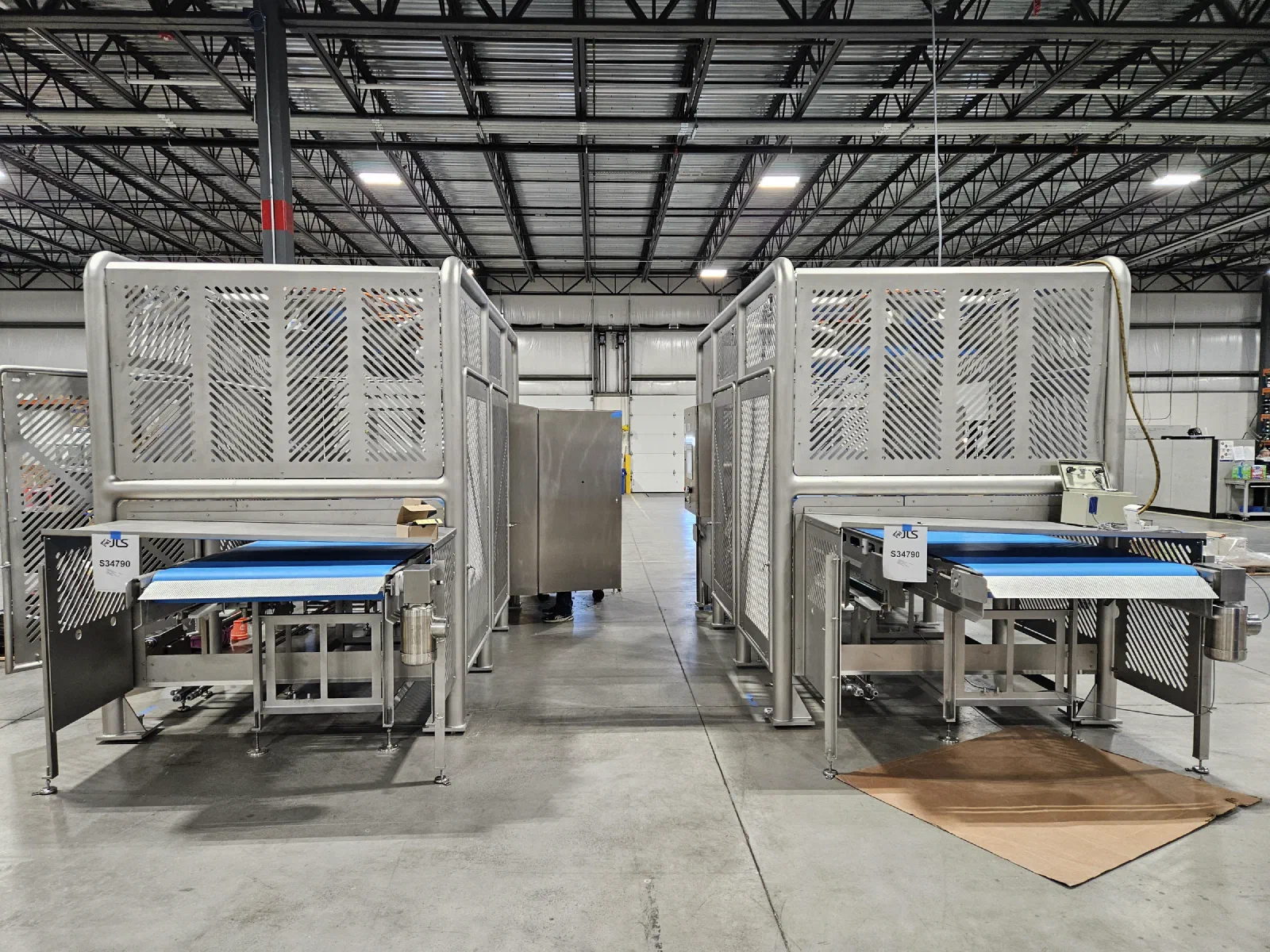
Vision-guided robotic cells case-packing more than thirty bagged frozen food recipes across three lines, with logic to protect an upstream freezer.
- Employer
- JLS Automation
- Role
- Systems Engineer
- Industry
- Frozen and refrigerated food
- Period
- Aug 2023 to Oct 2023
- Scale
- Two dual-head robotic cells covering three production lines, more than 30 bagged product recipes at up to 55 bags per minute
Three lines, one platform
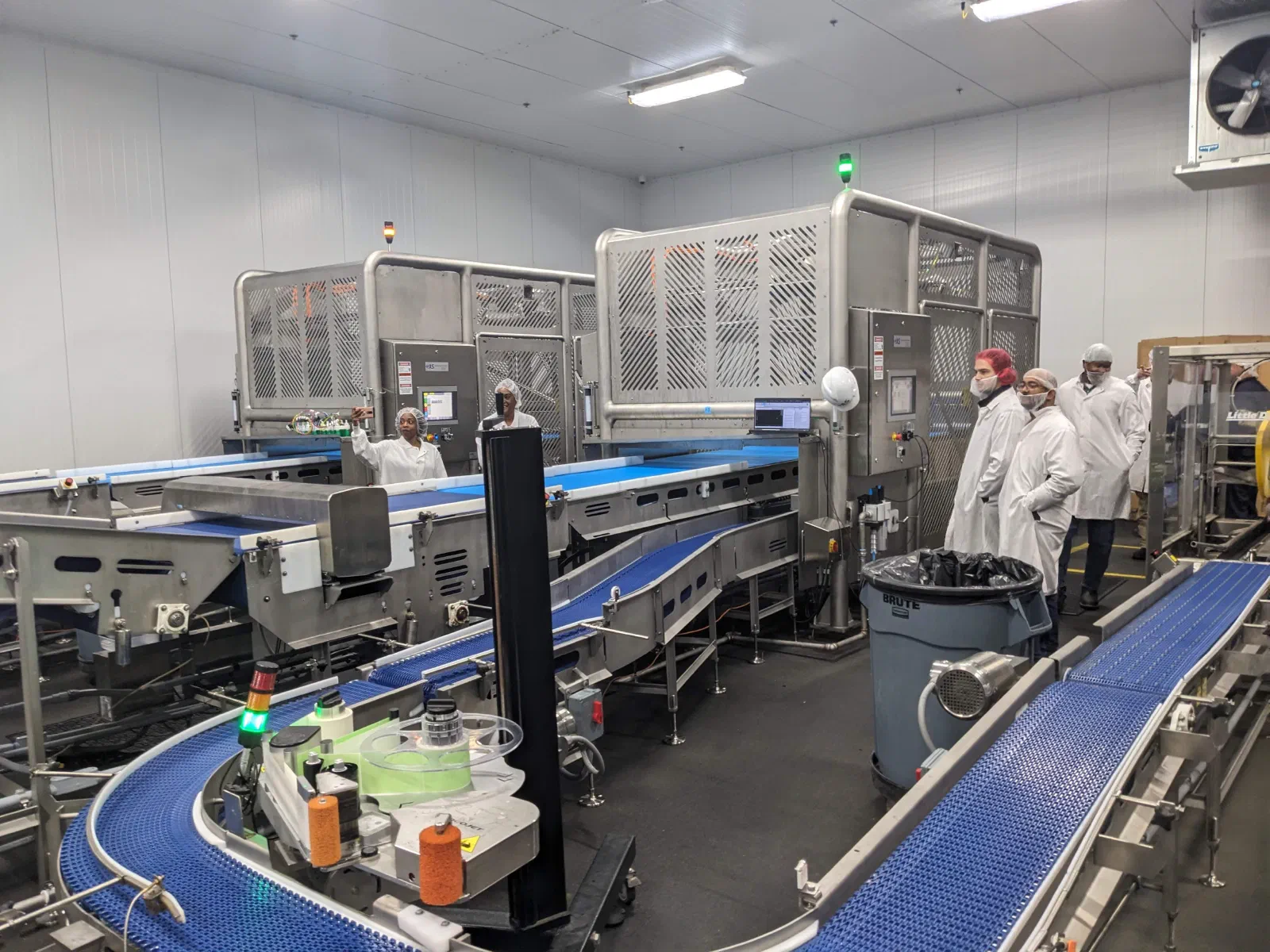
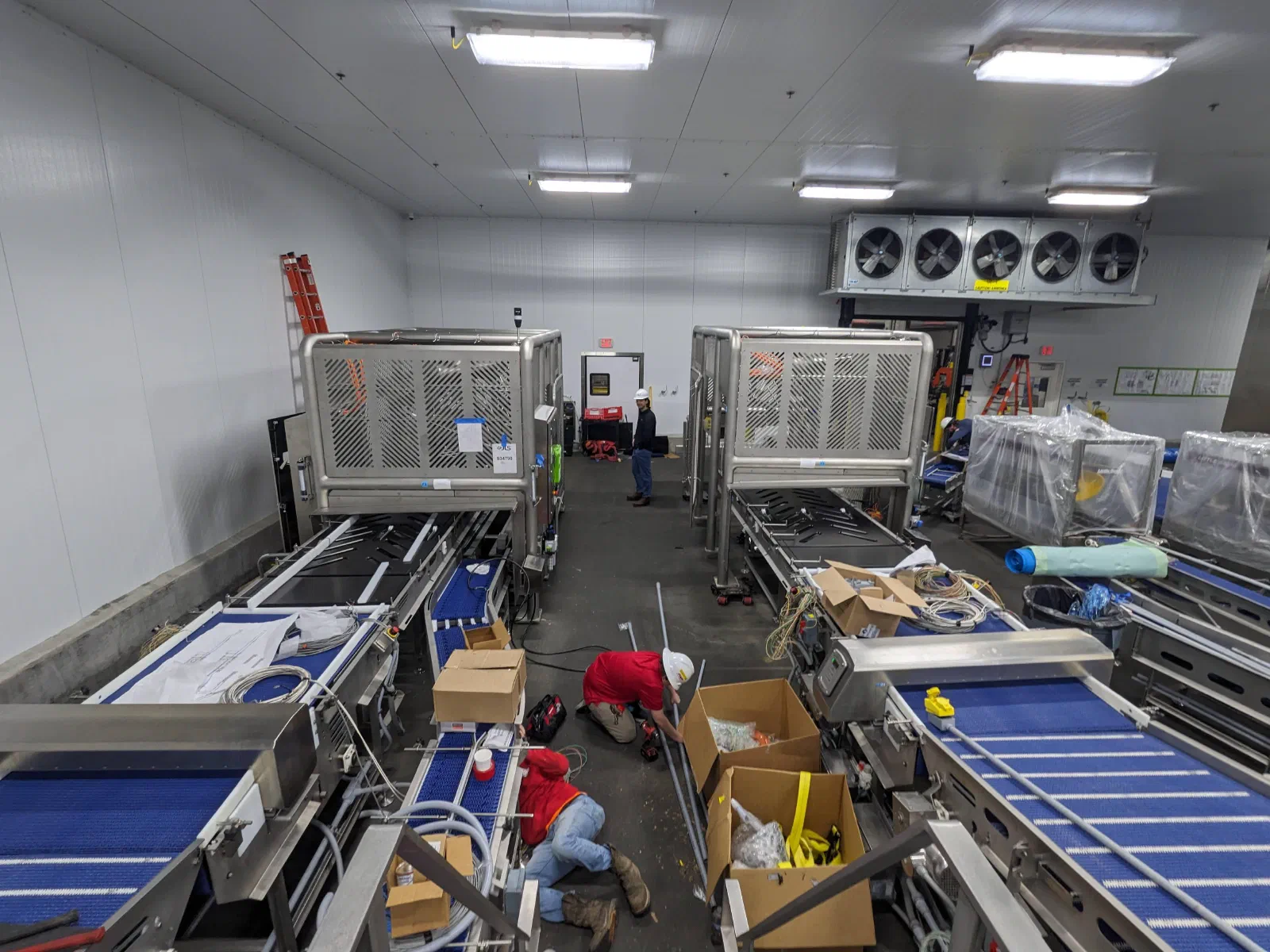
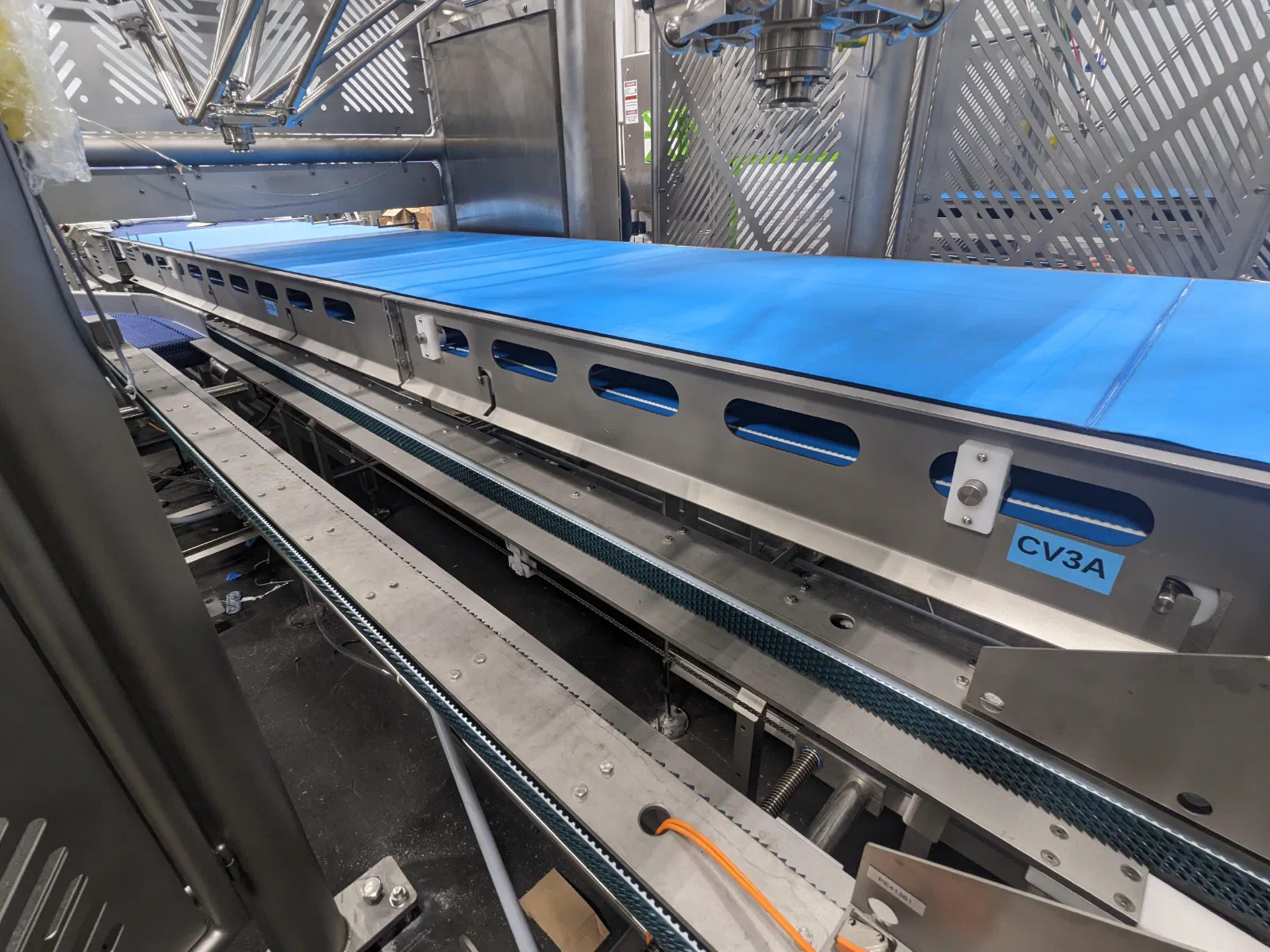
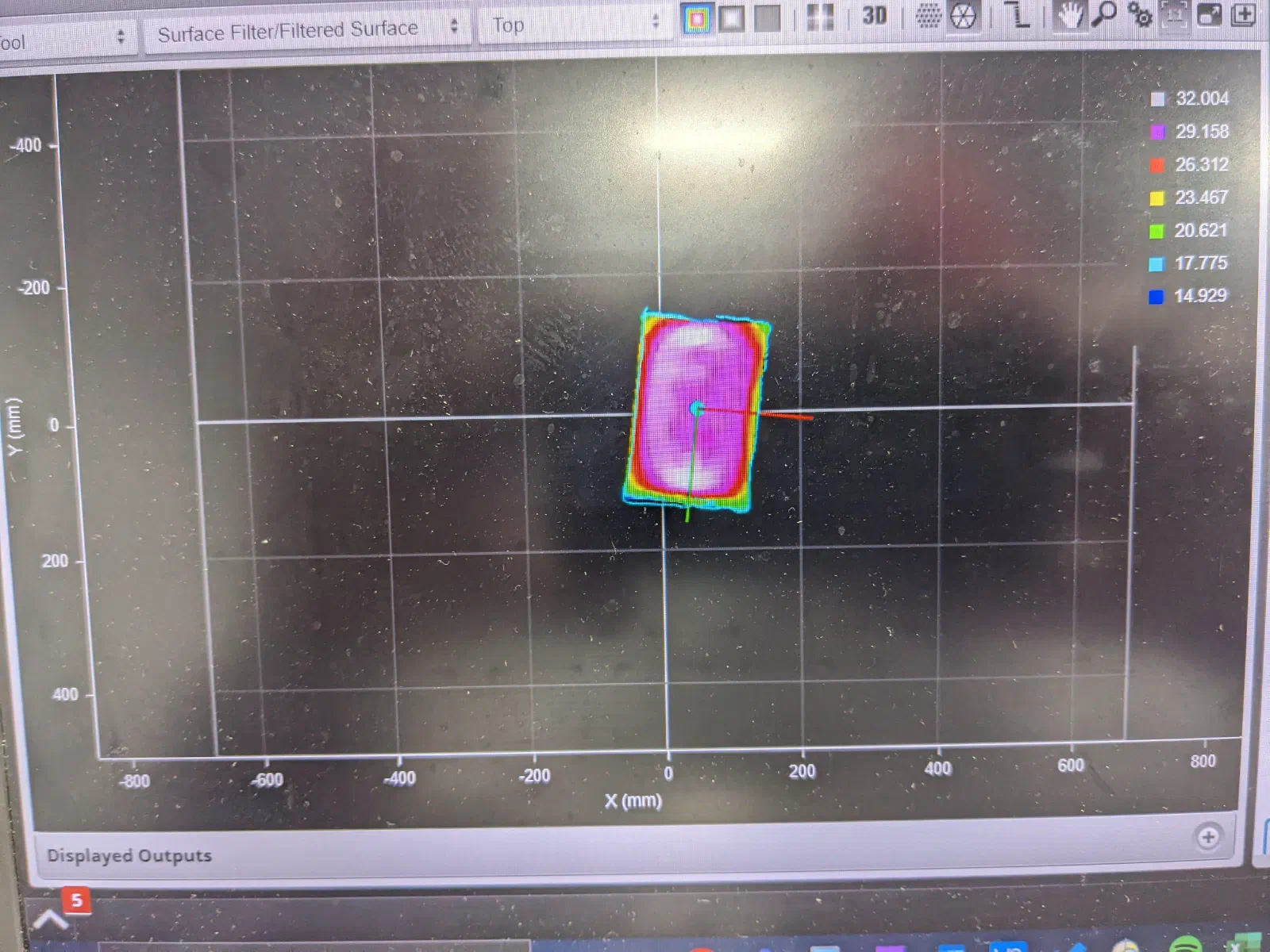
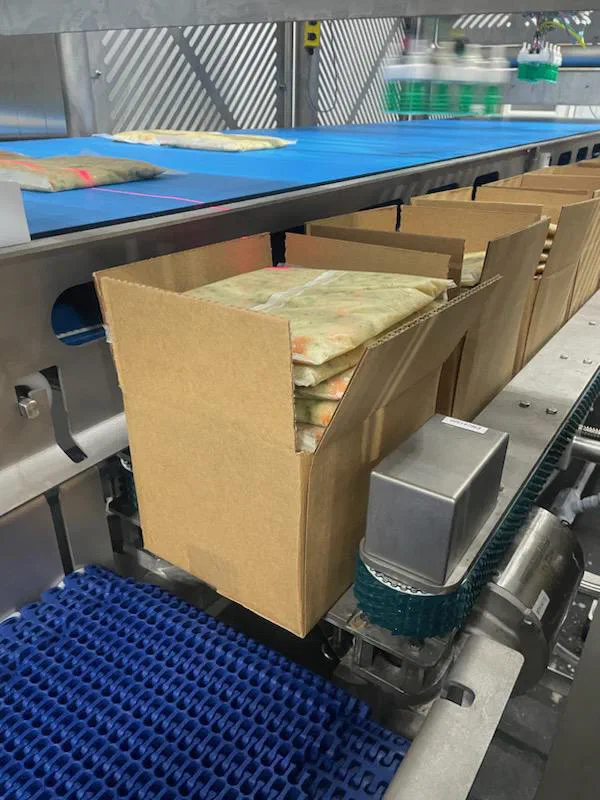
This system case-packs bagged frozen and refrigerated food across three production lines. Bags come off the customer’s line onto our pick conveyor, a 3D vision camera locates them, and two dual-head robotic cells pick each bag and place it into a case traveling the opposite direction through the cell. The customer needed more than thirty SKUs handled, each with its own bag size, case size, and pack pattern. As Systems Engineer, I defined the scope and fault logic, configured the cells and vision systems, and coordinated the mechanical and controls work through commissioning.
Protecting the freezer
Product sits in a spiral freezer before it reaches our cells, so a stoppage on our system could leave product sitting and cause frost damage. We added a timer that tracks how long the system has been stopped. If it runs past the limit, it forces the freezer’s conveyor to keep running and raises an alarm. Most case-loading cells don’t have to reach back into upstream equipment like that.
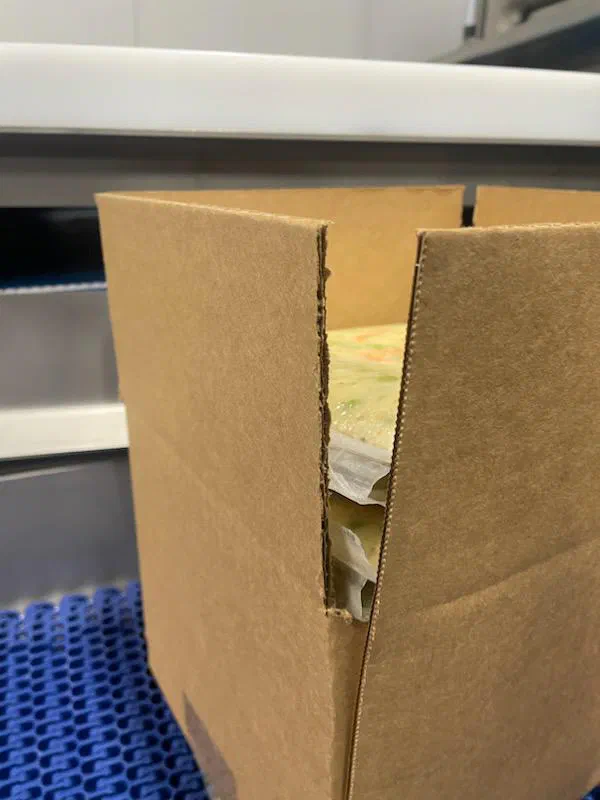
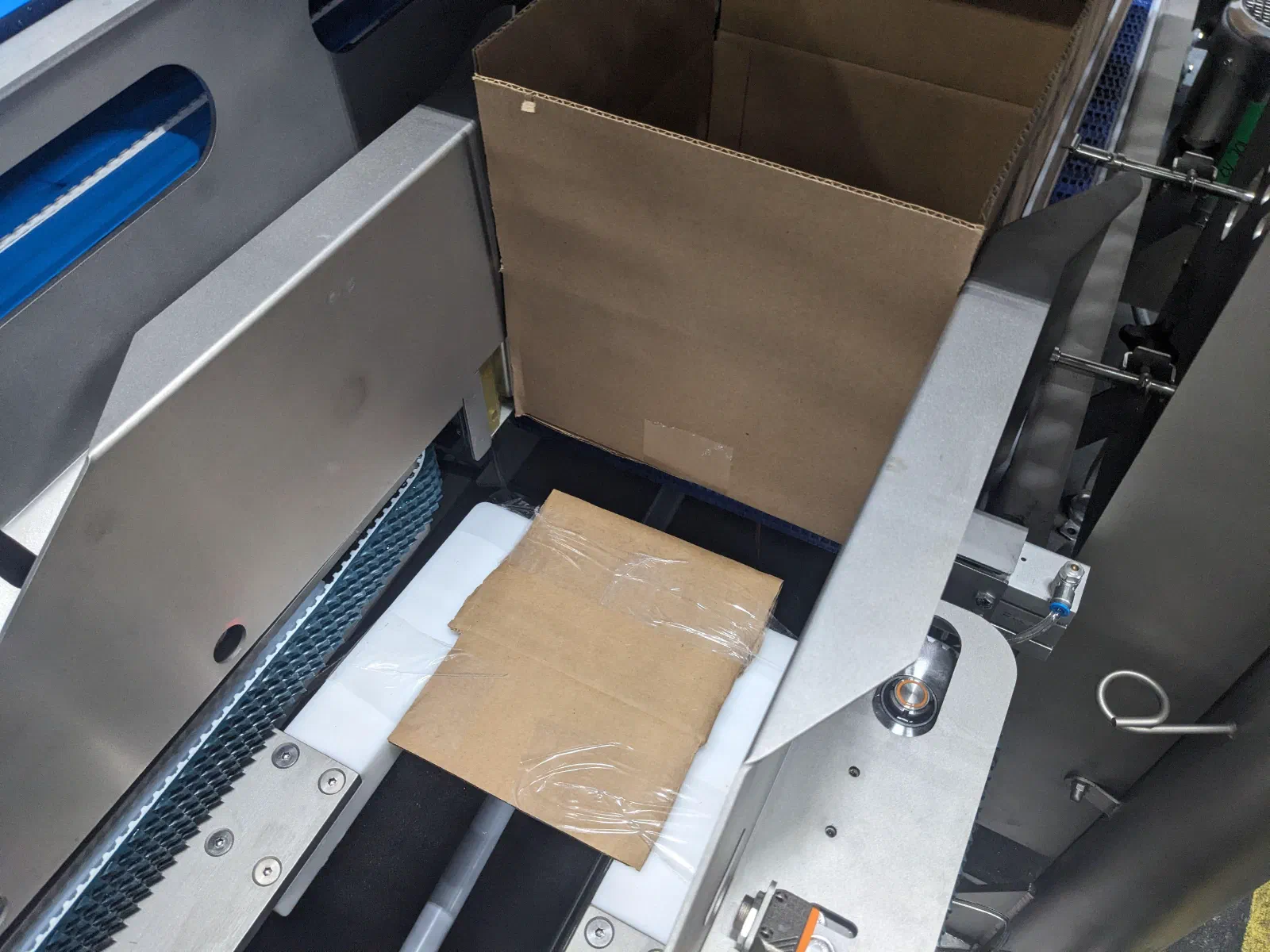
We also found that oversized product could tear a case as the robot placed it, and we added a warning to the scope after commissioning.
Opportunities and struggles
- Site verification: The floor sloped a little over a degree across the length of the system, which made lining up infeed and discharge elevations harder. A floor slope measurement during the pre-installation visit would have caught it.
- Vision: The camera had more trouble finding orientation on square bags than on taller or more distinctly shaped ones, which is worth planning for when a recipe includes square product.
- What worked: Using curved instead of rectangular motion limits extended the robots’ reach near the case conveyor, and it’s now a technique I reach for on other cells.
- Base design: A recurring pneumatic pressure issue kept coming back on service visits, and a check valve fixed it each time. That valve belongs in the base design.
Specific skills
- 2D machine layout drafting in DraftSight (AutoCAD)
- requirements capture and scope definition
- robotic cell configuration and layout design
- machine vision integration
- multi-line system design
- cross-discipline coordination
- commissioning and factory acceptance testing
- sanitary and washdown design requirements in food production