Beef Stick Thermoformer and Cartoner Loader
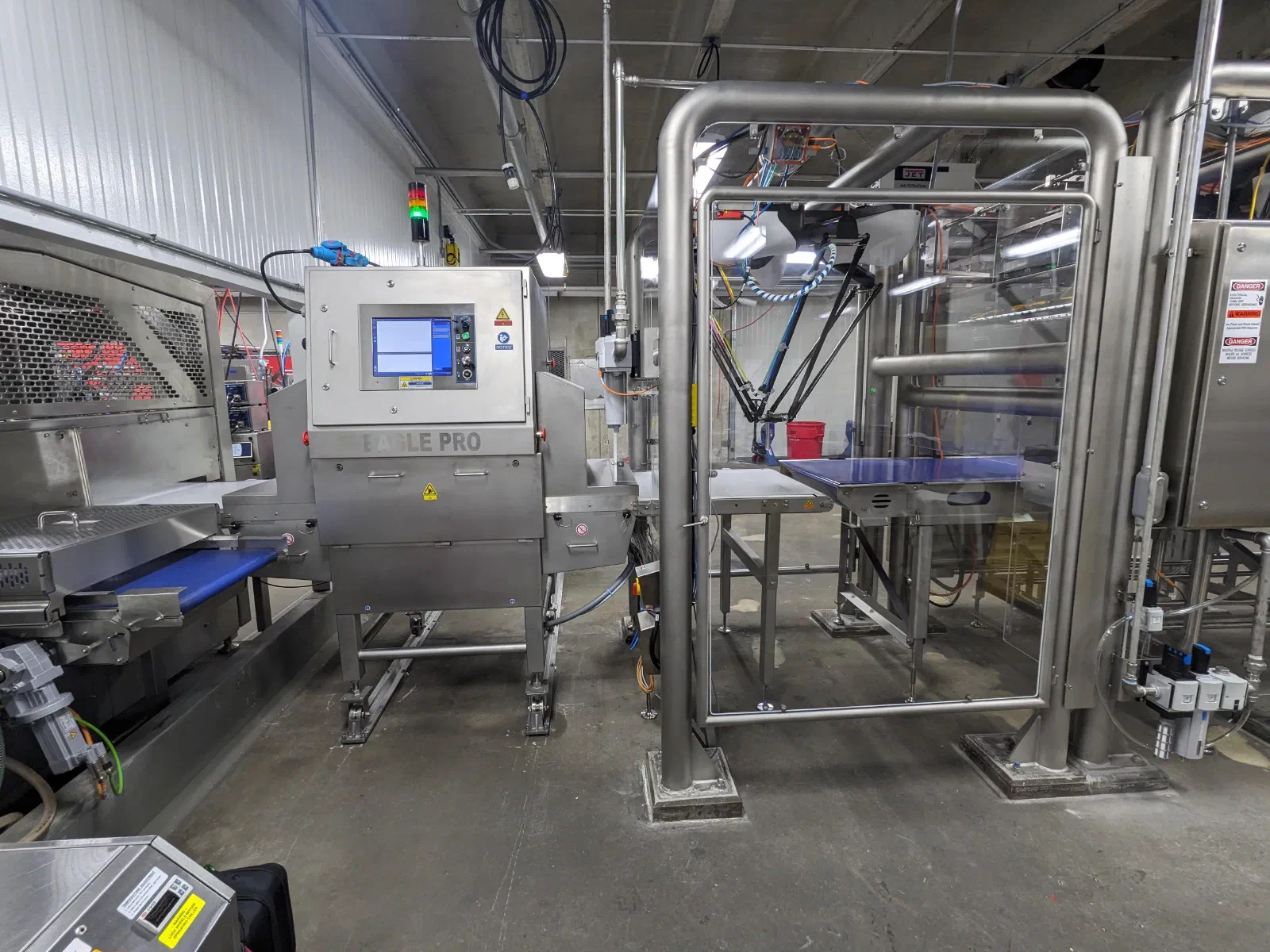
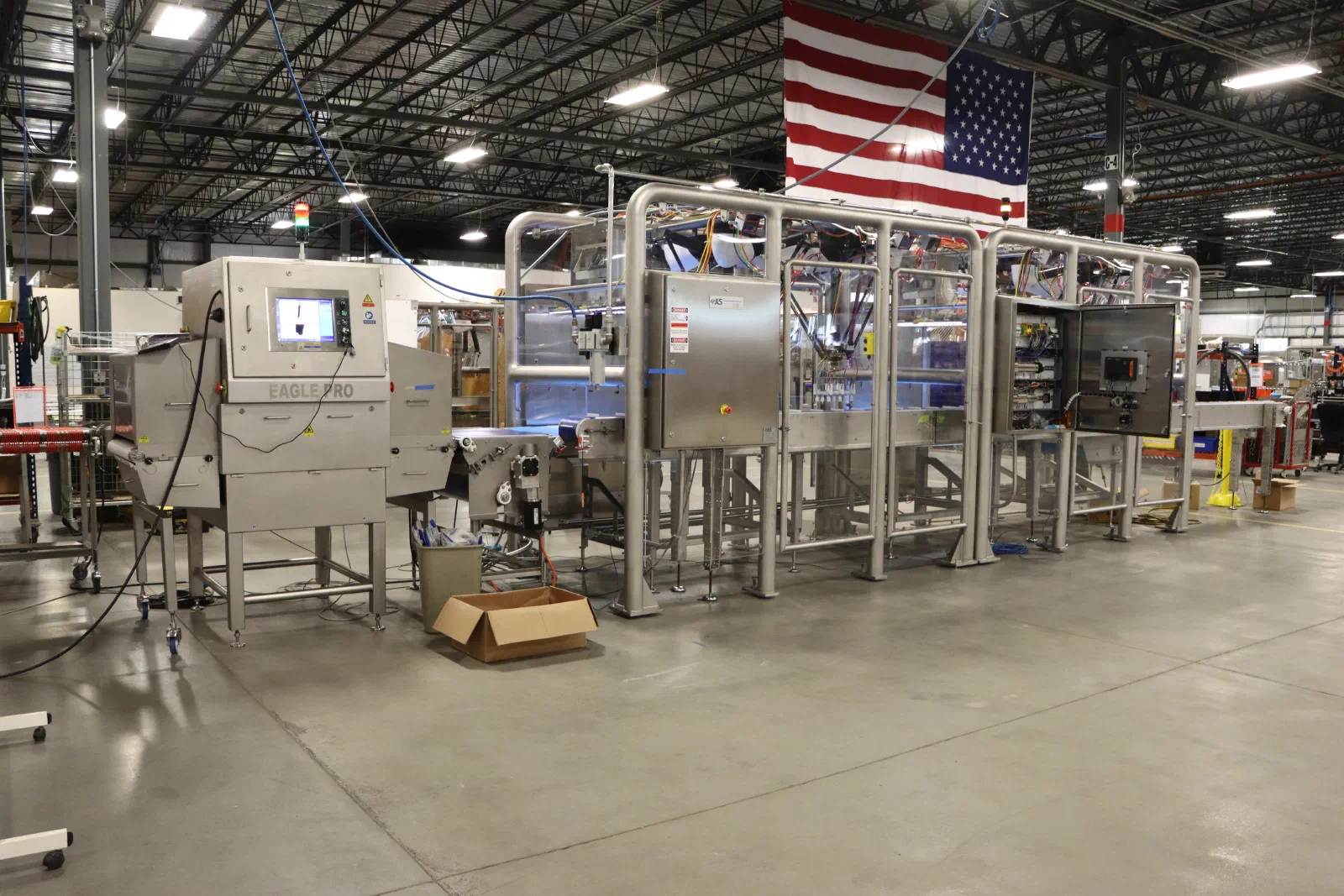
Twelve delta robots and an X-ray taking loose beef sticks into a thermoformer and on to a cartoner, at up to about 900 pieces per minute.
- Employer
- JLS Automation
- Role
- Systems Engineer
- Industry
- Cured meat
- Period
- Jan 2022 to Jul 2023
- Scale
- 12 delta robots across two linked systems (8 loading a thermoformer, 4 loading a cartoner), later expanded with a fifth cell, two SKUs at up to about 900 pieces per minute
Two cells with an X-ray between them
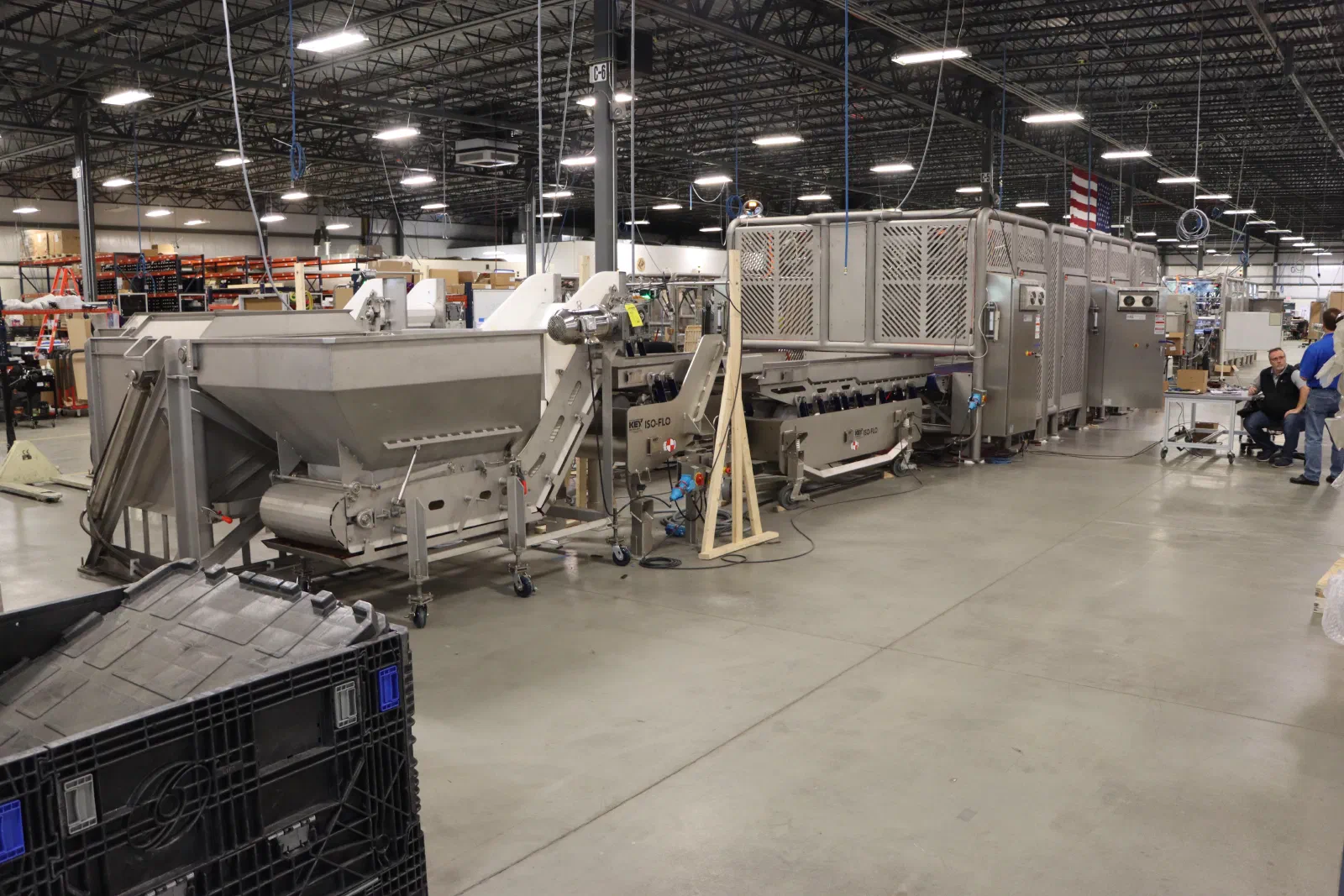
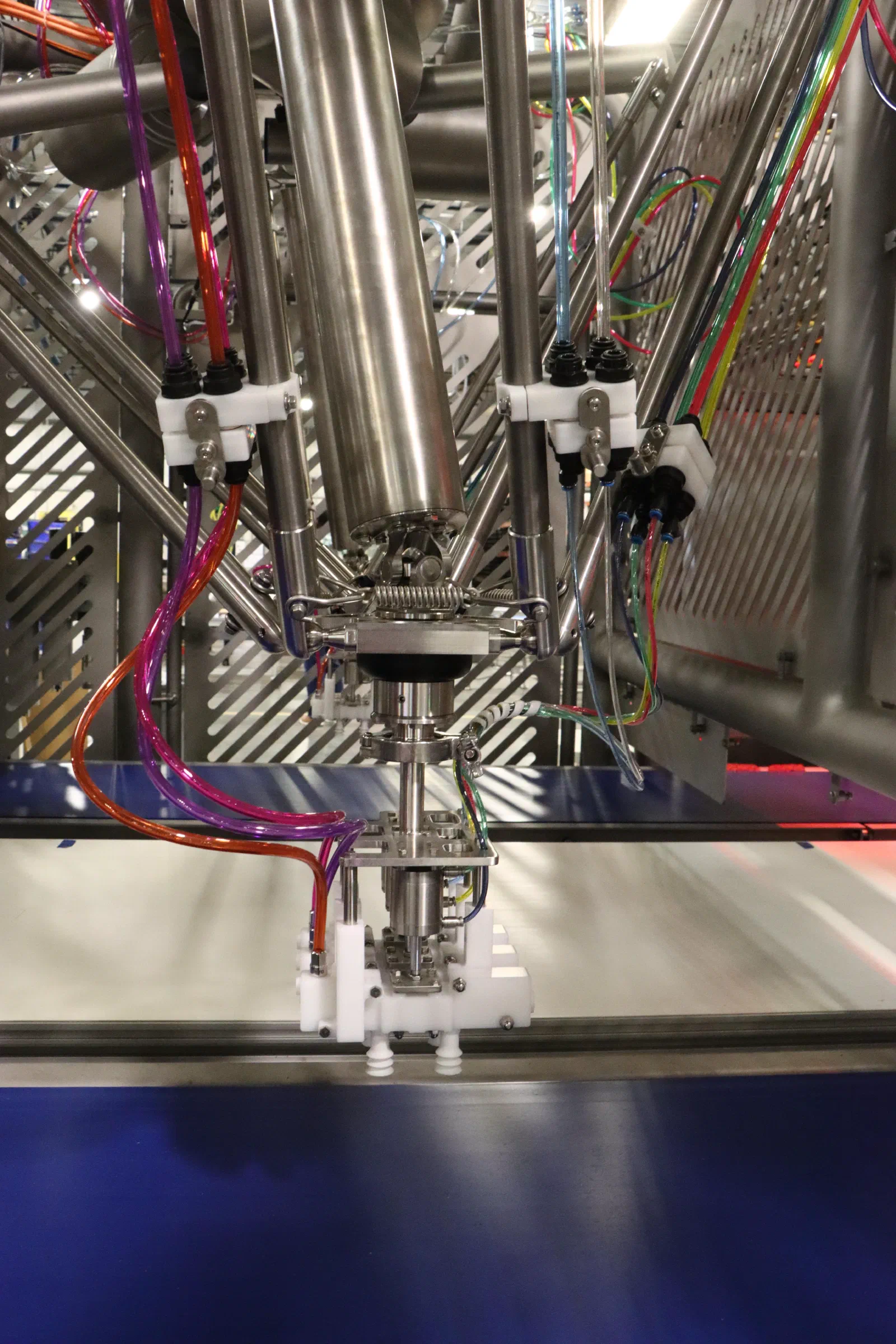
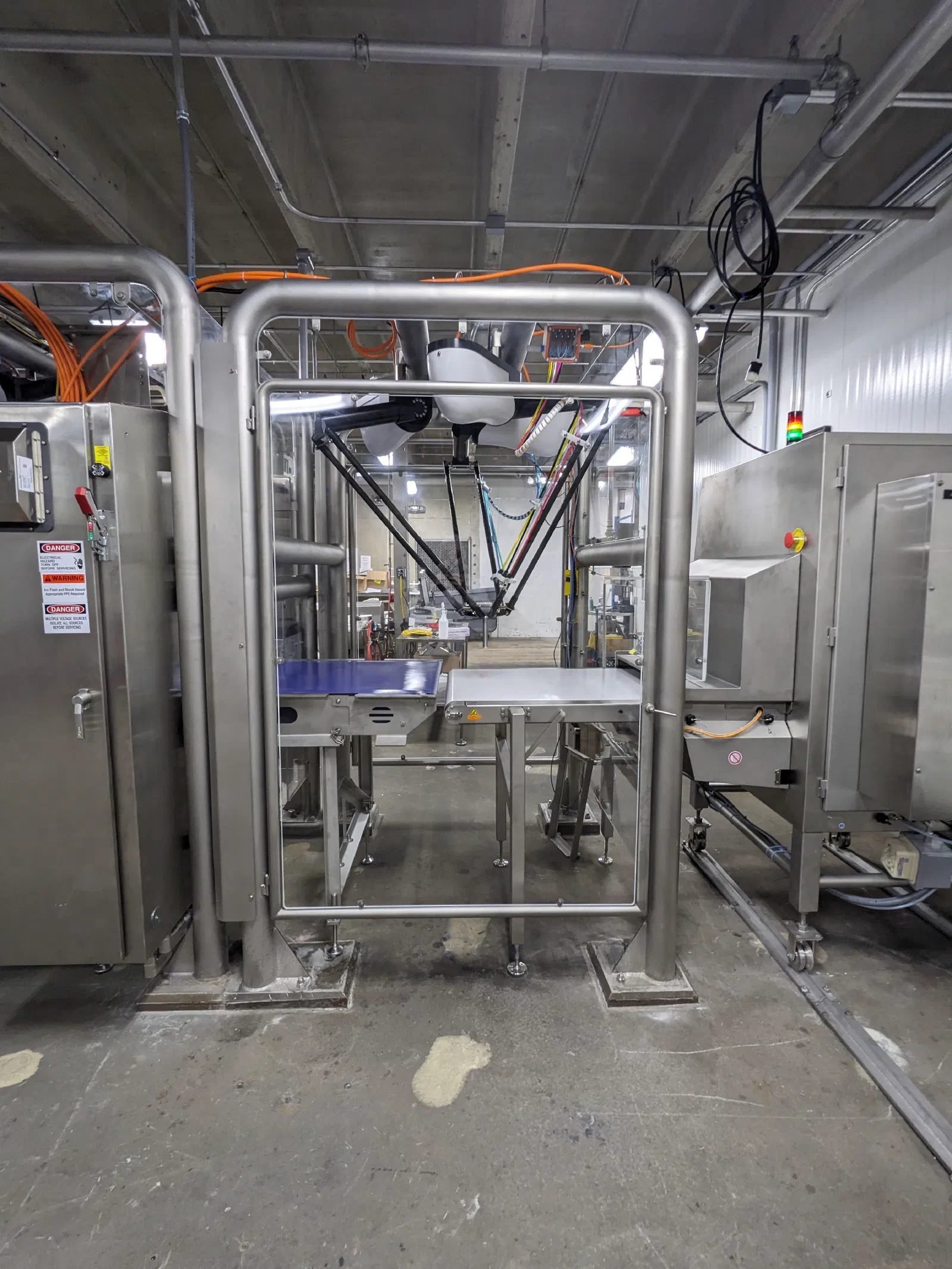
A cured meat producer needed loose beef sticks turned into sealed, cartoned product without hand loading. In the first cell, operators dump totes of sticks into hoppers, vibratory pans spread the product out, and eight delta robots load the sticks two at a time into the thermoformer’s pockets. After the thermoformer seals the packages, an X-ray checks each one for contaminants and size, and four more robots load the accepted packages into the customer’s cartoner. We later added a fifth cell that picks inspected product off the X-ray conveyor, skipping any rejected rows.
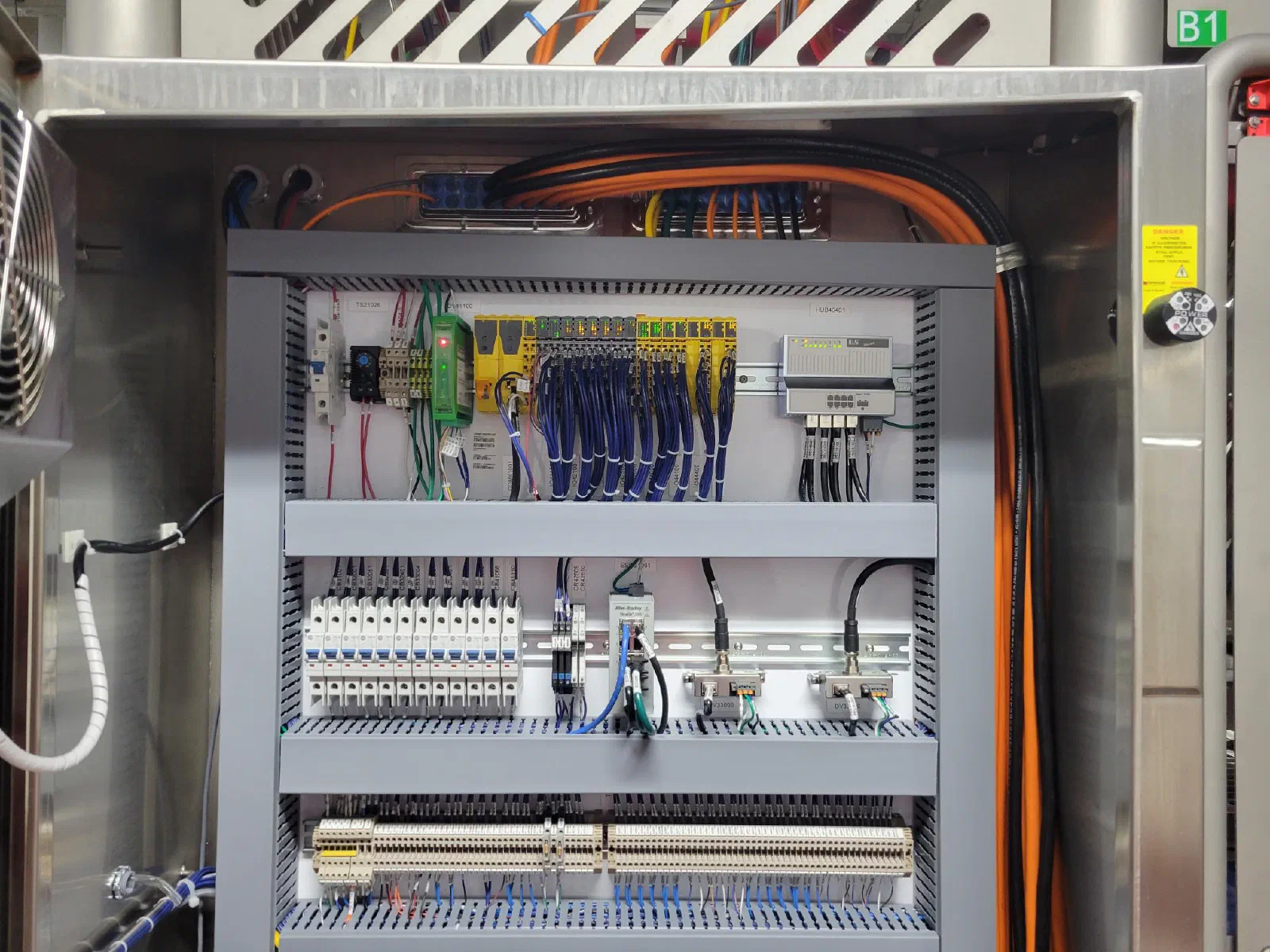
As Systems Engineer on the original system and the fifth cell, I defined our scope on both sides, configured the cells and vision systems, coordinated the disciplines, and carried the system through commissioning and acceptance testing.
Thin, light, and out of spec
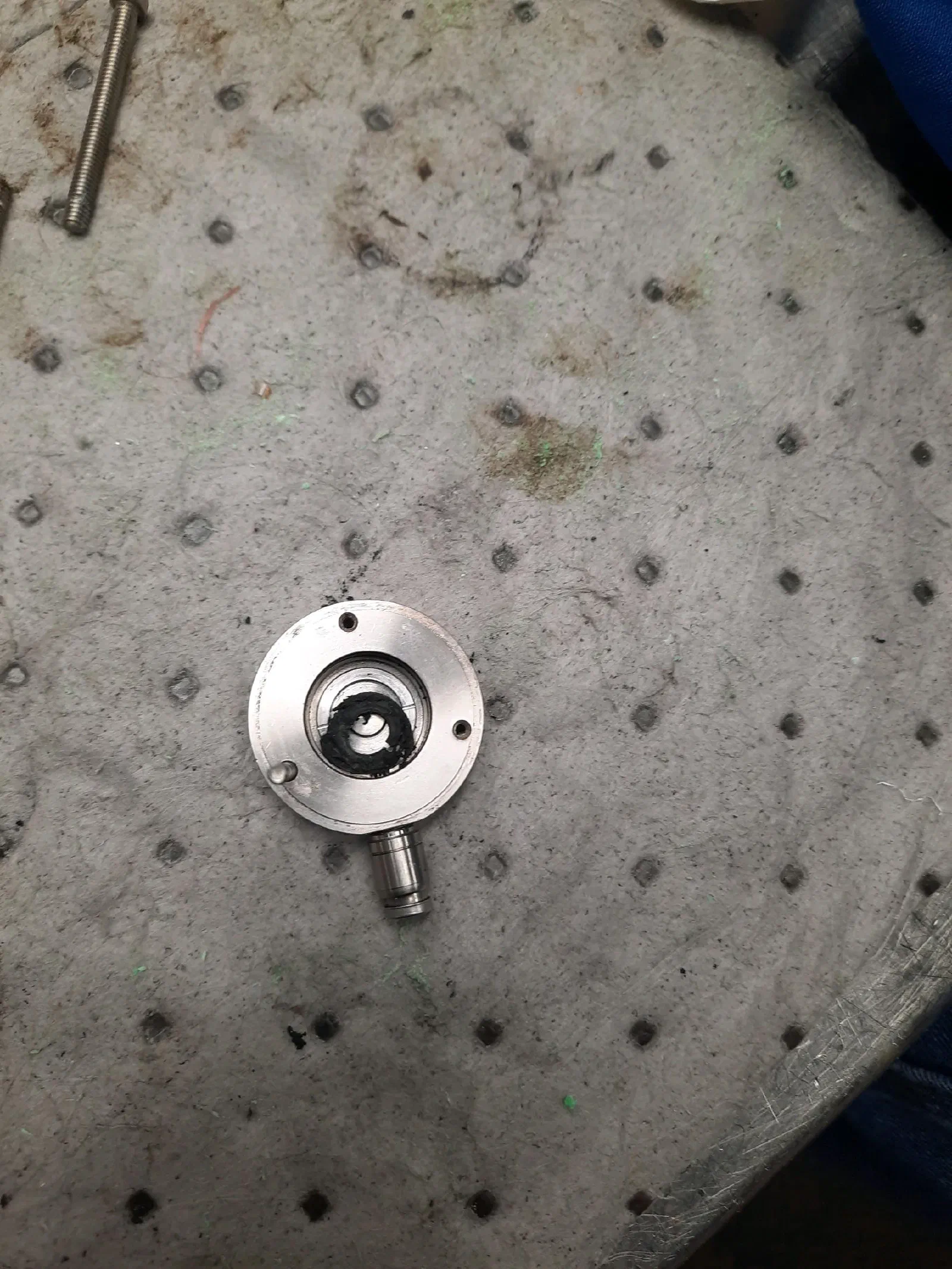
Beef sticks are thin, light, and irregular, and a good share of the incoming product ran outside the size spec our calculations assumed. Out-of-spec sticks overlapped on the conveyors, which drove up the number the robots had to bypass. The urethane band conveyor used for spreading was the worst piece of equipment on the job, skewing product and wearing out quickly. The X-ray also had an intermittent encoder and reject-signal drift that the vendor’s tools couldn’t see, so I built test signals from scratch to prove where the fault was.
Opportunities and struggles
- Spreading: Don’t use urethane band conveyors to spread product. A speed differential on other equipment works better.
- Application math: Proposals need to account for real product variation, and be clear that out-of-spec product doesn’t count against guaranteed numbers.
- Specs: A 3% bypass target was quoted without saying whether it applied per cell or to the whole line. Two cells at 97% each only compound to 94%, so targets should be set per cell.
- Acceptance testing: Decide up front how uptime and pick efficiency will be measured.
- The team: Three weeks of 14 to 16 hour install days was too much to ask. I now set labor expectations with the customer before an install trip.
Specific skills
- 2D machine layout drafting in DraftSight (AutoCAD)
- requirements capture and scope definition
- robotic cell configuration and layout design
- machine vision integration
- x-ray inspection system integration
- cross-discipline coordination
- commissioning and factory acceptance testing
- root-cause troubleshooting and field support
- sanitary and washdown design requirements in food production