Bottle Conveyance Line
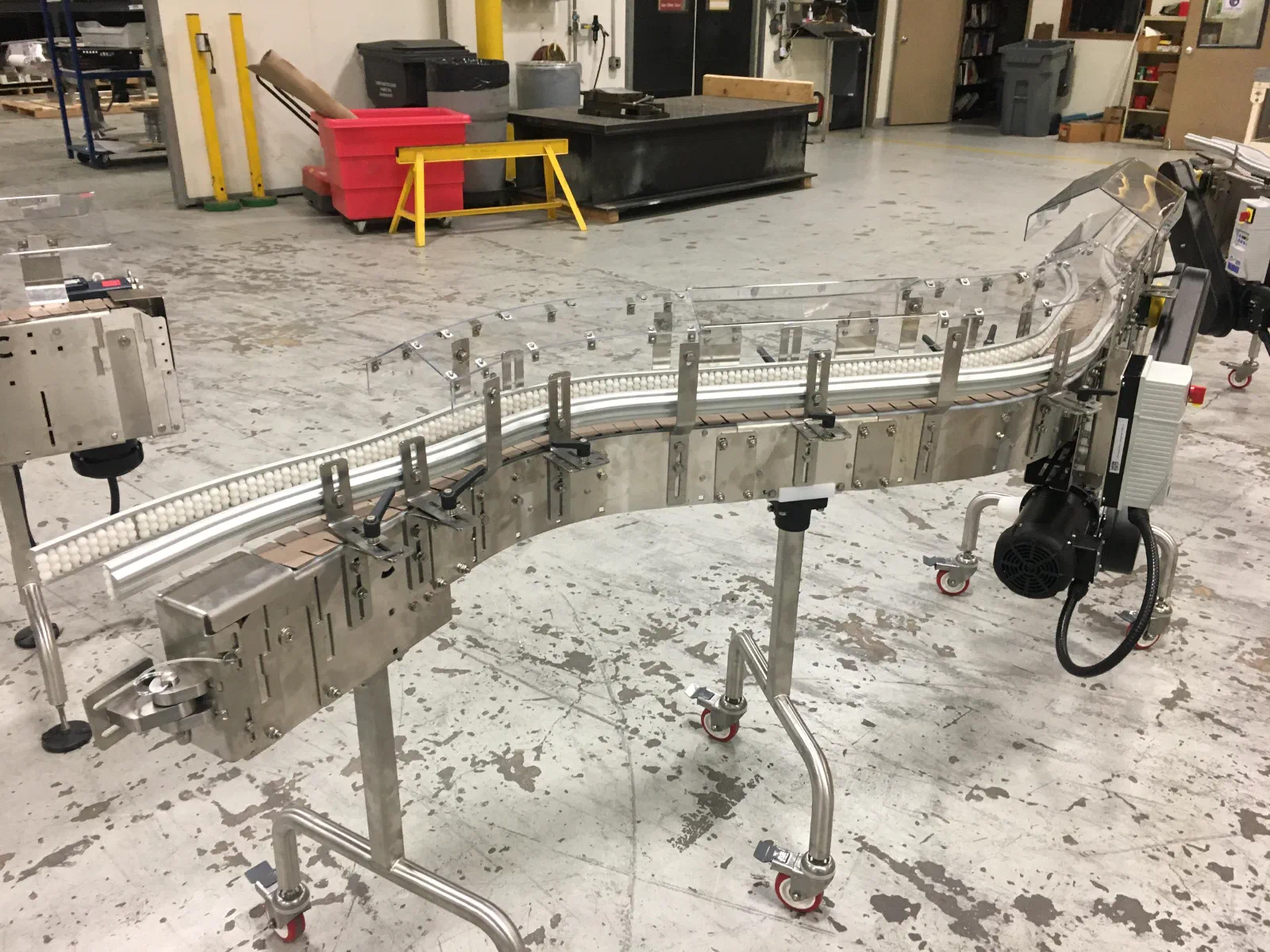
A pharmaceutical bottle line with pivoting sections to keep the plant passable and formed Lexan covers to keep open bottles clean.
- Employer
- CHL Systems
- Role
- Design Engineer
- Industry
- Pharmaceutical
- Period
- 2020 to 2021
- Scale
- New line layout around a bottle filler, with four pivoting conveyor sections
A line that cut the building in half
The customer needed a new conveyor layout around a bottle filler. Fitting the equipment was solvable, but a continuous line across that floor would have left no way through the building except around the end of the line. That doesn’t show up on a layout drawing. It shows up later, when everyone with a pallet jack takes a long detour every trip.
Conveyors that get out of the way
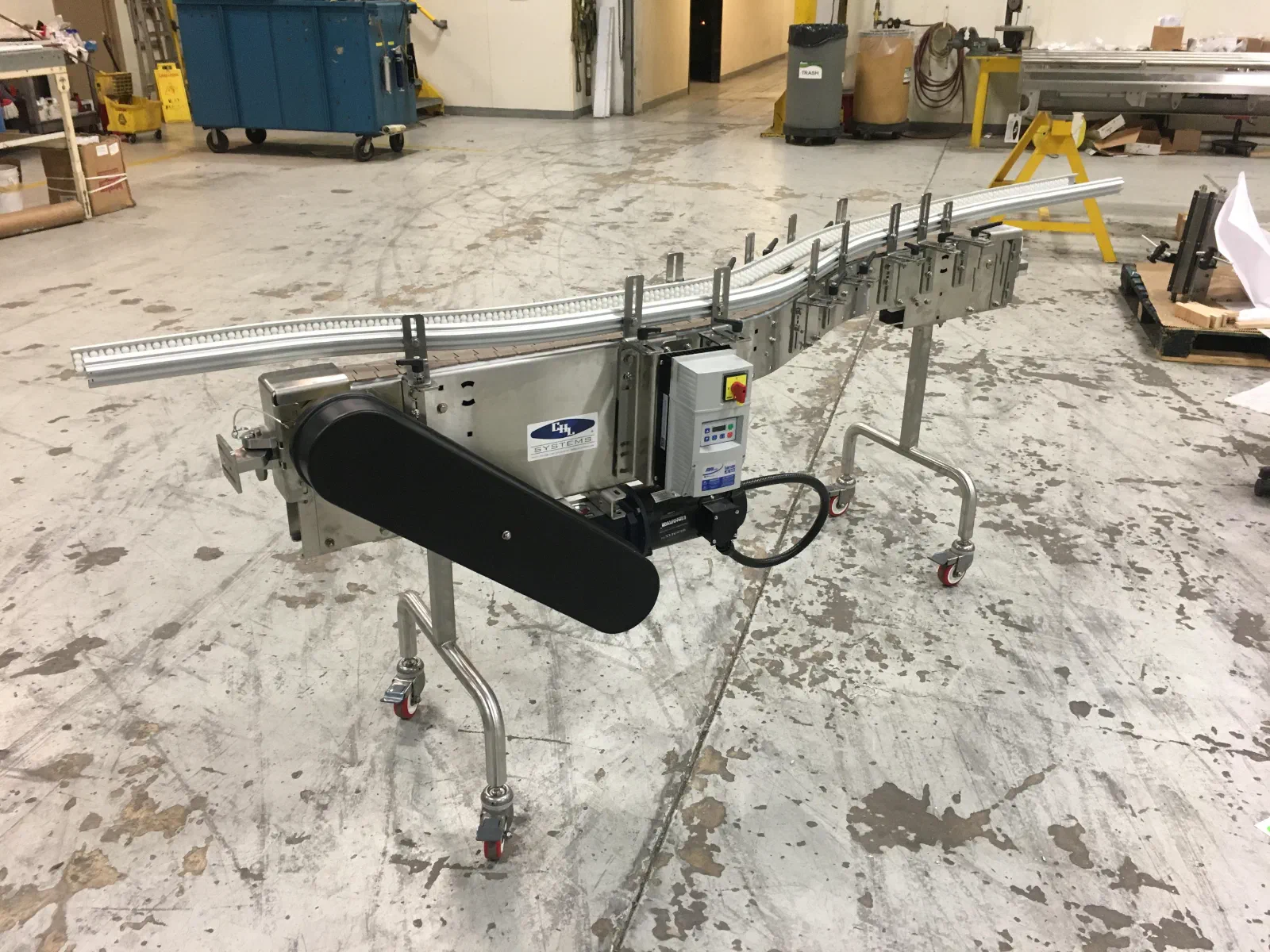
I designed four pivot and receiver assemblies that let sections of the line swing clear to open passages for people and equipment. The receiver is the other half of the design, bringing each section back to the same position so product crosses the joint cleanly every time. Clearance around the filler was tight enough that we moved a wall in the model, which is much better to find in CAD than on site.
Keeping the bottles clean
Everything upstream of capping carries open bottles, so all of that conveyance had to be covered. The customer’s requirements pulled in four directions: the covers couldn’t be flat, so nothing could settle on top and fall in later; they had to be clear so operators could see the product; they had to be easy to remove for cleaning; and they had to follow the conveyor’s contour, including around the corner. I designed curved, sloped Lexan covers on long piano hinges that lift away in seconds. Any one of those requirements is easy, but meeting all four in one formed clear part around a curve is where most of the time went.
Opportunities and struggles
The first curved covers didn’t hold their shape. Lexan wants to stay flat, and a sheet formed to a curve is always trying to spring back, which left gaps right where the covers were meant to seal. The fix was adding structure so the frame holds the shape instead of the sheet. It works, but it’s heavier than my first approach. I learned to start from what the material wants to do and design a shape that works with it, instead of designing the shape first and expecting the material to cooperate.
Specific skills
- SolidWorks
- collaboration with in-house machine and weld shops
- production line layout in a constrained building
- designing for personnel and equipment access
- contamination control for open containers
- formed Lexan cover design
- pivoting conveyor and receiver design
- integration around existing filling equipment