Bulk Beef Patty Case Loader
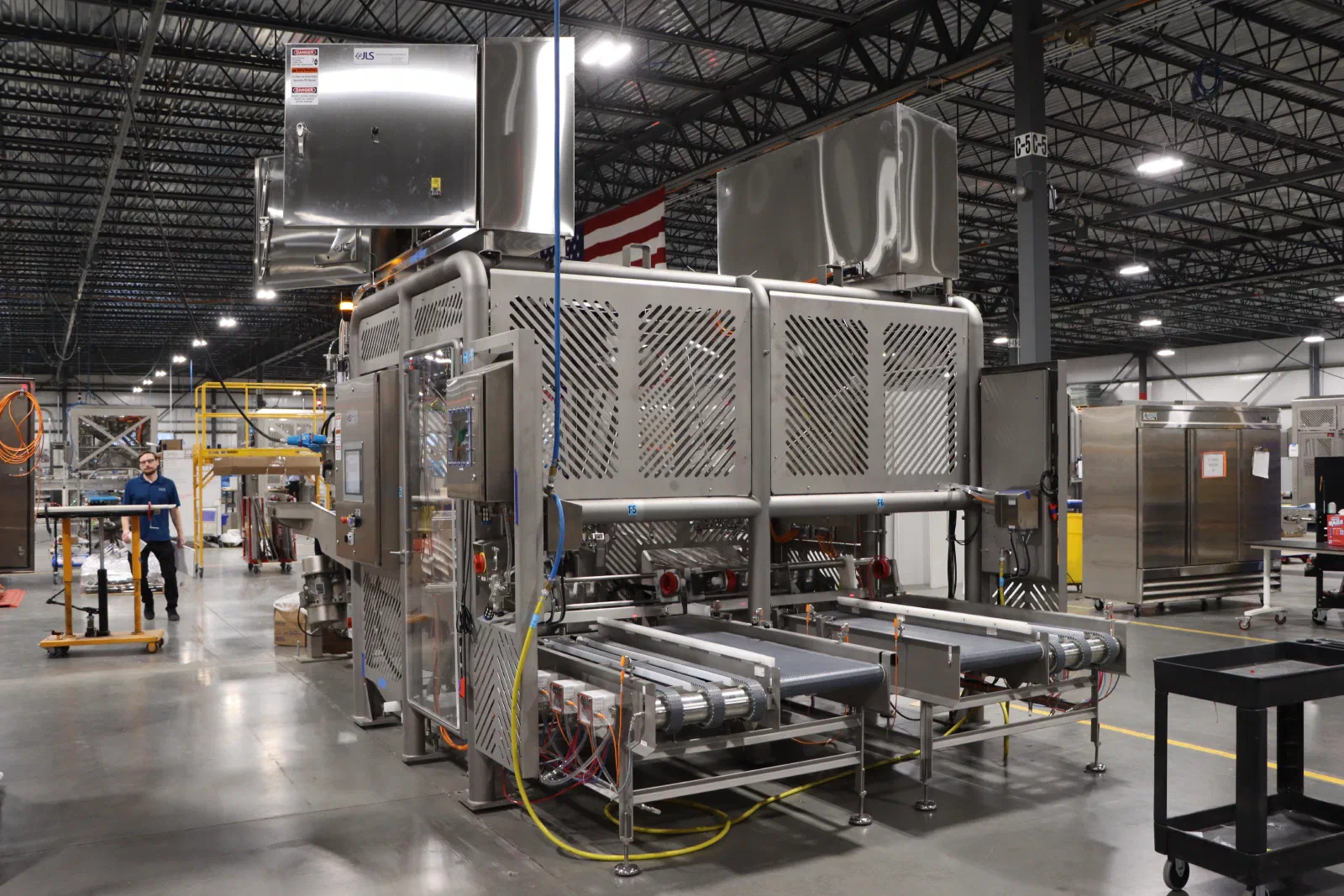
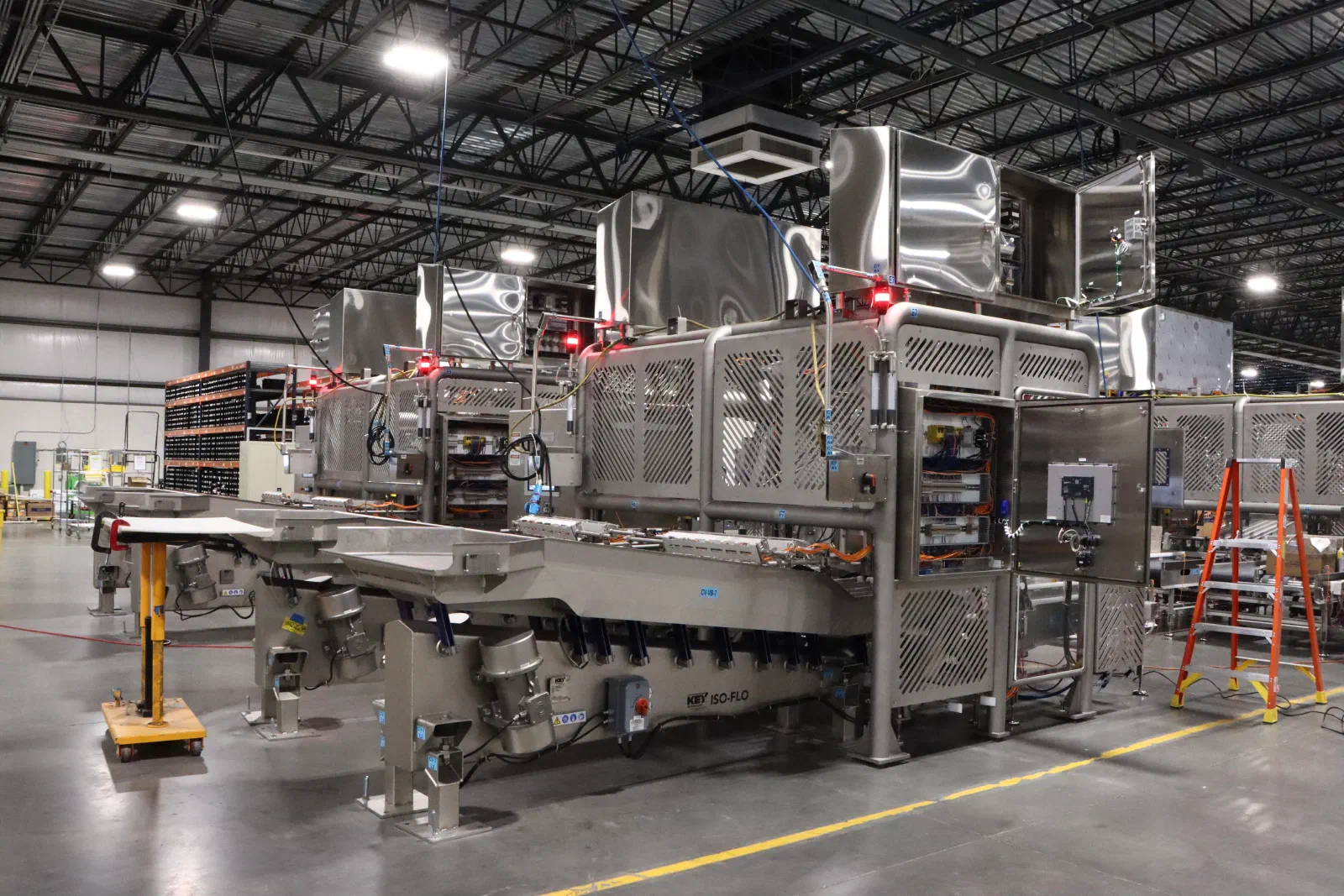
Eight robotic cells on four shared frames loading frozen beef patties, standing on edge, into bulk cases.
- Employer
- JLS Automation
- Role
- Systems Engineer
- Industry
- Beef processing
- Period
- Mar 2024
- Scale
- 8 robotic cells sharing 4 support frames, each at about 2.5 cases per minute, feeding two downstream lines at 10 cases per minute combined
Eight lines of patties on edge
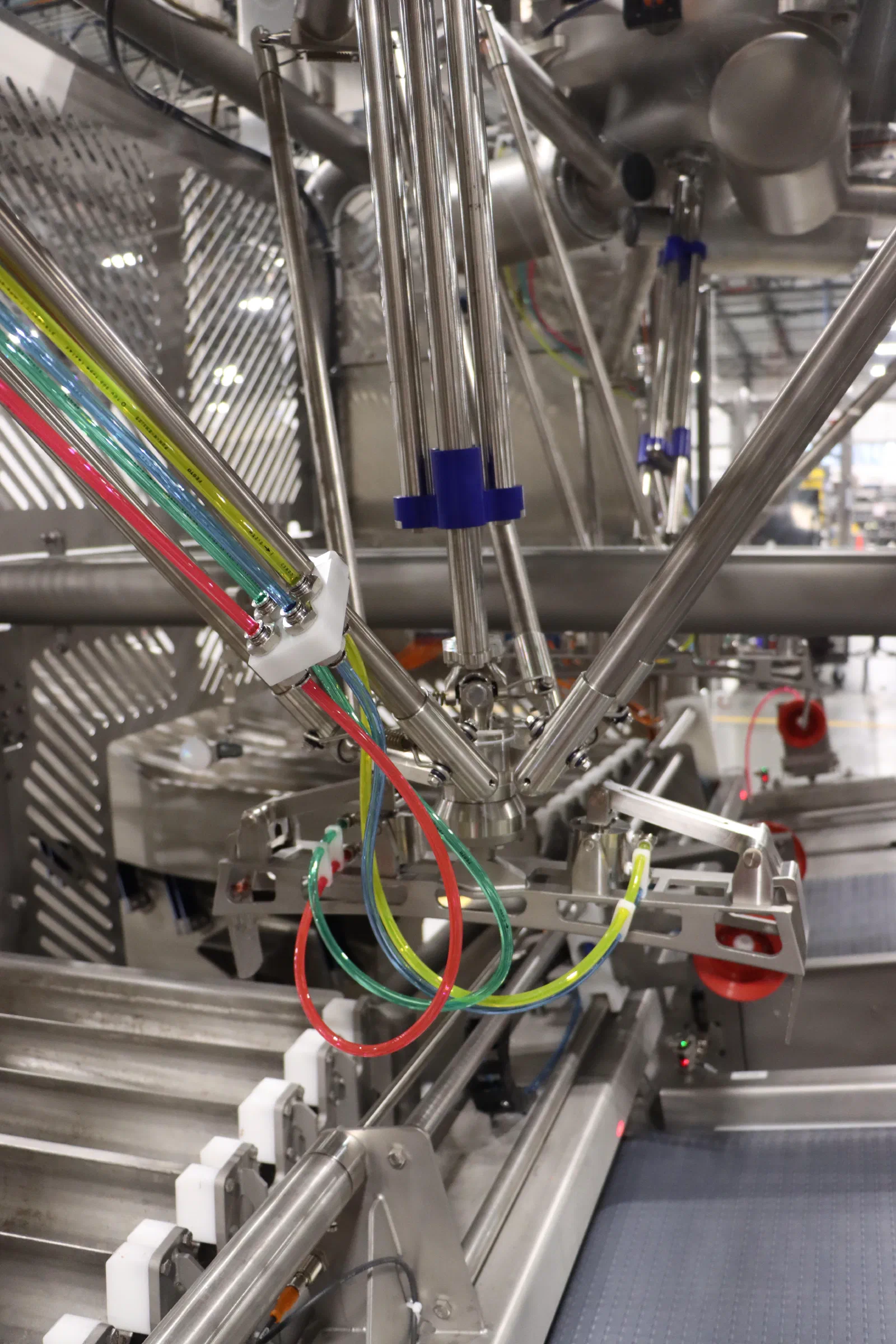
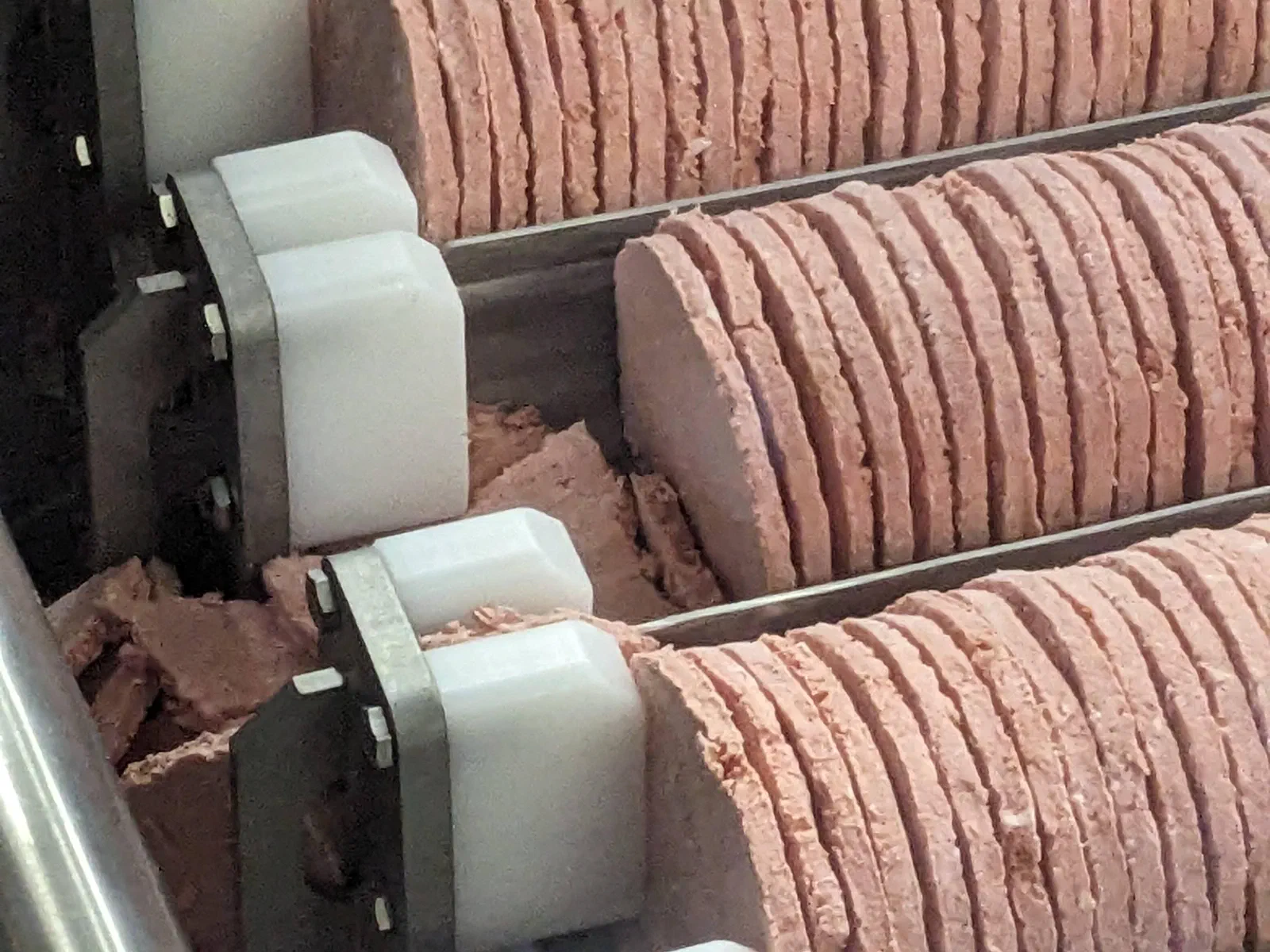
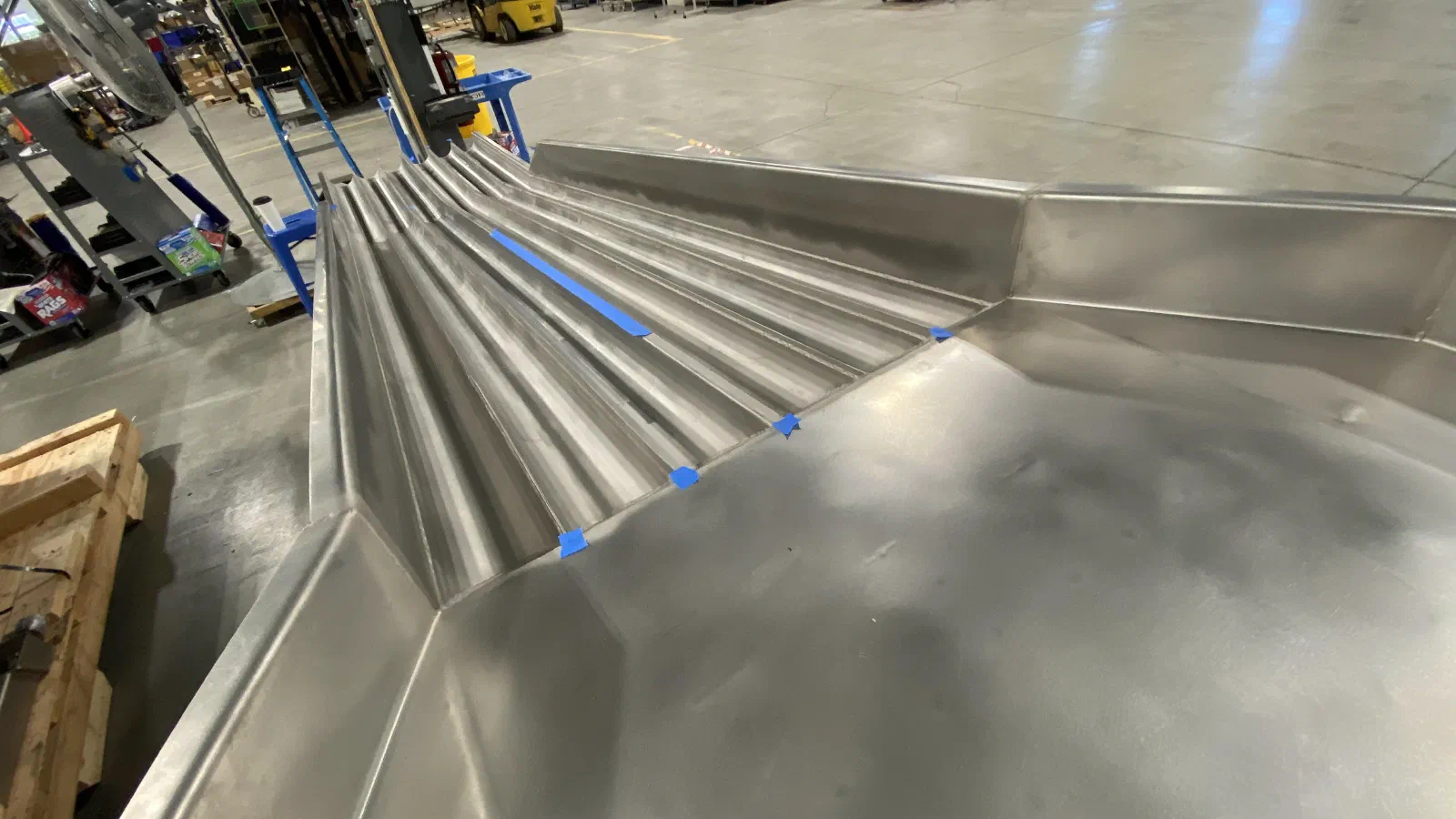
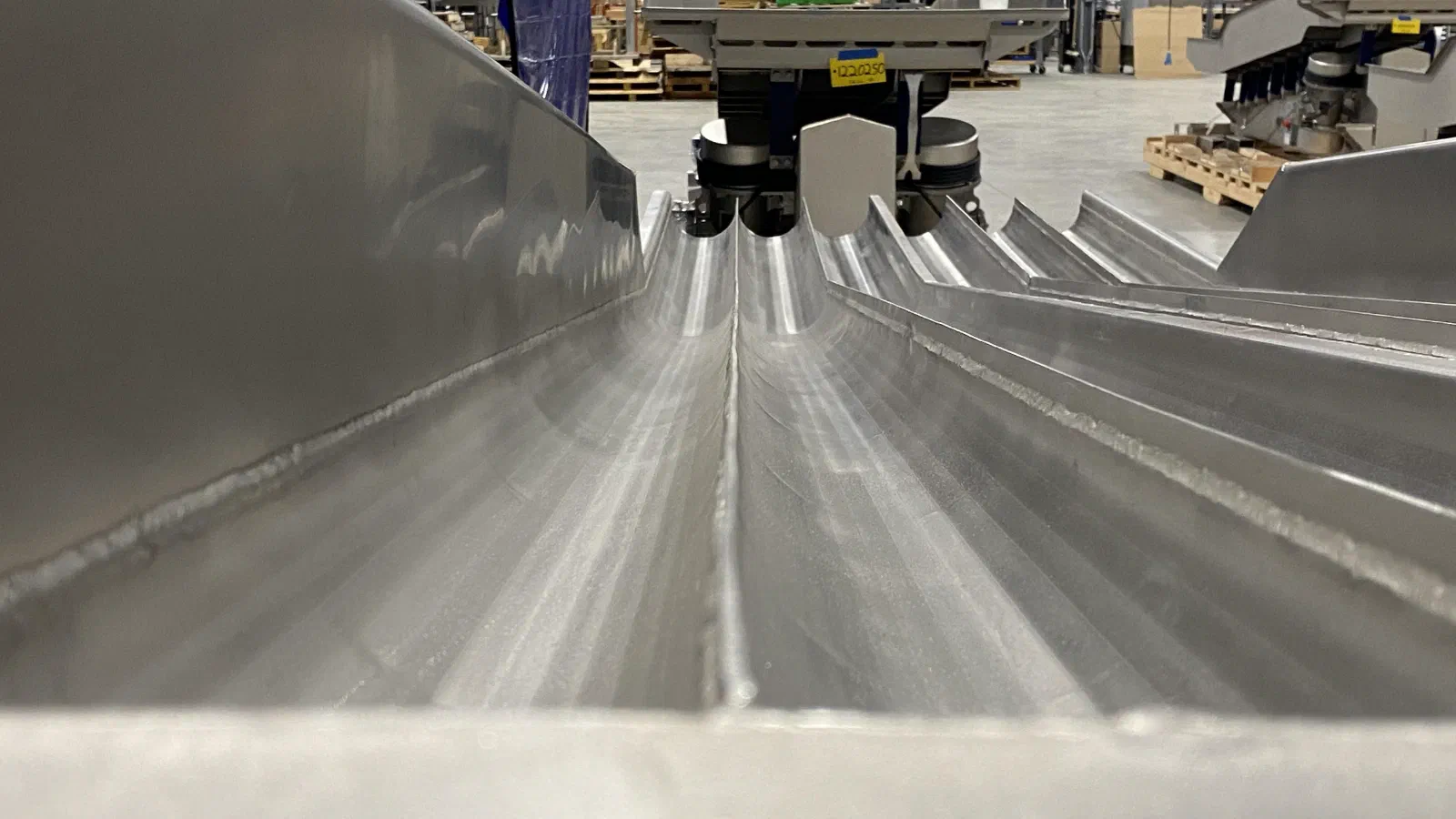
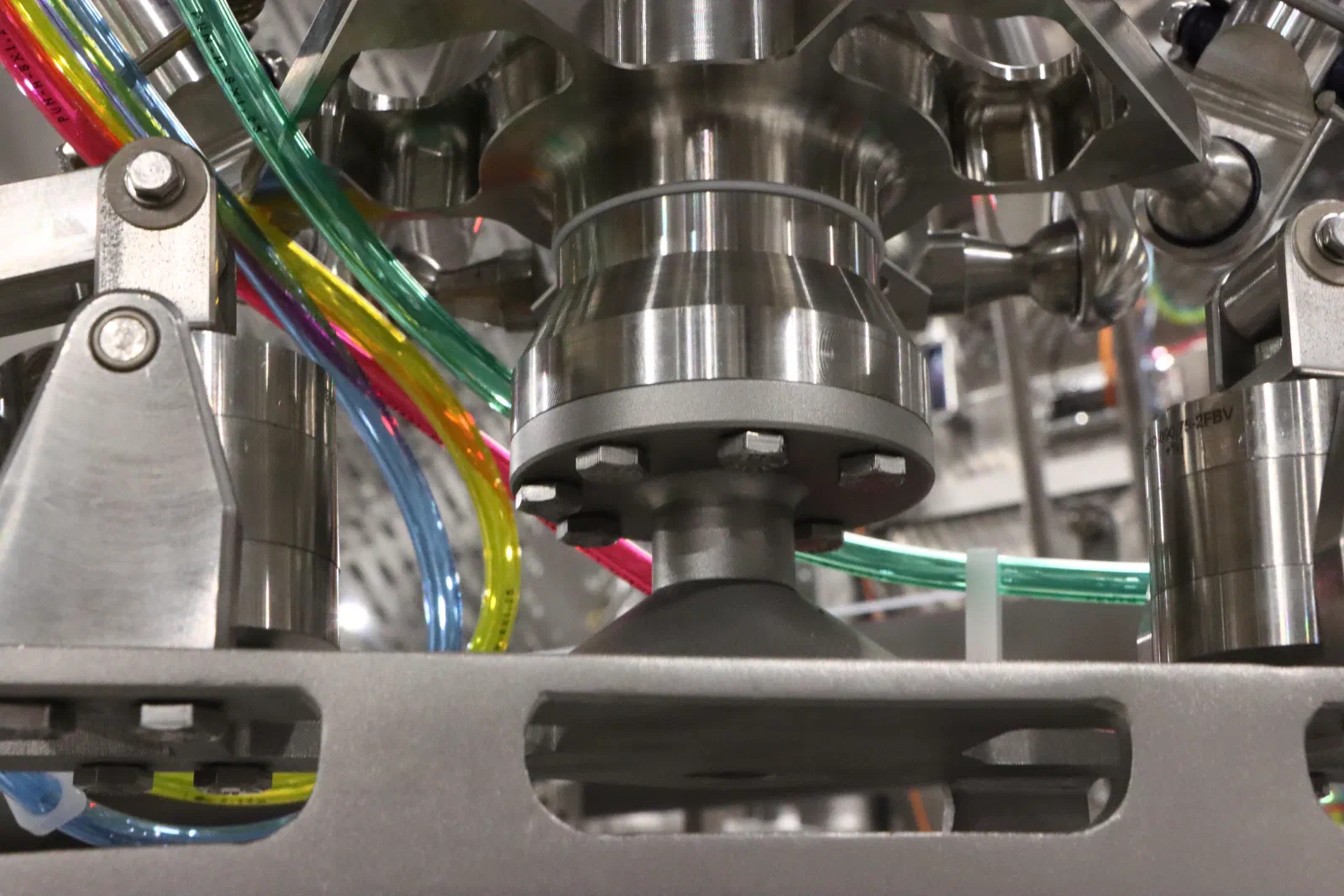
This system loads frozen beef patties into bag-lined bulk cases across eight production lines at a beef processor. Patties come from an upstream freezer onto vibratory feeders that stand them on edge in rows. A delta robot on each line picks a full row at a time and places it into a tilted case, and a partner’s conveyance system carries the cases through elevators into two continuous downstream lines for sealing and palletizing.
Partitioning eight lines
The picking motion is our standard patty platform. The interesting engineering was how to split eight lines into something that could be built, installed, and cleaned together. Instead of eight separate frames, we paired the cells two to a shared support frame, cutting the frame count to four without changing the robot count. That only works with a clean interface to the case-handling conveyance, which an outside partner built and installed. As Systems Engineer, I defined that interface, configured the shared-frame layout, and supported the field rework on the feeders.
Standing frozen patties
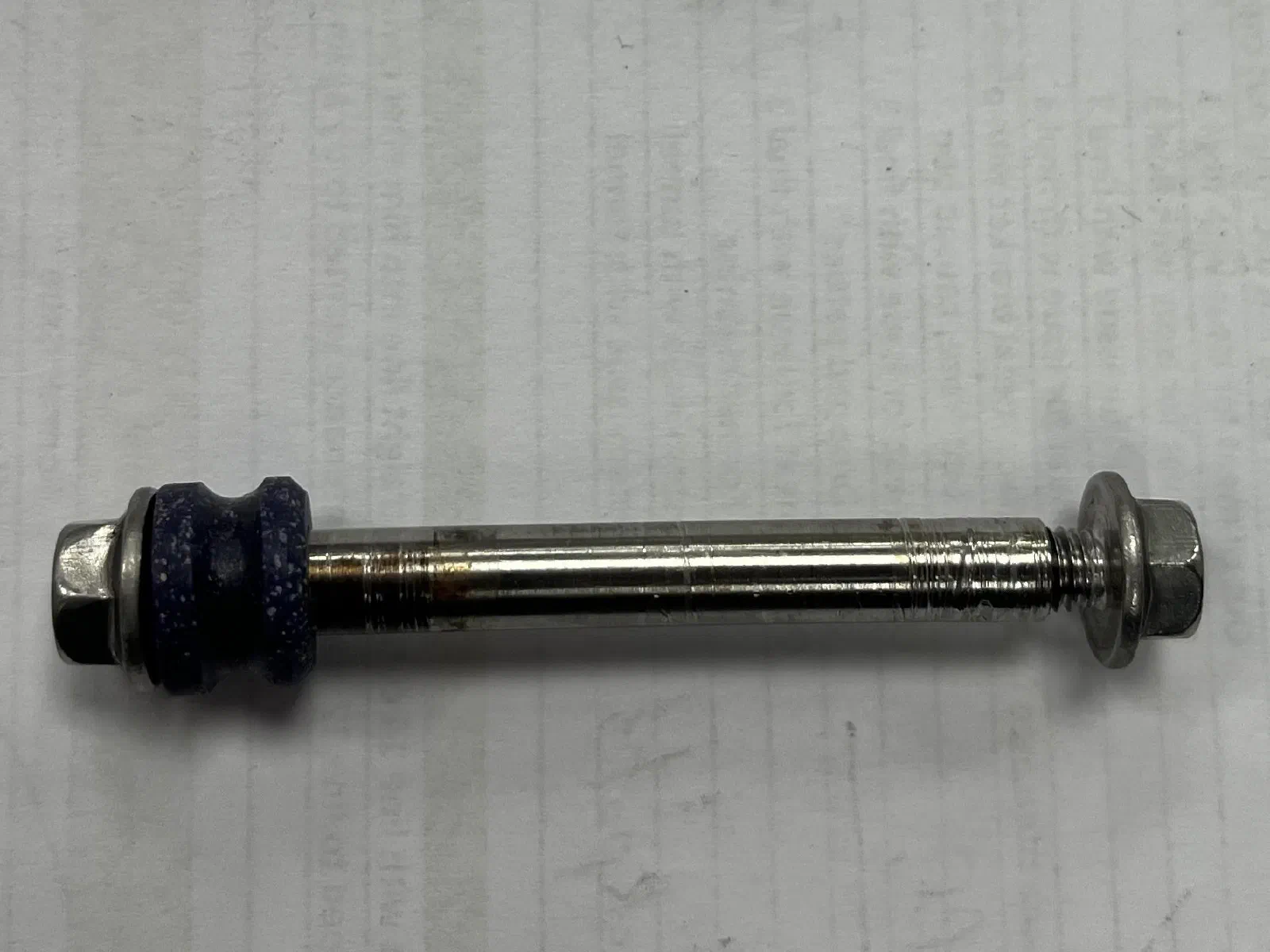
Standing frozen patties on edge brought its own problems. Patties that lay flat instead of standing could escape the stops, and the vibratory pans came loose from their anchoring within weeks of startup and needed a second installation with a custom alignment jig.
Opportunities and struggles
- Anchoring: Using proper epoxy grout and an alignment jig the first time would have saved a second installation pass.
- Access: A late request for mezzanine access forced us to move electrical cabinets close to install. I now make sure maintenance and operator access needs are understood before a cell design is finalized.
- New components: This was our first job with a B&R standalone VFD instead of the rack-mounted version, and it behaved differently enough to need real troubleshooting. Even scaling out a proven platform can surface new integration problems.
The system held up well enough to become a reference point for newer patty-loading work at the company.
Specific skills
- 2D machine layout drafting in DraftSight (AutoCAD)
- requirements capture and scope definition
- robotic cell configuration and layout design
- multi-line and multi-cell system scale-out
- third-party subsystem interface engineering
- cross-discipline coordination
- commissioning and factory acceptance testing
- root-cause troubleshooting and field support
- sanitary and washdown design requirements in food production