Carton Forming and Loading Test Machine
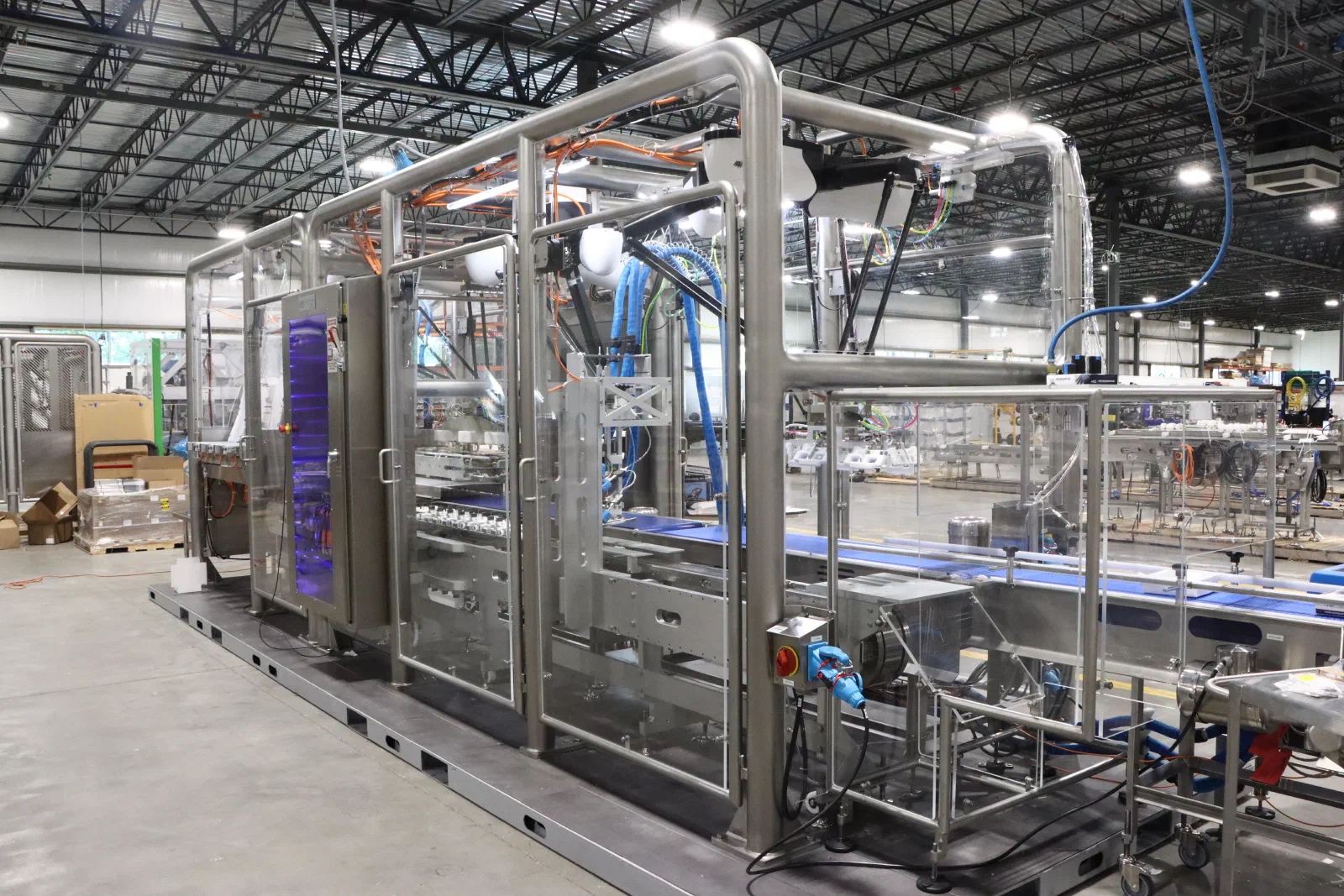
A portable, skid-mounted robotic carton cell that doubles as a product test machine and a trade show demo.
- Employer
- JLS Automation
- Role
- Systems Engineer
- Industry
- Packaging automation (internal)
- Period
- May 2026
- Scale
- Two carton forming and loading cells with three delta robots, built to ship on skids between the test lab and trade shows
A machine with no customer
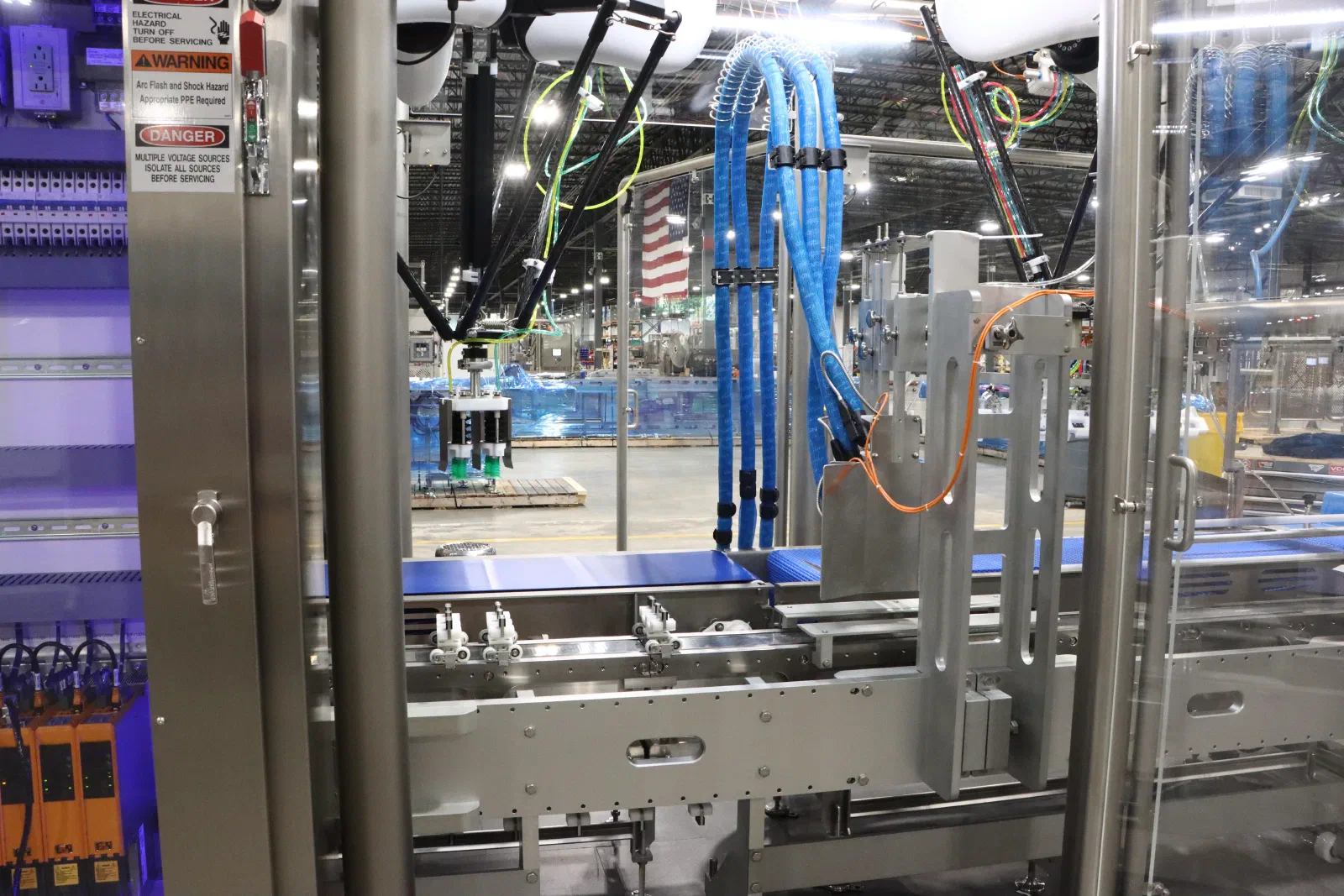
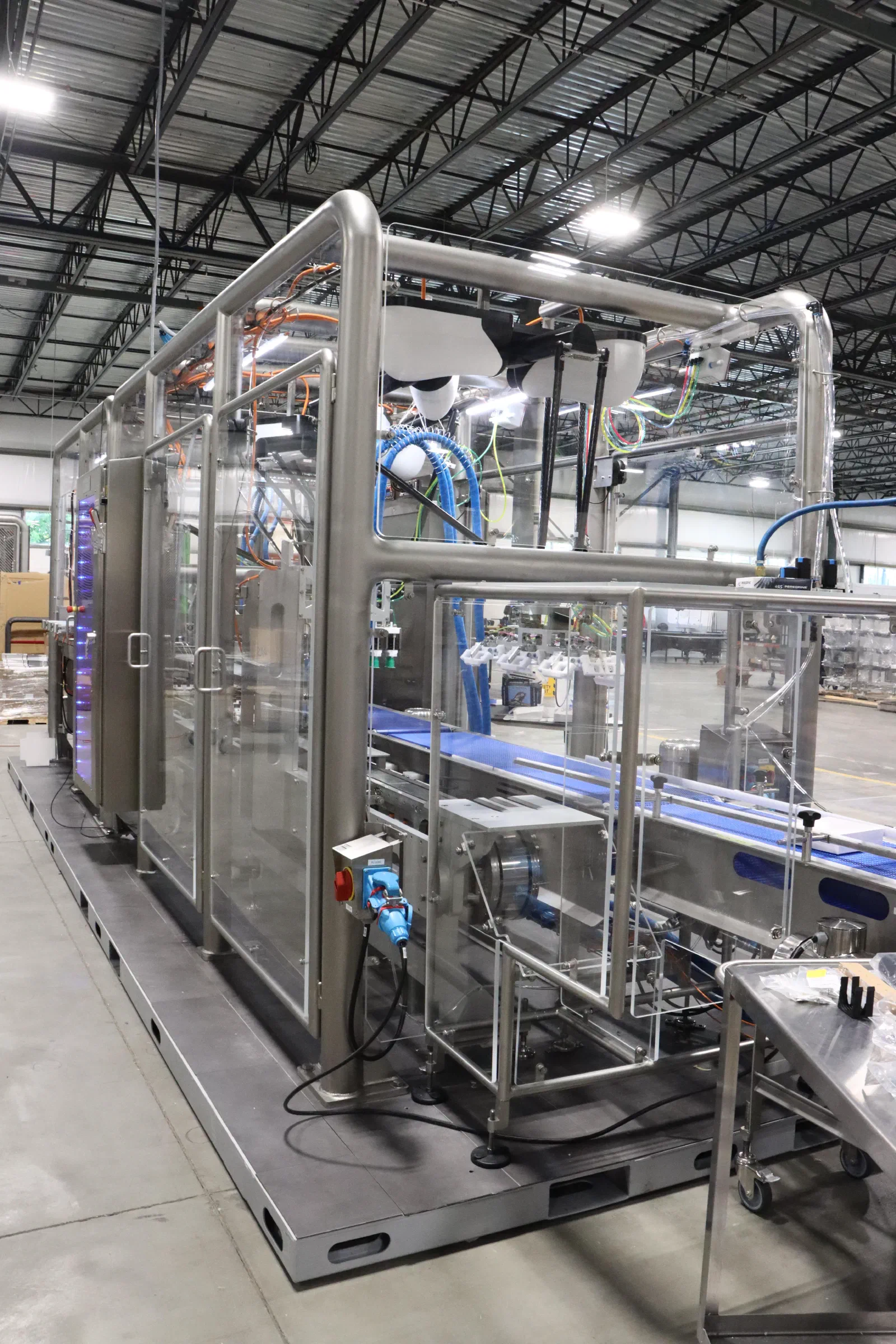
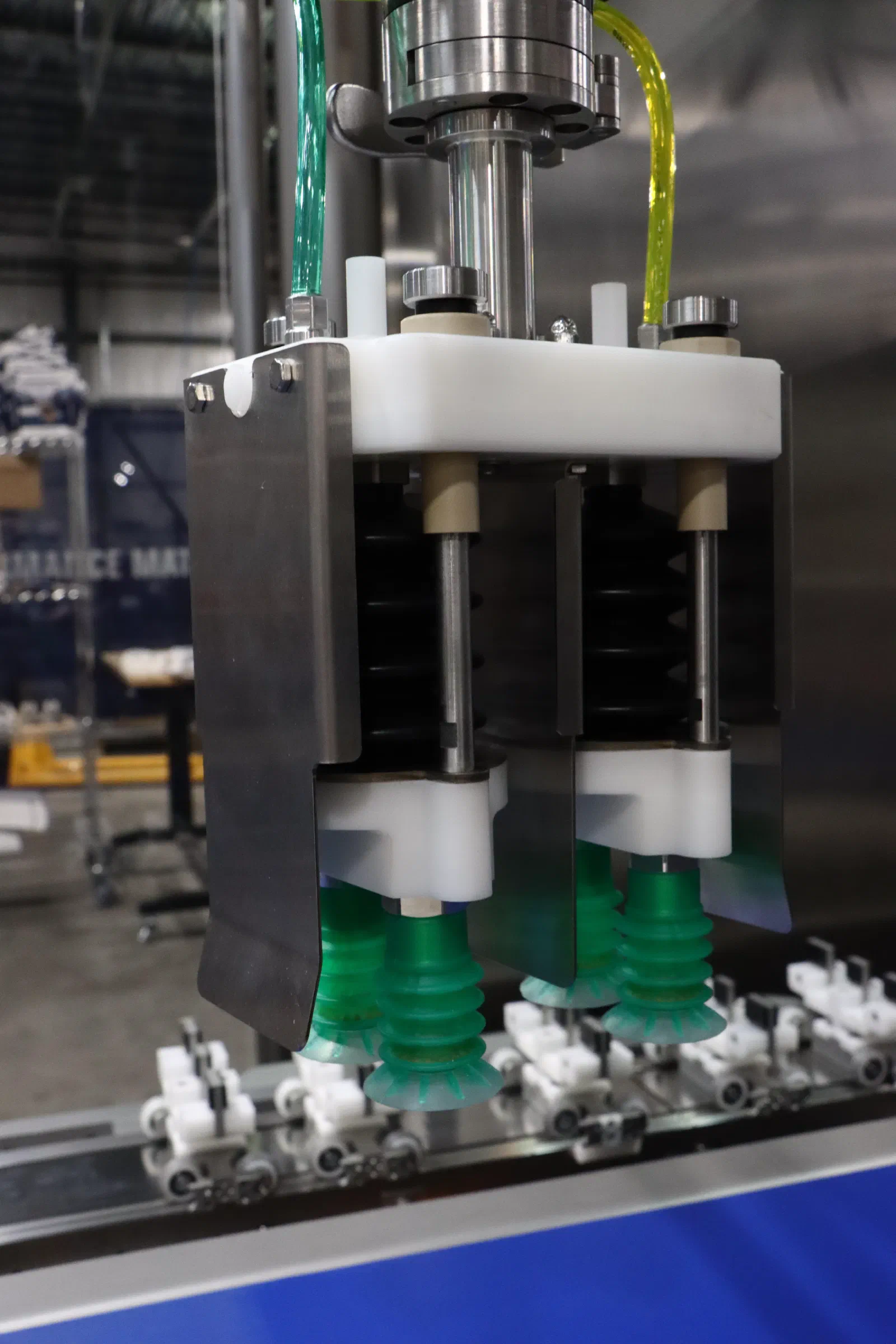
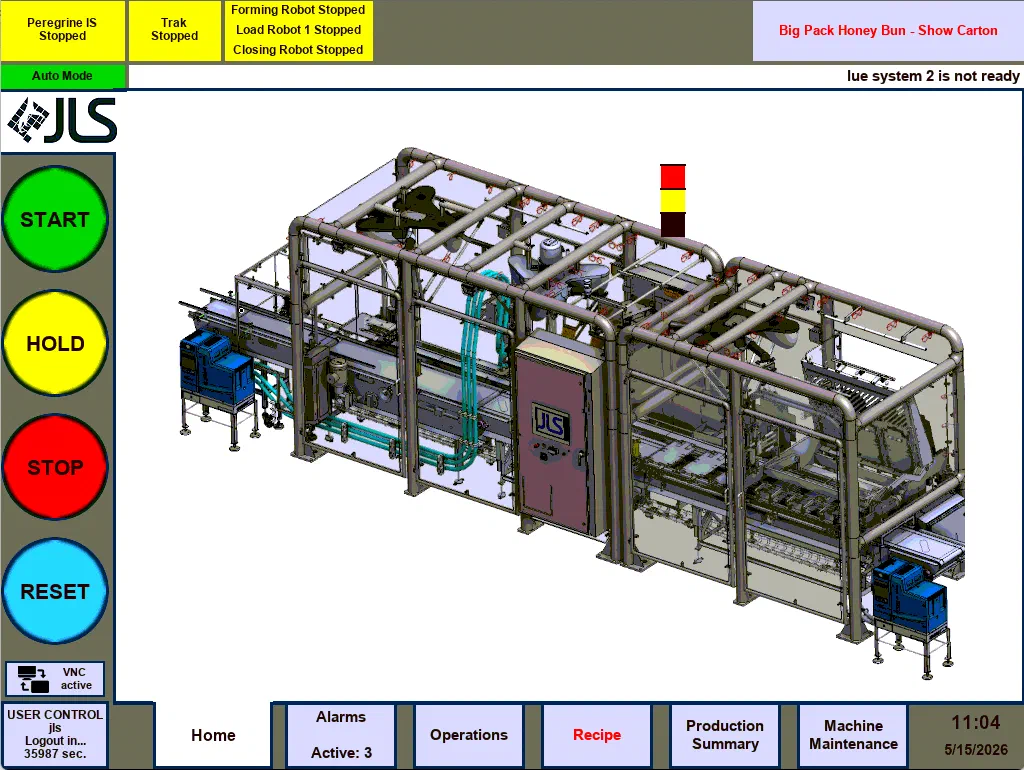
This is JLS’s own demonstrator for our carton forming and loading platform. It has two cells, one that forms cartons and one that fills and closes them, using delta robots on B&R Trak conveyance. It does two jobs: running a customer’s actual product for qualification testing, and traveling to trade shows as a working demo. Instead of building two machines, we built one that does both, mounted on steel skids so it can be broken down, shipped, and rebuilt.
Designed to be taken apart
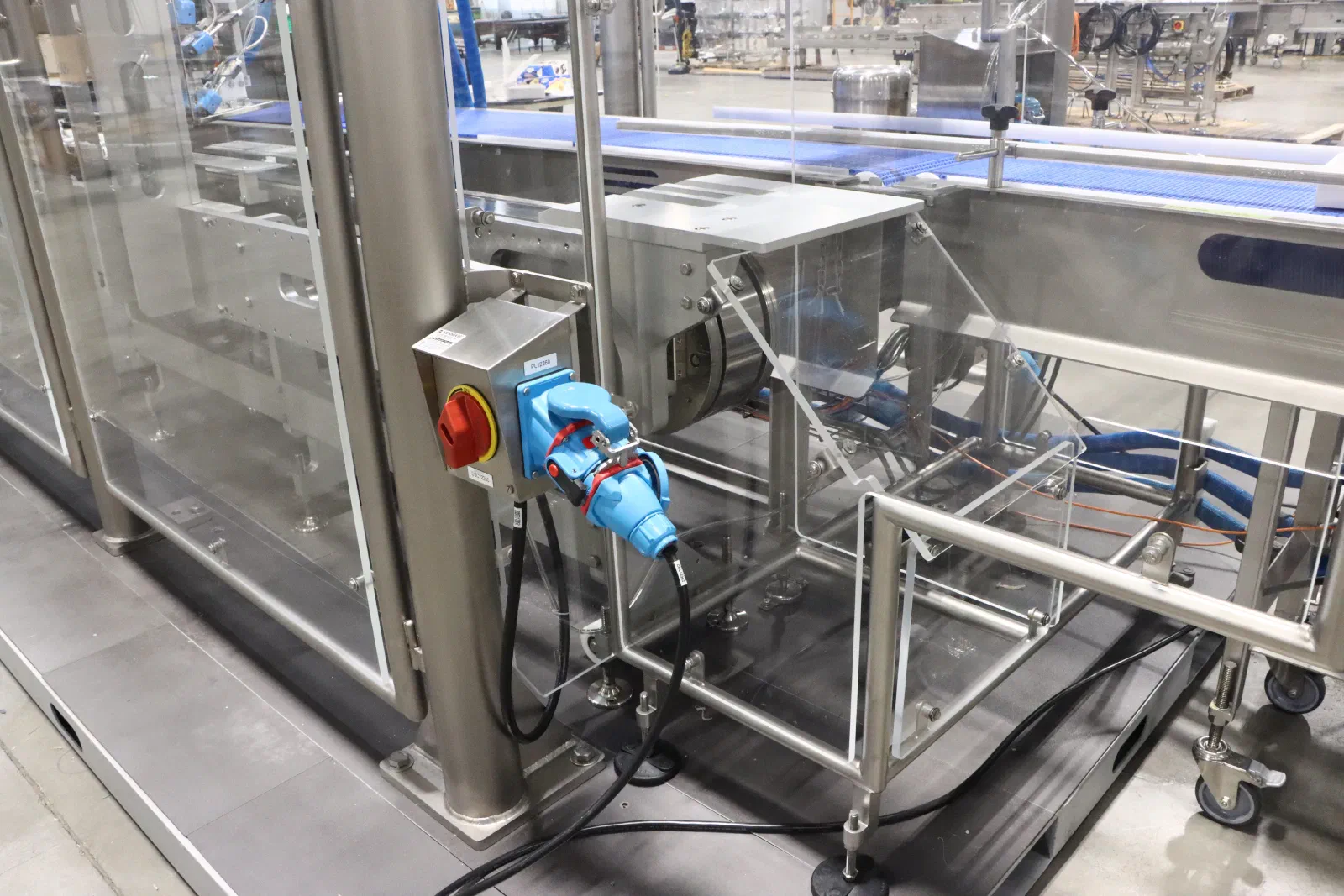
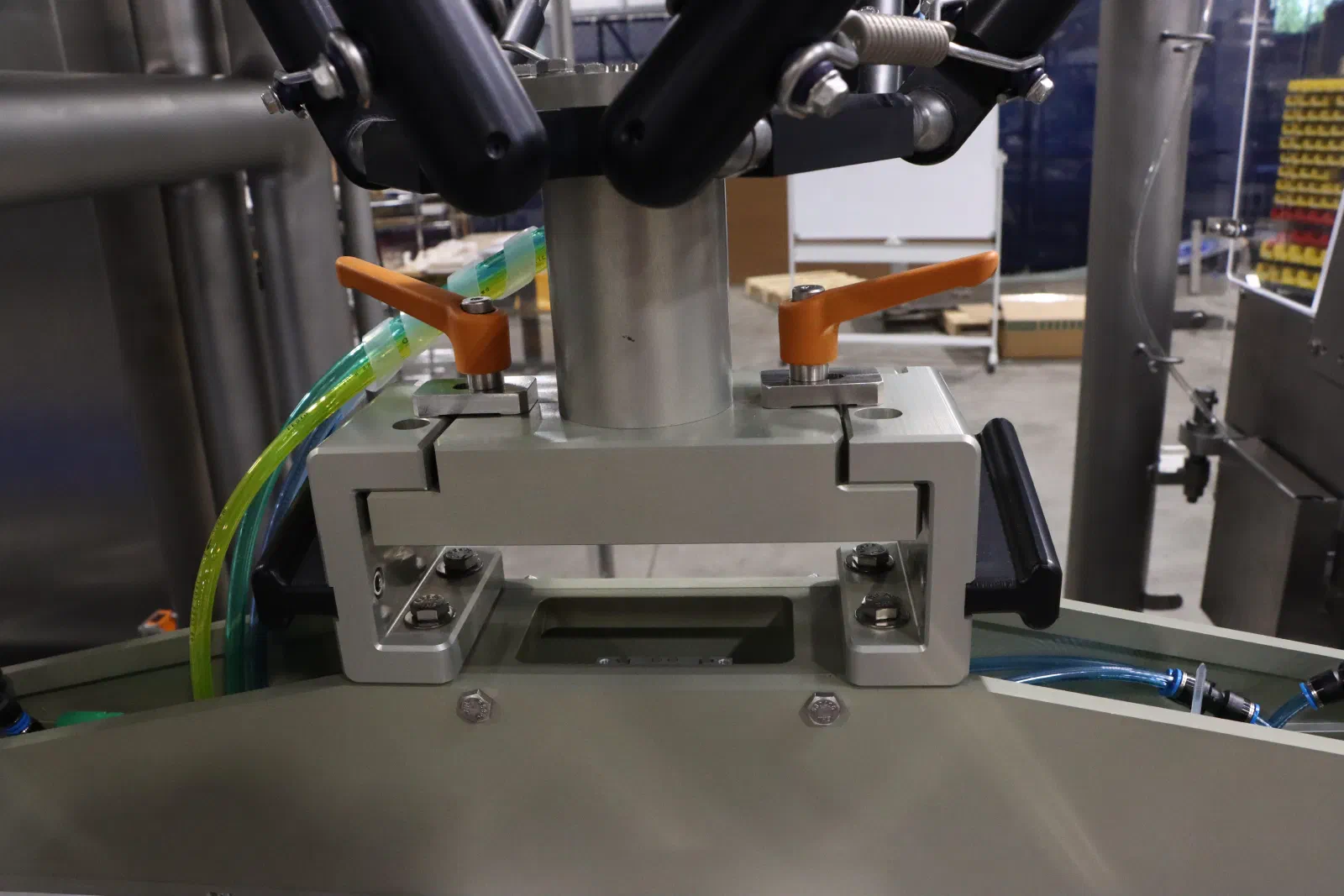
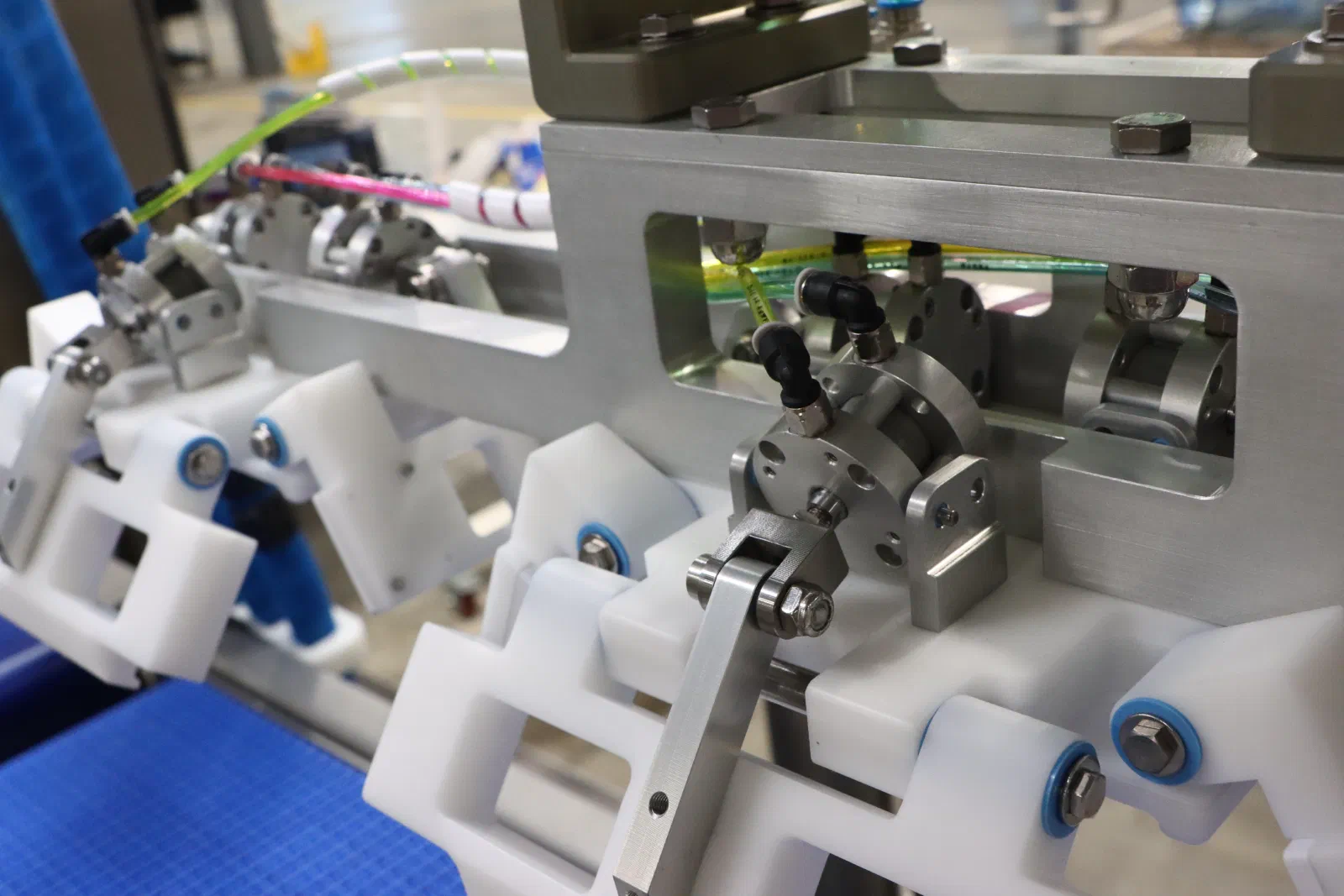
Designing equipment to be torn down and rebuilt on a schedule is a different problem from a normal installation. The frames, conveyors, and Trak sections were laser aligned against CAD on the shop floor, marked, and pulled apart so the skids could be drilled and have mounting nuts welded on, then reassembled in a set order. The machine also switches between two tooling sets, one for running customer product and a separate set for trade show duty, each with its own documented teardown and rebuild procedure.
As Systems Engineer, I defined what the machine needed to do in both roles, configured the two cells and the shared conveyance between them, and worked out the skid mounting and teardown sequence.
Opportunities and struggles
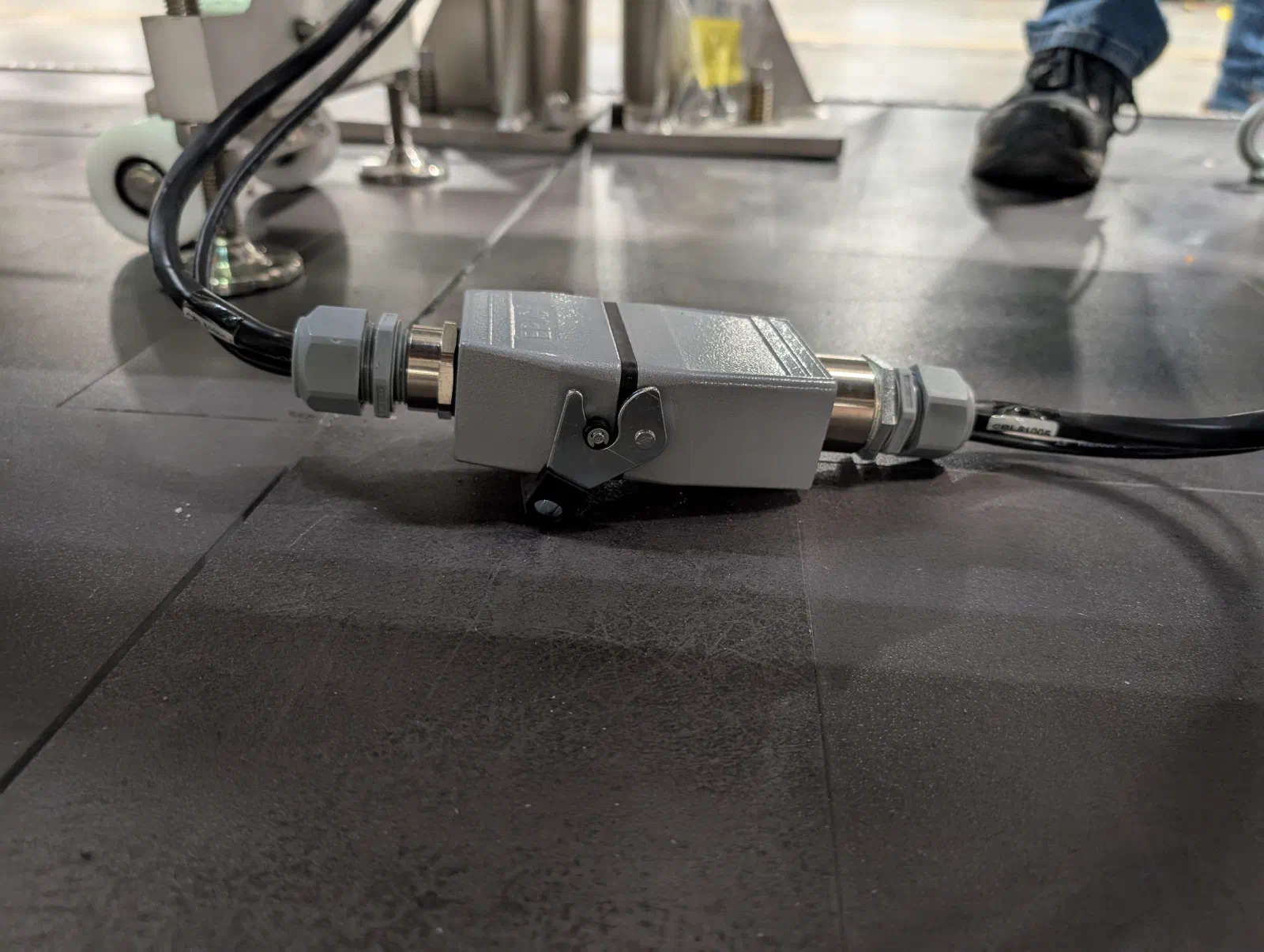
Getting the skid-to-frame alignment sequence wrong early on cost us rework, and fixing the order of laser alignment, then drilling, then welding is what kept it from happening again. I learned that equipment built to ship repeatedly needs more design discipline up front, since every joint and connector has to survive being disconnected many times instead of once. We also found a cracked weld on a skid during a status check that turned out to be harmless because the skids were so overbuilt. That worked out, but I would rather design to a known margin than discover it after the fact.
Specific skills
- 2D machine layout drafting in DraftSight (AutoCAD)
- requirements capture and scope definition
- robotic cell configuration and layout design
- portable and demo equipment design
- cross-discipline coordination
- trade show equipment support
- sanitary and washdown design requirements in food production