CIM-Powered Belt Sander
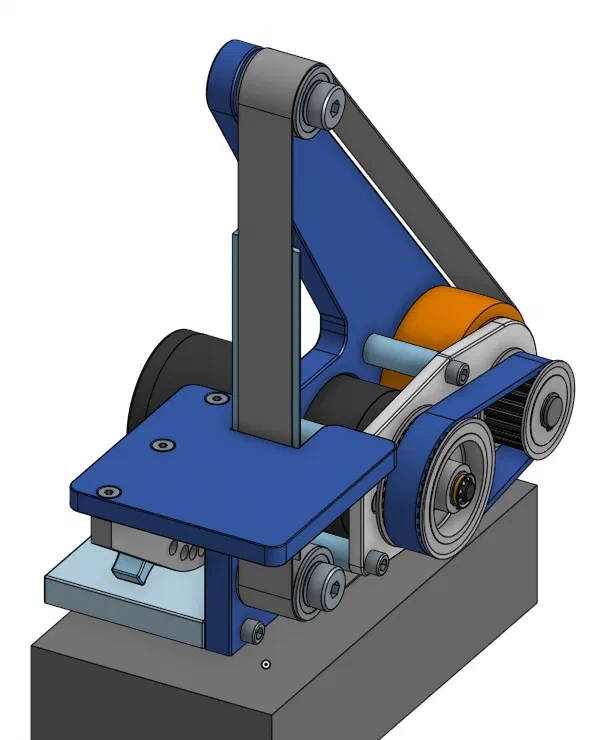
A belt sander designed around surplus robotics motors, and a cost analysis that convinced me not to build it.
- Employer
- Personal
- Role
- Personal design project, not built
- Industry
- Shop tools
- Period
- 2021
- Scale
- 1 x 30 belt sander designed around surplus FRC motors
Where the idea came from
When brushless motors arrived in FIRST Robotics, the older CIM motors went from standard equipment to surplus almost overnight. I had several perfectly good ones sitting around, so I designed a 1 x 30 belt sander around one, including the frame, drive, and tensioning arm.
Why it was never built
When I priced it out, the numbers weren’t close. Built as designed, it would have cost significantly more than almost any sander already on the market, with fewer features and much less power. Add in the time to fabricate it, weighed against a tool I wouldn’t use very often, and the case fell apart. I also considered selling plans for it, and the same math applied. I’m still confident not building it was the right call.
The design itself would have been a tank. It’s overbuilt the way a shop tool tends to be when the designer likes the design more than they need the tool.
Opportunities and struggles
This project started from a resource instead of a requirement. I had motors, so I went looking for something to do with them, and I ended up with a machine I didn’t really need. That’s easy to compare with the filter I helped build on a farm in Eswatini, which was also made from whatever materials were on hand. That one worked because a real problem came first and the materials were just the constraint.
The useful outcome here wasn’t the sander. It was doing the cost and effort analysis honestly and then acting on it, instead of building the thing anyway because it was already drawn.
Specific skills
- SolidWorks
- shop tool design
- cost and effort analysis
- deciding not to build