Combo Pack Cartoner Loader
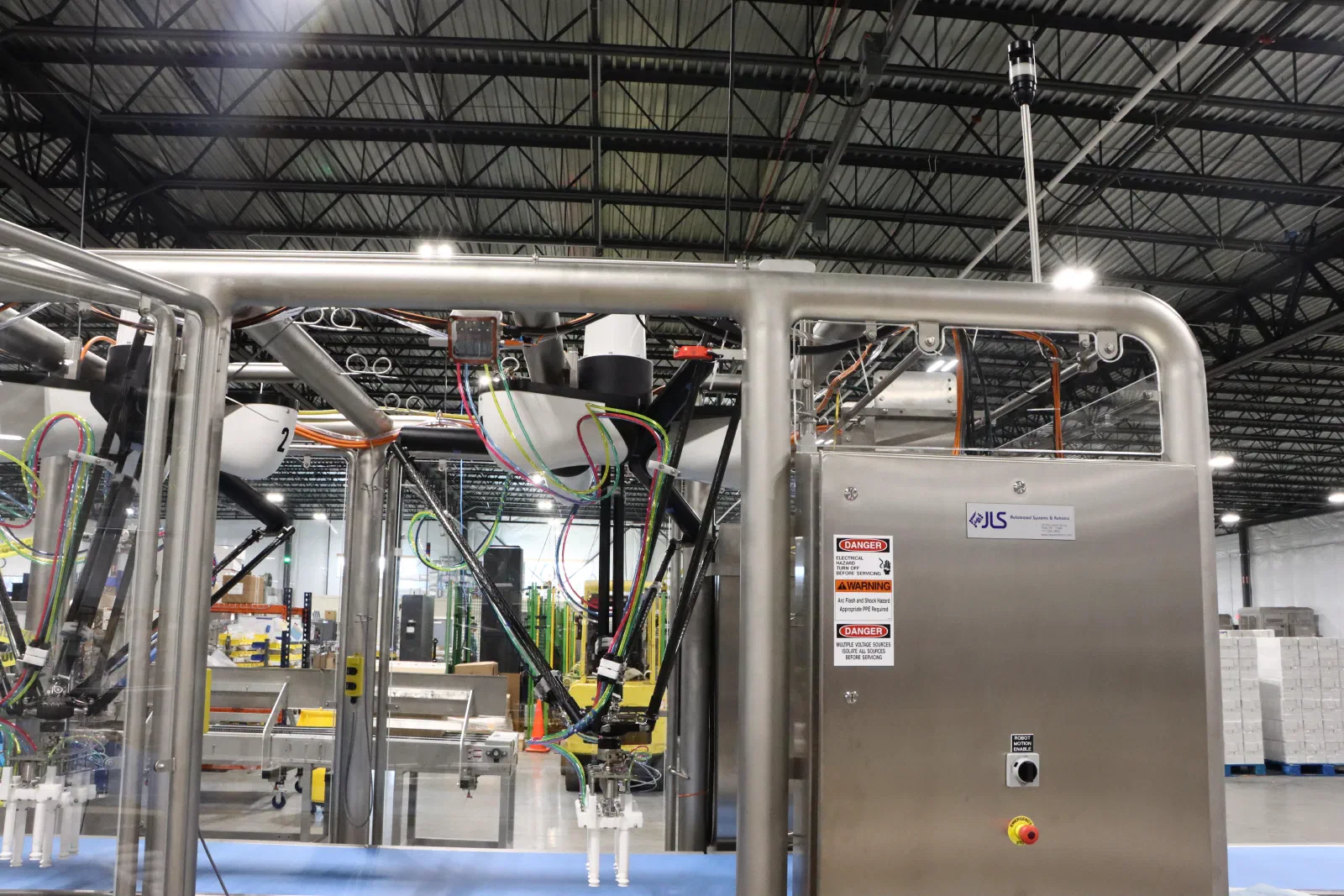
A six-robot vision-picking line loading four combo-pack products into cartons, then cases, then pallets.
- Employer
- JLS Automation
- Role
- Systems Engineer
- Industry
- Snack food
- Period
- Nov 2024 to Sep 2025
- Scale
- Six-head robotic cartoner-loading system plus case packing and palletizing, running four SKUs across five loading recipes, seven case configurations, and eight pallet configurations
The combo line
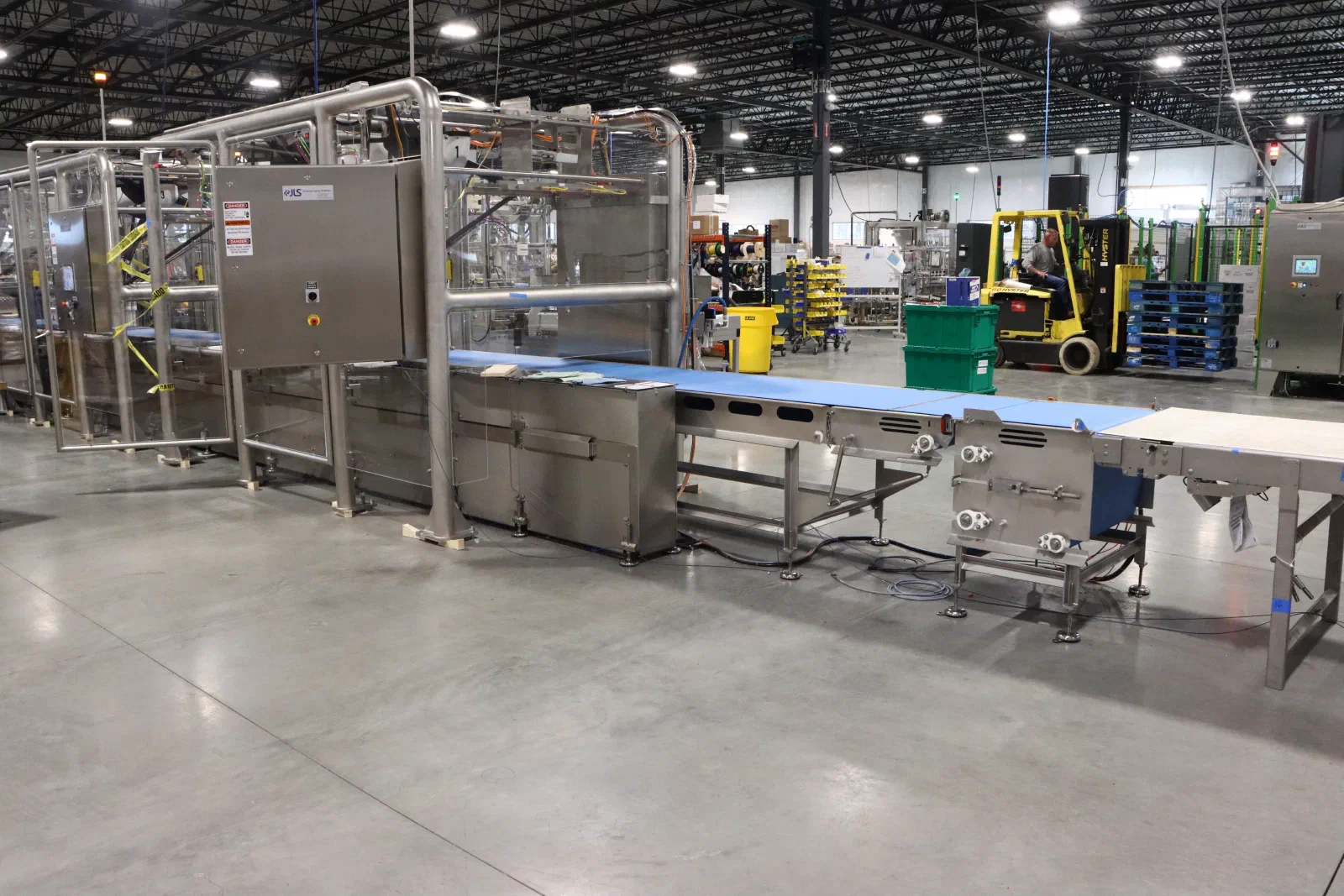
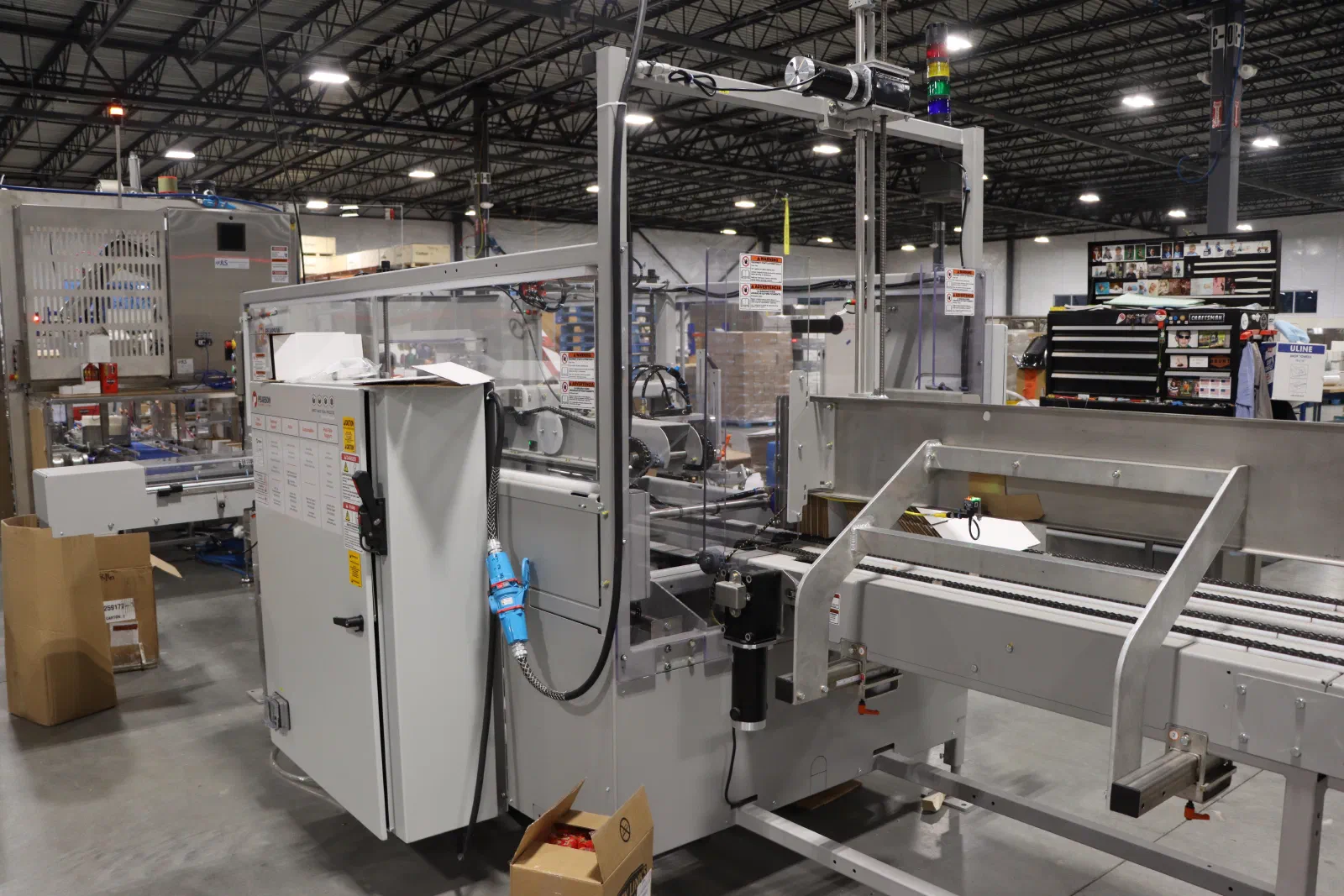
This line packages combo-pack snack products at the same plant as the snack stick line. Product arrives two rows at a time from the customer’s thermoformer, and six robots in three cells vision-pick the packs and load them into a customer-supplied cartoner. Filled cartons then move through our conveyance to a robotic case packer, which loads cases standing or lying flat depending on the product, and a second robotic system palletizes the cases.
Four products on one line
The customer needed one line that could run four different combo-pack products, each with its own carton count and case pattern. That came out to five loading recipes, seven case configurations, and eight pallet configurations. As Systems Engineer, I defined that recipe matrix, configured the six-robot cell, and coordinated with the case packing and palletizing systems downstream. We planned, risk-assessed, and commissioned this line together with the stick line, even though they are separate systems.
Tight margins
Handling four products means the tolerances have to work for all of them, not just the easiest one. Our clearance analysis rated several case and carton combinations as workable rather than ideal, which leaves less room for material variation than a single-product line would have.
Opportunities and struggles
- Margins: Workable clearances are fine until they aren’t, and a multi-product line tests those margins far more often than a dedicated one. I’d push harder for ideal clearances early on.
- Tooling: The pick tool needed two rounds of small fixes after launch, swapping cap nuts for lock nuts so they wouldn’t back out and adding tube holders so airlines wouldn’t chafe. A tool has to survive months of vibration, not just its first inspection.
- Field issues: We had a belt tear from an operator interacting with a guard, jams at a turning conveyor, and a pick failure on a buffer conveyor. None of these got a documented root cause, and closing that gap properly would have been better than guessing.
Specific skills
- 2D machine layout drafting in DraftSight (AutoCAD)
- requirements capture and scope definition
- robotic cell configuration and layout design
- multi-SKU recipe management
- third-party subsystem interface engineering
- cross-discipline coordination
- commissioning and factory acceptance testing
- sanitary and washdown design requirements in food production