Cookie Tub Case Loading with Case Erecting
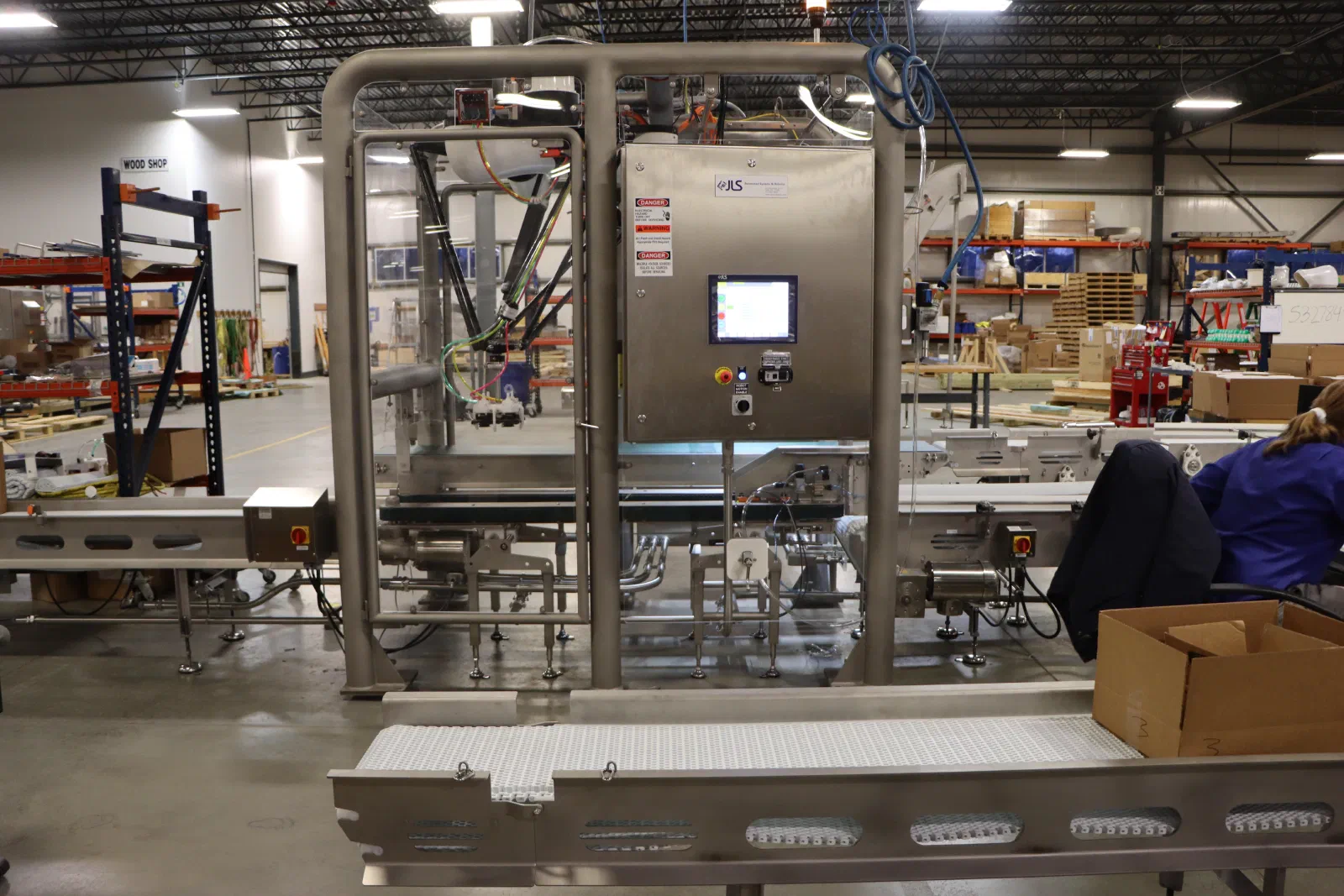
A full secondary packaging line for cookie dough tubs, from case erecting through robotic packing, sealing, and palletizing.
- Employer
- JLS Automation
- Role
- Systems Engineer
- Industry
- Snack food (bakery)
- Period
- Jan 2022
- Scale
- One robotic case-packing cell running four tub and cup recipes at 60 to 120 packs per minute, integrated with a case erector, sealer, and robotic palletizer
From filled tub to wrapped pallet
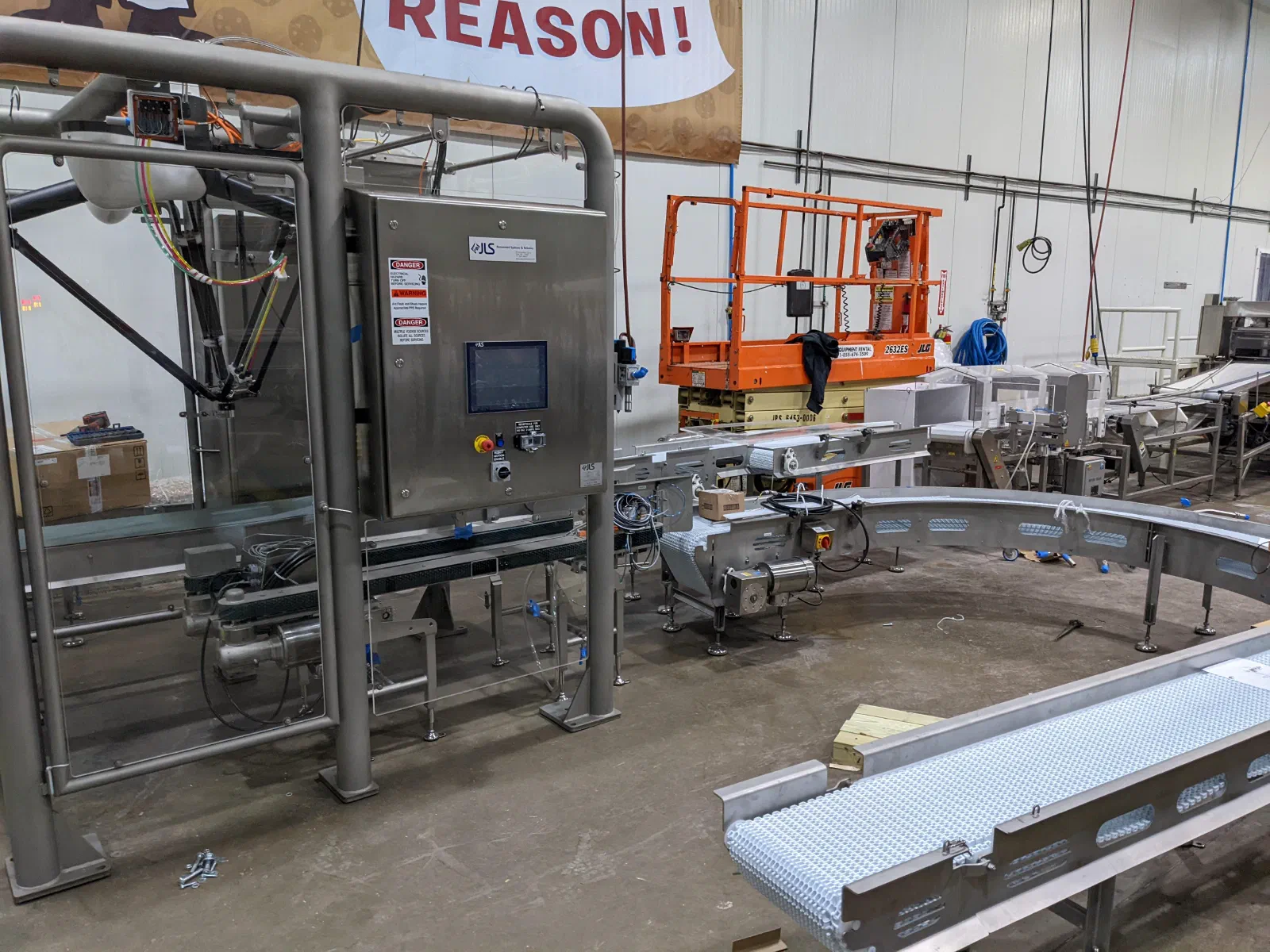
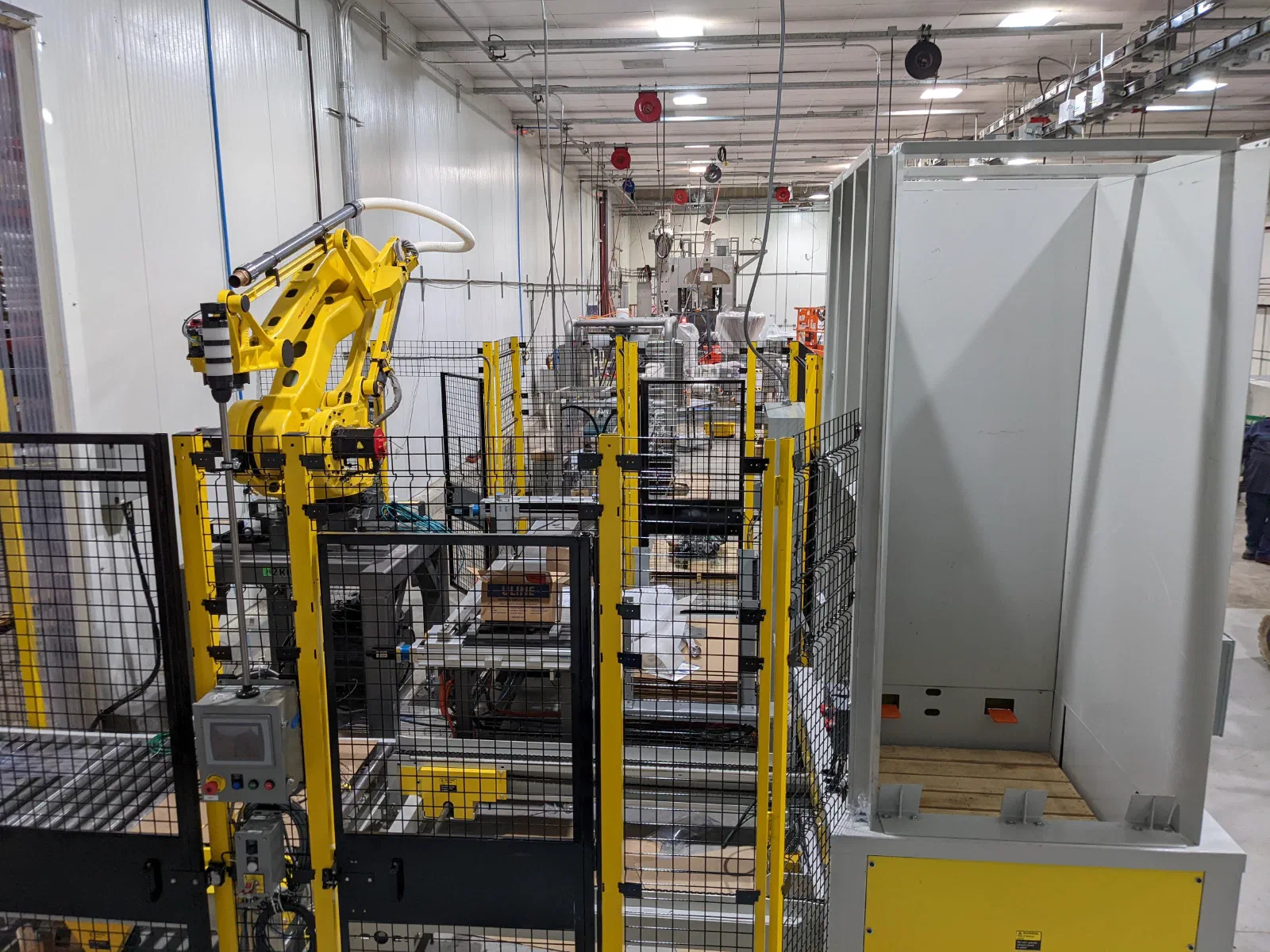
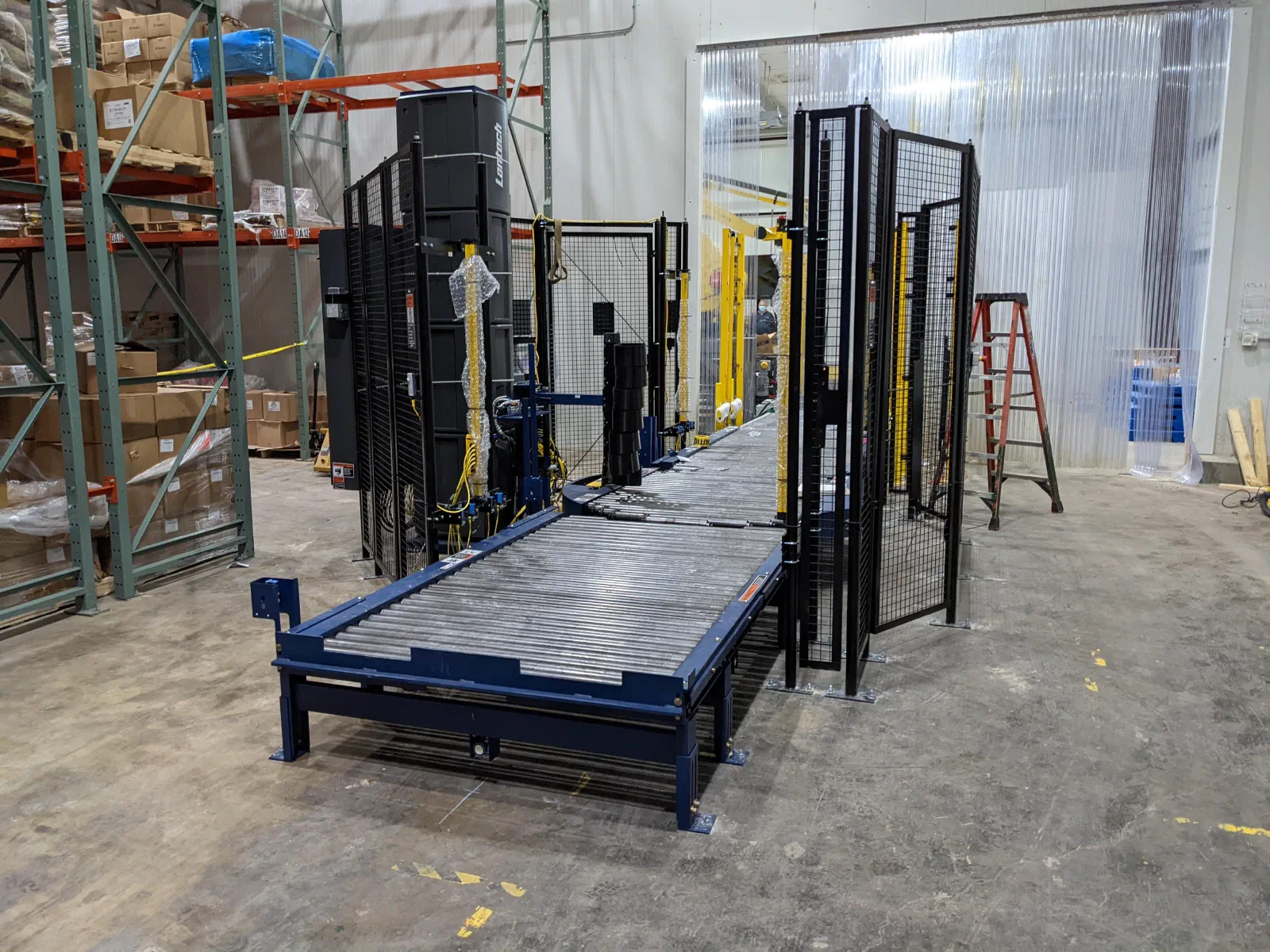
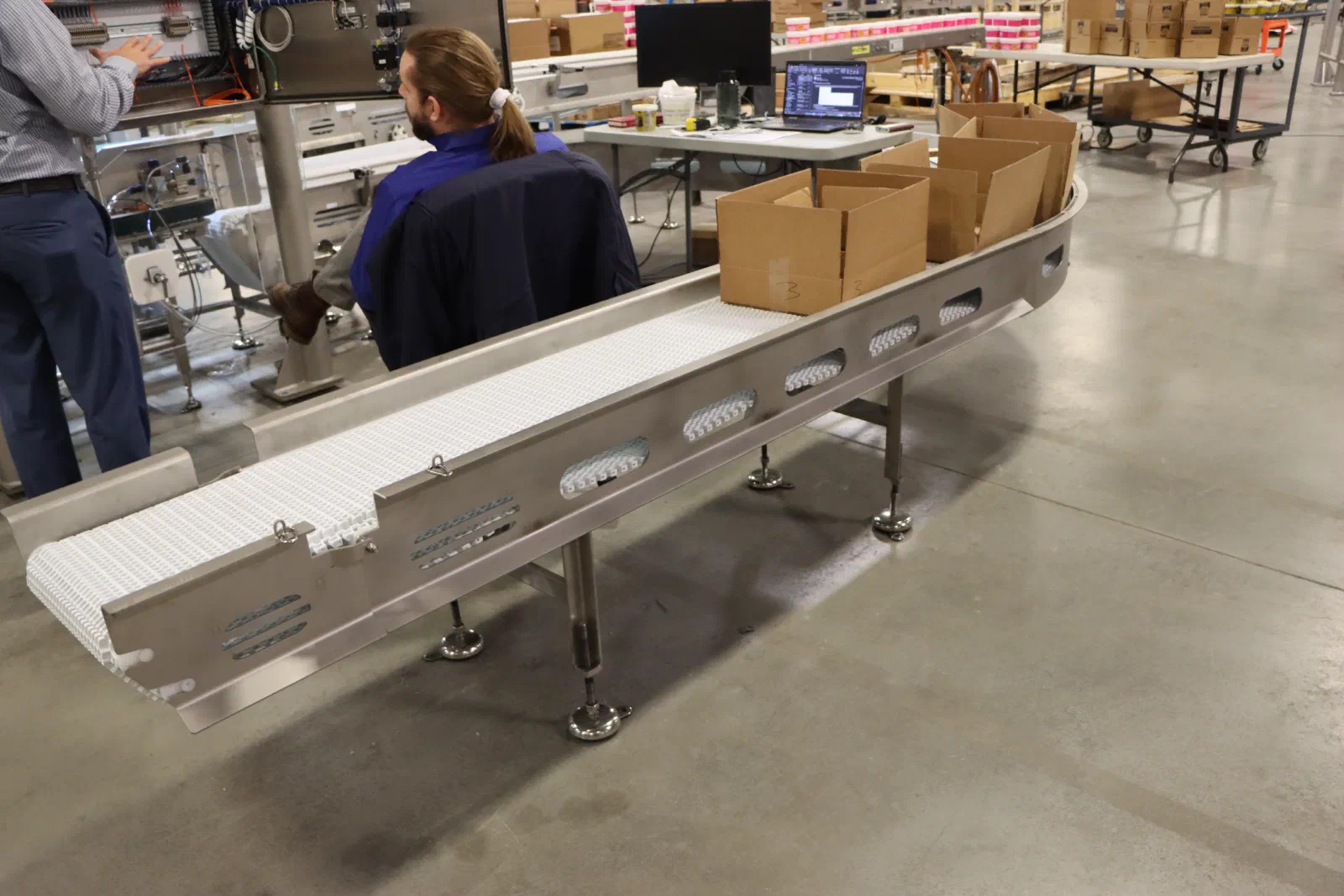
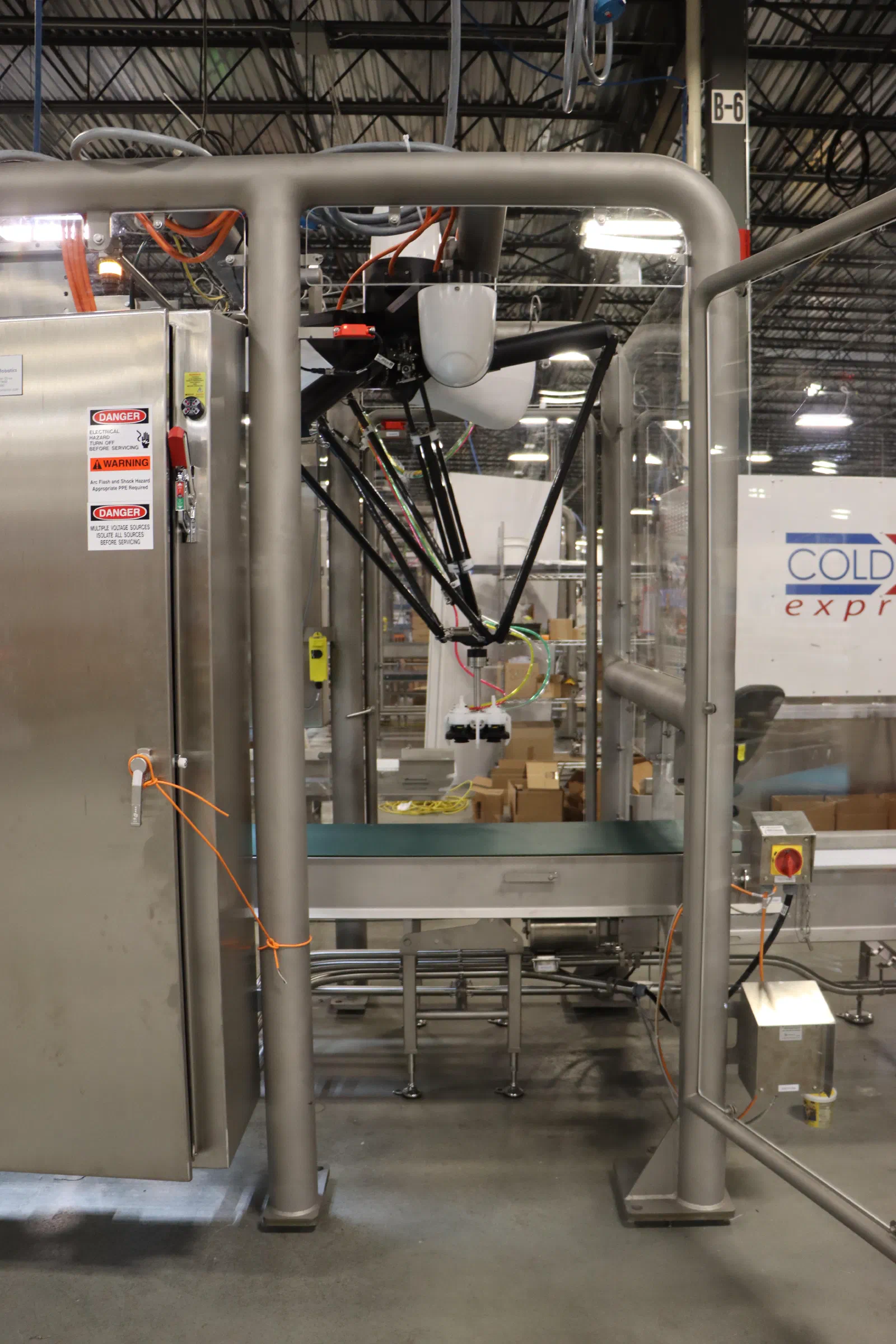
A cookie producer needed a complete secondary packaging line for their dough tubs and cups, not just a robotic pick cell. Sealed tubs come off the customer’s filling line, a vision camera locates them, and a delta robot packs them into cases. Full cases then move through a sealer and into a robotic palletizer, and finished pallets are stretch-wrapped. The case erector, sealer, and palletizer came from outside suppliers, but our scope covered engineering the whole sequence.
As Systems Engineer, I engineered our cell to interface with each piece of outside equipment, absorbed a mid-project supplier change, and stayed involved in installing equipment we didn’t build.
Everything that wasn’t ours
Partway through the project, the case erector changed from an inline model to a right-angle one to hit the customer’s rate. That sounds like a purchasing decision, but it meant re-checking that the new machine fit the committed layout and re-establishing scope and pricing with a new supplier. During the palletizer install, a third-party crew drilled the anchors at an angle. Because we had someone on site, we caught it in time to recommend re-pouring the pad before the equipment was set. The palletizer’s infeed conveyor supplier had also only provided plan-view drawings, so the conveyor’s incline wasn’t obvious until installation.
Opportunities and struggles
- Supplier changes: Before committing to a swap, verify the new equipment actually fits the space and lock down scope and pricing with the new supplier early.
- Site verification: A doorway dimension that didn’t match the drawings surfaced late and caused real delay. I now push for site photos early instead of trusting drawings alone.
- Tooling: Dough cups swung on the vacuum cups under acceleration, and we didn’t catch it until production-speed testing. Testing tooling under real motion profiles early would have found it sooner.
- Third-party installs: Understanding how an outside installer works before their crew arrives matters. Being on site is the only reason the anchor problem was caught cheaply.
Specific skills
- 2D machine layout drafting in DraftSight (AutoCAD)
- requirements capture and scope definition
- robotic cell configuration and layout design
- third-party subsystem interface engineering
- ancillary equipment integration (case erecting, sealing, palletizing)
- cross-discipline coordination
- commissioning and factory acceptance testing
- sanitary and washdown design requirements in food production