Corn Conveyance and Distribution System
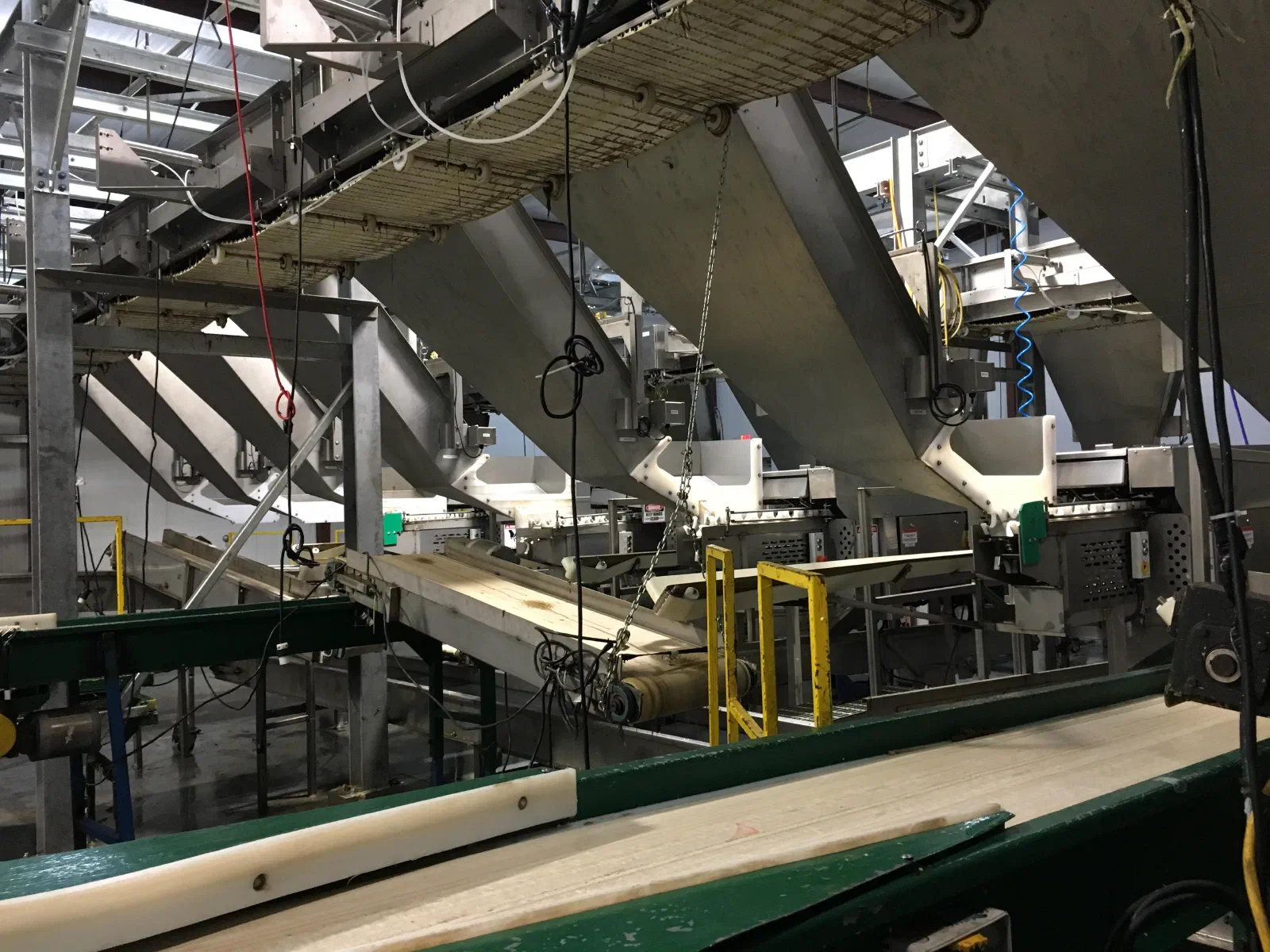
An overhead conveyor loop that carries corn over a full plant floor and drops it to sixteen stations below.
- Employer
- CHL Systems
- Role
- Lead Engineer
- Industry
- Agriculture
- Period
- 2018 to 2019
- Scale
- Six conveyors, 16 drop chutes, roughly 37 ft by 20 ft footprint, belts at 116 in top-of-belt
Up and over
An agricultural processor needed corn moved from a single supply point out to a row of stations, but their plant floor was already full. The only way to get there was overhead. I was the lead engineer on the system, and I started with a site visit to capture the existing steel, clear heights, columns, and maintenance routes before committing to a layout.
A loop instead of a line
The system uses six conveyors: two supply conveyors, an infeed, two distribution conveyors, and a recirculation conveyor that closes everything into a loop. Corn that no station takes keeps cycling until there is demand for it somewhere on the line, so the supply side doesn’t have to predict exactly what each station will need. Every belt runs at the same speed, which kept balancing between stations a matter of where the diverts sit and when they fire. I designed the conveyors, diverts, and chutes, including sixteen sanitary stainless drop chutes that bring product down about seven feet to the stations below.
Holding it up
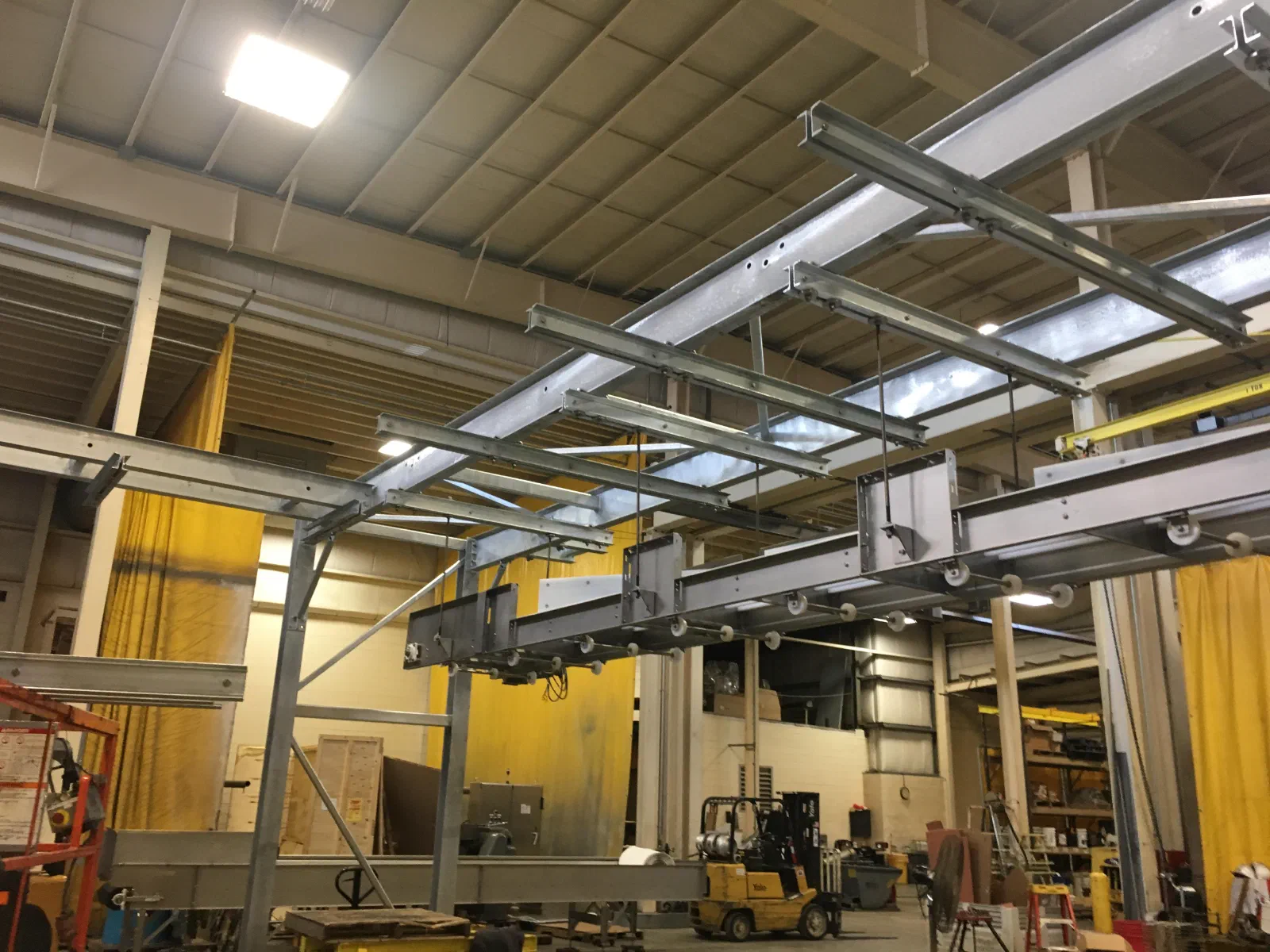
I designed the overhead support steel and worked with our professional engineer to validate it against the expected loads. We built and trial fit the structure in our shop with the conveyor frame hung from it, so the hanger geometry was proven before anyone was working off a lift at the customer’s site. I then went out to the plant to help install and troubleshoot the system.
Opportunities and struggles
Once the system was running, corn husks, which are slightly sticky, began collecting at the tail of a declining conveyor where nothing carried them away. Over time they built up enough to badly stretch the belt. I fixed it two ways. A scraper inside the conveyor frame removes husks before they build up, and an over-center tensioner mounted below the tail roller lets operators release tension and clean out whatever still collects. I learned that a real production system needs both a fix for the problem and easy access for dealing with whatever the fix misses.
Specific skills
- SolidWorks
- collaboration with in-house machine and weld shops
- lead engineer on a full system
- site survey and constraint capture
- overhead conveyor system layout
- modular belt selection
- divert and chute design
- recirculating conveyance loop design
- structural steel design
- coordination with a professional engineer for load validation
- factory acceptance testing
- field installation and troubleshooting