Drill to Vacuum Conversion
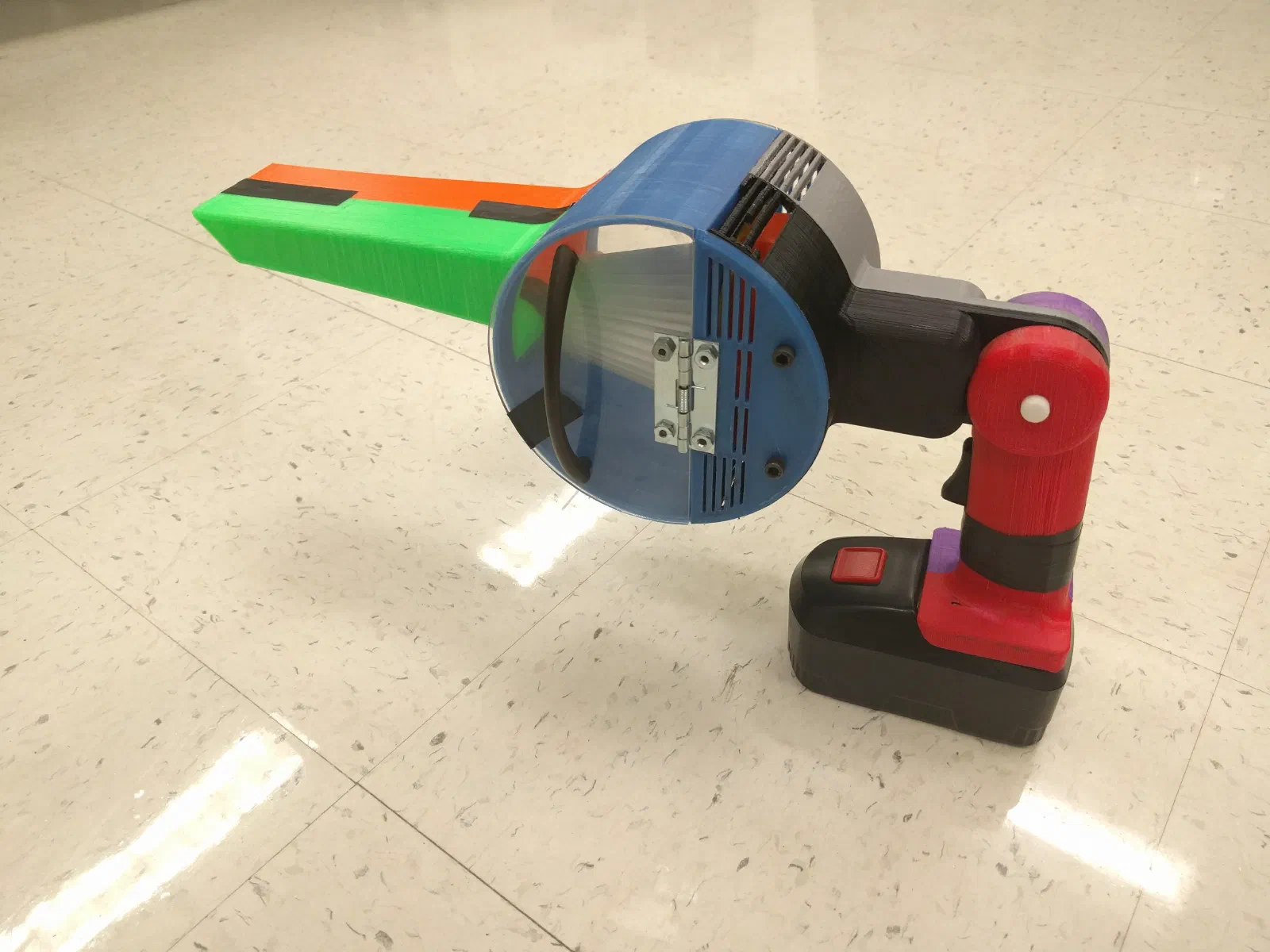
A class project that turned a power drill into a vacuum by designing the whole flow path, and picked up twice as much as the next team.
- Employer
- Penn State
- Role
- Mechanical design, team project
- Industry
- Consumer products
- Period
- 2015
- Scale
- A pound of rice picked up in ten seconds, twice the nearest team
The brief
In my junior year design class, each team had to turn an existing power drill into a vacuum cleaner.
Our approach
Most teams mounted the drill motor into PVC and other off-the-shelf parts. We pulled the motor out of the drill and designed everything else from scratch around it, including the impeller that actually generates the vacuum. Airflow performance depends on the geometry the air moves through, so designing that flow path ourselves meant we were solving the actual problem instead of working around whatever fittings were available.
What I designed
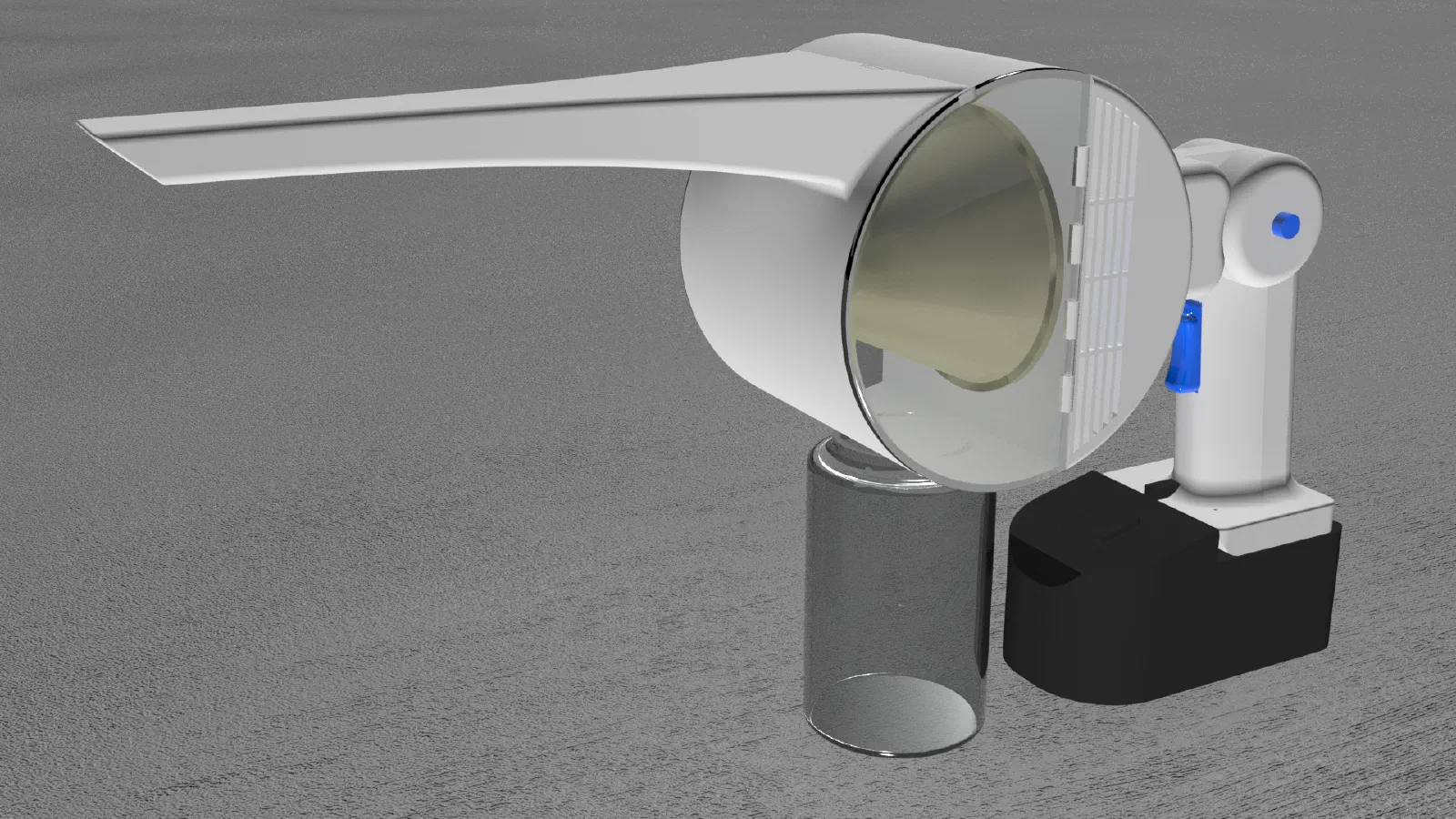
I designed an adjustable handle that moves from a straight configuration to a ninety degree one, so the tool can be held comfortably for different kinds of cleaning. I also replaced the drill’s variable trigger with a detent switch. A drill needs a variable trigger because you’re adjusting speed the whole time, but a vacuum needs full power latched on so your hand is free to move the tool. It’s the same finger in the same spot with the opposite requirement. I also designed the full nozzle section, where the airflow actually meets the mess. Everything was modeled in 3D, printed, and assembled.
The test
The final test was a pound of rice on a table and ten seconds to get as much as possible into a trash bin. Our vacuum picked up the entire pound and got it into the bin in time, even emptying its storage several times during the run. The best of the other teams managed about half the pile.
What I learned
This project showed me the value of designing the part that actually determines performance, even when it’s more work than assembling something from existing parts. It also taught me to question controls and features inherited from another product, since what’s right for a drill isn’t always right for a vacuum.
Specific skills
- SolidWorks
- clean-sheet design around a reused component
- impeller and volute design
- adjustable handle mechanism
- human factors in control design
- 3D printed functional prototyping