Dry Mixer Counterbalance Lid
A replacement mixer lid that always wants to close, solving a fall hazard, a dust problem, and loading access at once.
- Employer
- Hart Mechanical
- Role
- Mechanical Design Engineer
- Industry
- Industrial processing
- Period
- 2017
- Scale
- Full-width lid on an industrial dry mixer, with a grated filling hatch and tuned counterweight
Three problems, one cover
A large industrial dry mixer had a flimsy, deteriorating lid that was failing at three jobs at once. With the mixer open, a person could fall in. The old lid let enough hazardous dust escape to leave piles on the facility floor. And material still had to be loaded into the mixer, so any fix that made loading difficult would just end up being left open.
The lid
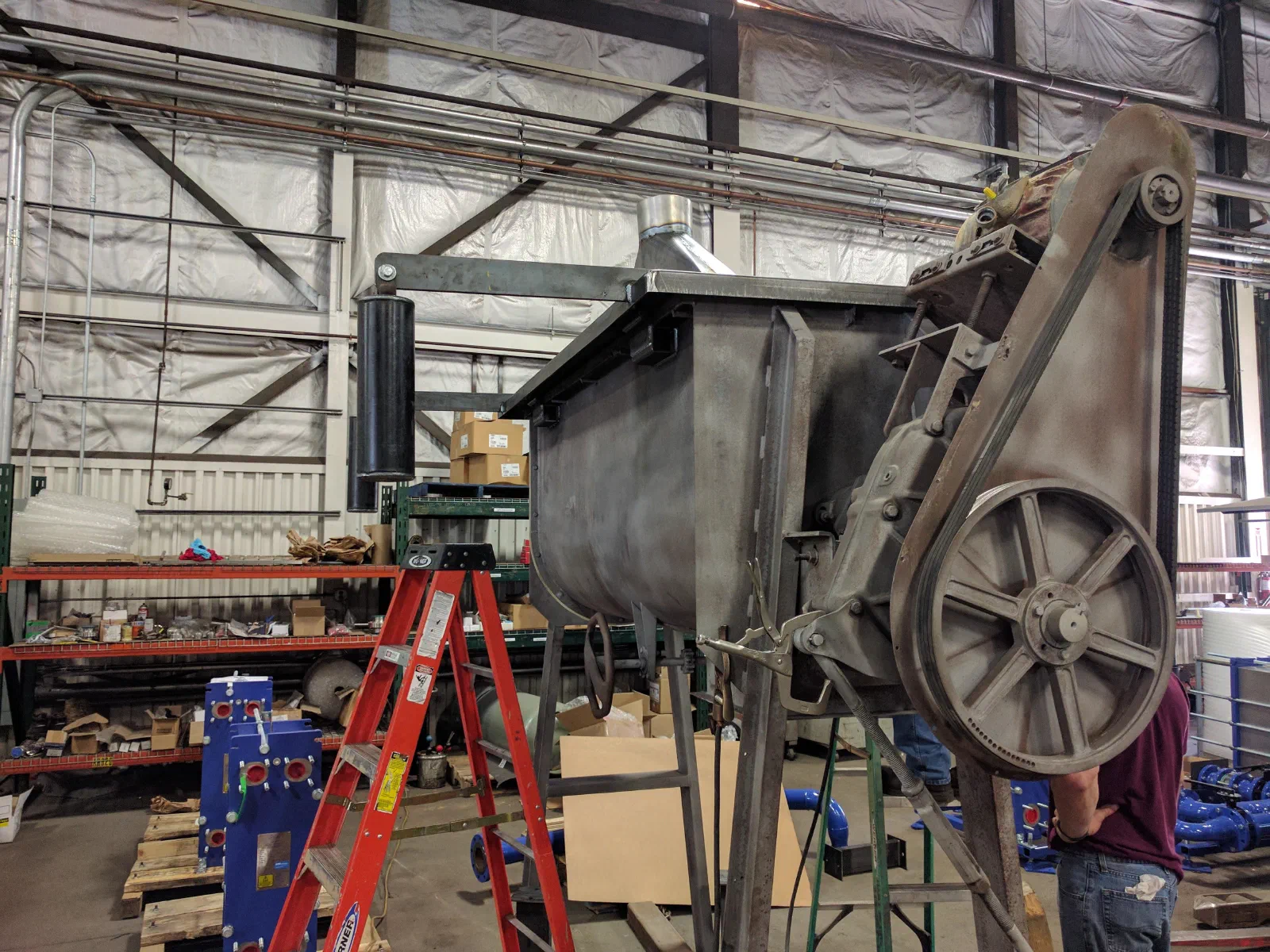
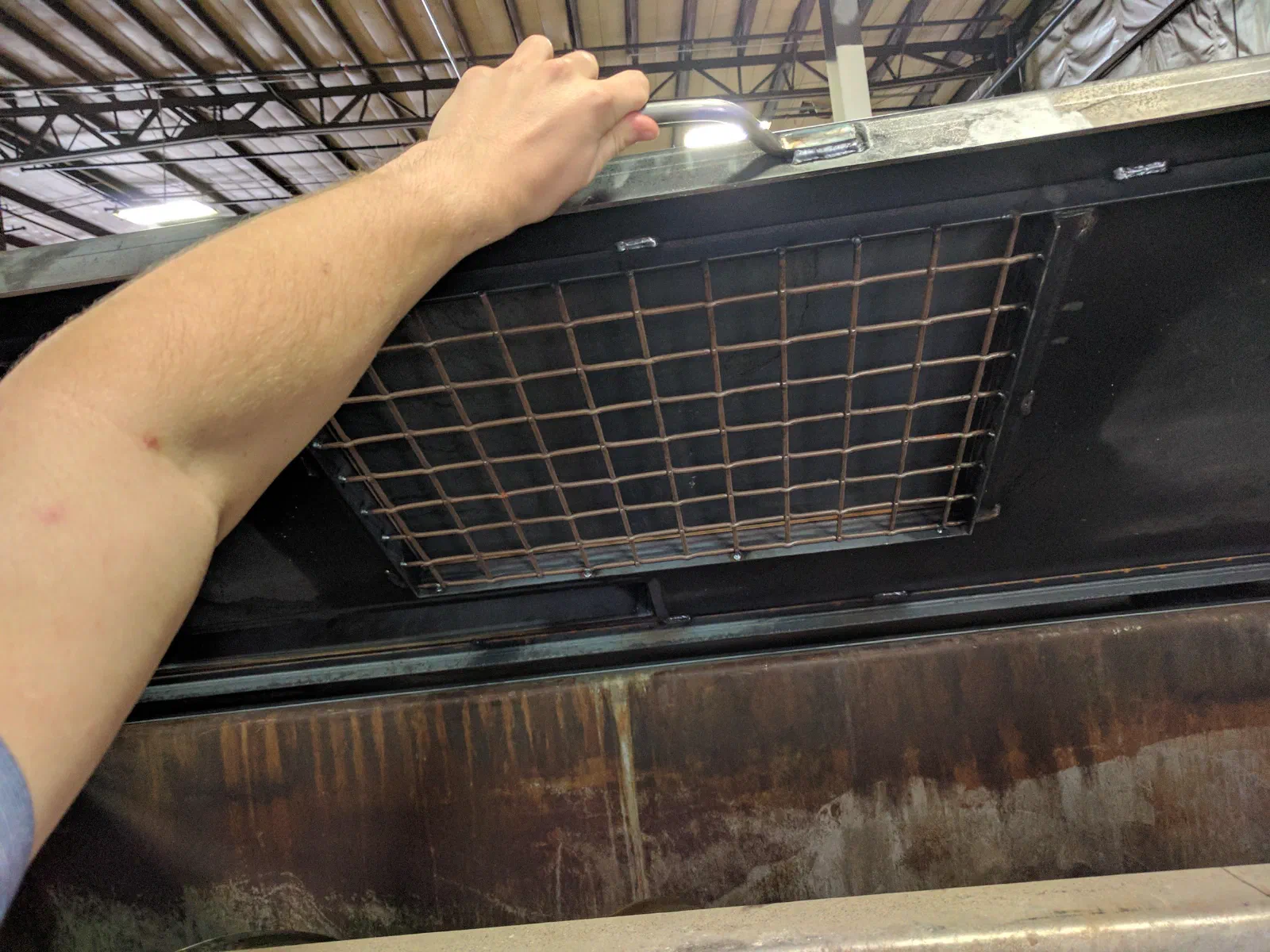
I designed a replacement that handles all three. A grated hatch in the lid lets operators fill the mixer without opening the whole cover and without an opening anyone could fall through. A heavier hinge replaces the one that had been wearing out, and a lever arm with an adjustable counterweight carries the lid’s weight so one person can lift it.
Always wanting to close
The critical requirement was that the lid should always naturally want to close. A lid that stays wherever it’s left will eventually stay open, and then the fall hazard and dust come right back. The tricky part was the balance. The counterweight had to take enough weight that the lid was easy to lift, while still leaving a closing tendency through the whole swing, even as the moment arms of the lid and counterweight changed with the angle.
Tuning it with sand
The counterweights are pipes, welded shut at one end, threaded at the other, and filled with sand. Adding or removing sand changes the weight, so the balance could be set on the actual machine instead of calculated once and hoped for. The target was a narrow band: heavy enough to close on its own, but light enough not to slam and create a pinch hazard. It looks like a crude solution, but it made the balance adjustable by hand on site with no machining or new parts.
What I learned
This project taught me to design mechanisms whose safe state is their natural state, so safety doesn’t depend on someone remembering a procedure at the end of a shift.
Specific skills
- SolidWorks
- counterbalance and lever arm geometry
- designing a gravity-biased safe state
- fall-in hazard mitigation
- dust containment
- field-adjustable mechanism design
- heavy hinge design for a deteriorating retrofit
- collaboration with in-house machine and weld shops