Aquaponic Farm Filter and Solar Charger, Eswatini
New solids-separating filters for a small aquaponic farm's systems, built from hardware store parts, plus a more efficient solar charging setup.
- Employer
- Personal
- Role
- Volunteer, design and installation
- Industry
- Small-scale agriculture
- Period
- 2017
- Scale
- Solids filters for the farm's aquaponic systems and an upgraded off-grid solar charging system, built from locally available parts
Where this was
In January 2017, right after graduating from Penn State and before starting my first engineering job, my sister and I spent a couple of weeks on a small nonprofit farm in eastern Eswatini, then Swaziland. A young American couple ran the farm, which was in its second year and had grown to five full-time local employees. Alongside field crops, it grew basil and lettuce in aquaponic systems, and the produce was sold to fund the farm or given to the surrounding community. The couple described the whole farm as one big science and design experiment, and they asked me to help with two problems.
Solids reaching the aeration tanks
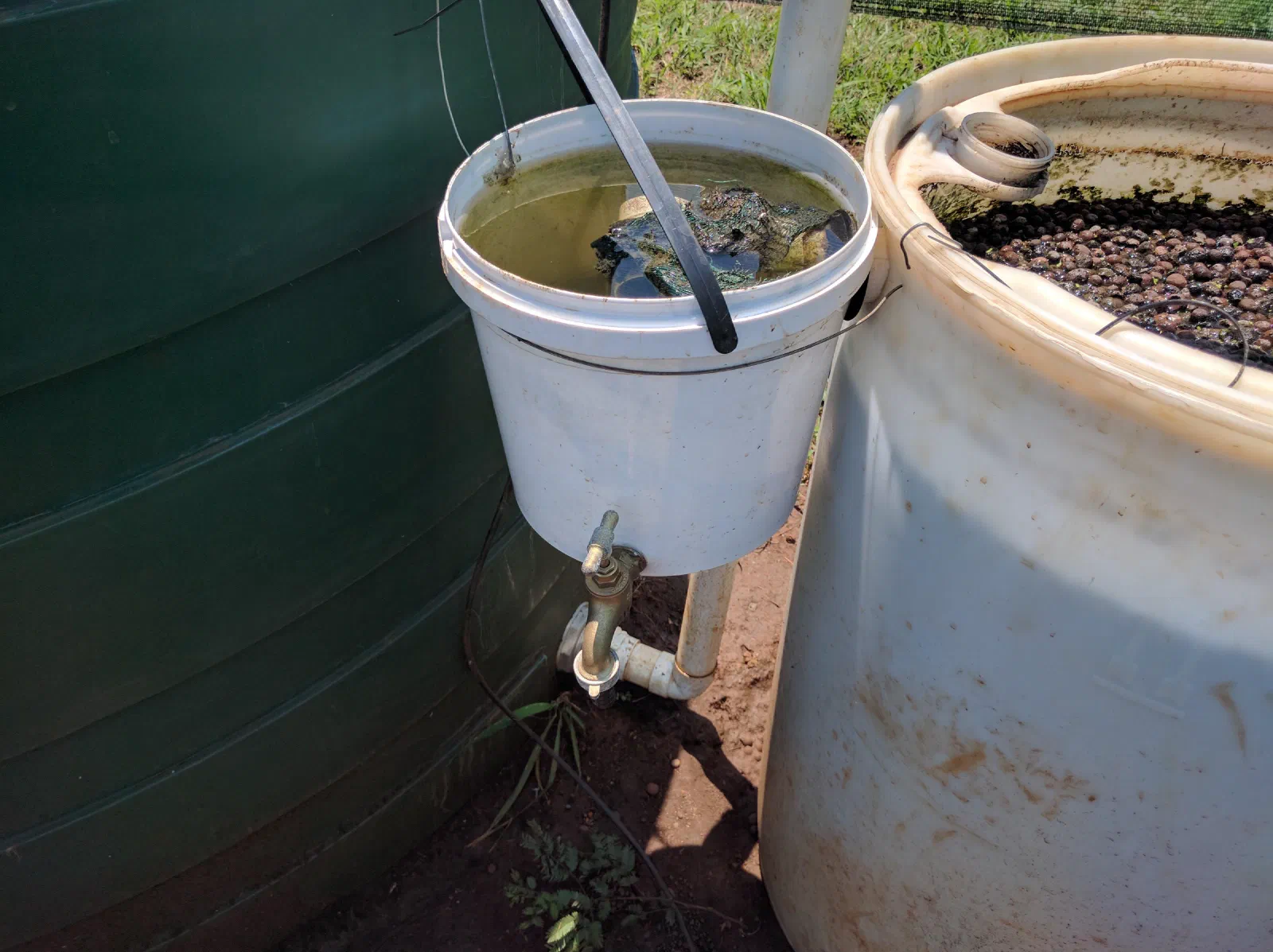
The aquaponic systems run fish tanks and growing beds together. Water leaving the fish tanks carried solids that weren’t being removed before reaching the aeration tanks, and those tanks would clog. Recovering meant draining the whole system, cleaning the volcanic stone media, and putting it all back together. That took a lot of manual labor and, more importantly, a lot of water, which was one of the farm’s scarcest resources.
Designing from the hardware store
We worked through some ideas together, then went to the hardware store and came back with a few fittings and a Brillo pad. That was the whole bill of materials. There was no option to order a part and wait, so the design had to come from what was on the shelf that day, in a form the farm staff could rebuild after I left. We then built and installed new solids-separating filters on the aquaponic systems. They were easier to maintain and ran longer between cleanings, which meant fewer full drain-downs and less water spent on recovery.
Getting more from the solar system
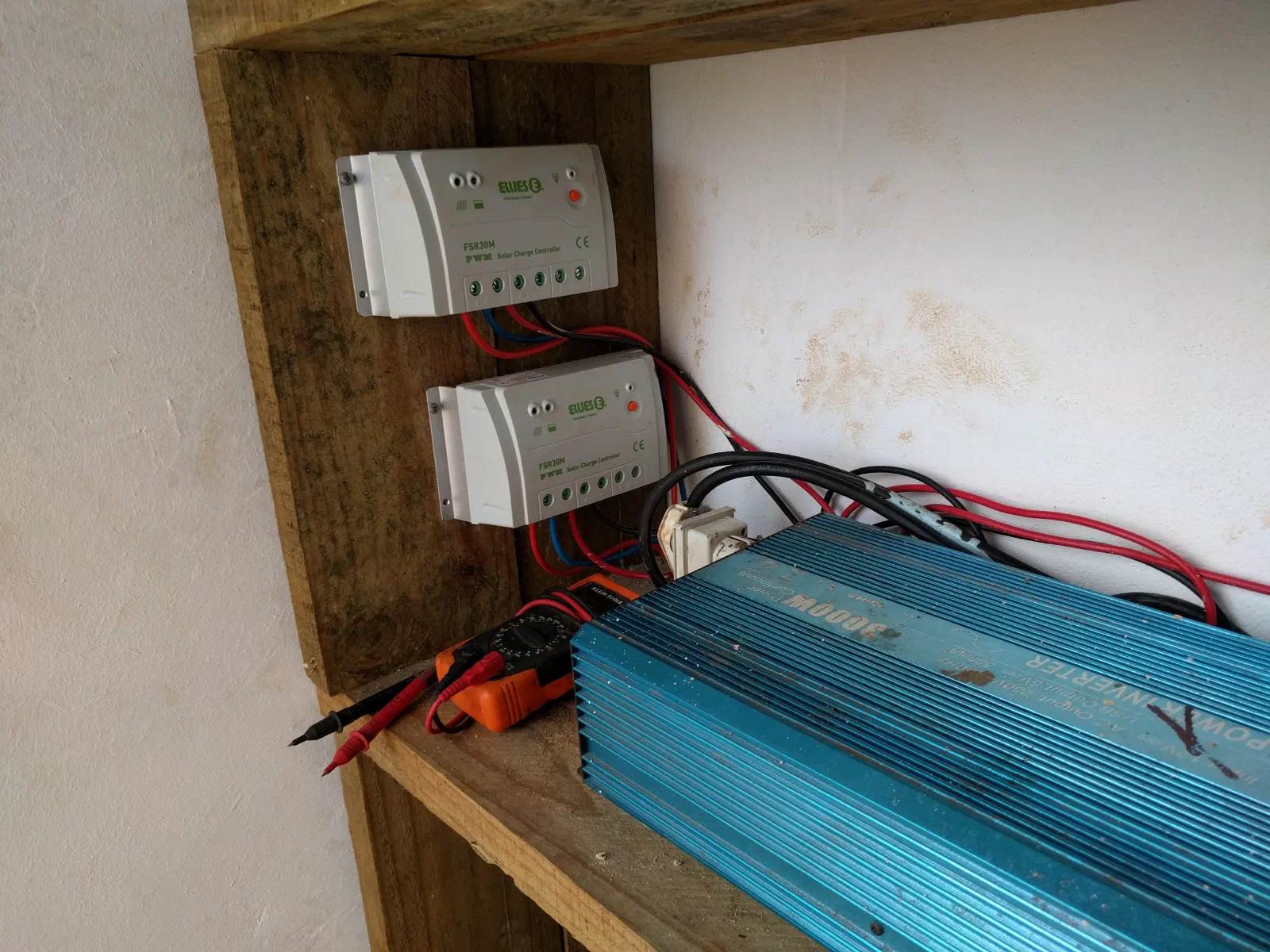
The farm’s first solar system was overcurrenting its batteries, which shortens the life of the most expensive part of an off-grid setup. The owner selected a smart charging system, and I helped install and wire it so the system ran more efficiently.
What I learned
This project taught me to start from the real problem and treat the available materials as the constraint, not the other way around. It also reminded me that the right measure of success depends on the setting. Here it was water and labor saved, not flow rate or filtration efficiency.
Specific skills
- solving a problem with locally available materials
- filtration and solids separation
- designing for maintenance interval
- water conservation
- working directly with the operator
- solar charge controller installation and wiring