Fat Percentage Blending System
A ground beef line that recirculates fat-rich trim and blends two streams to run just under the regulated fat limit.
- Employer
- CHL Systems
- Role
- Design Engineer
- Industry
- Raw meat
- Period
- 2019 to 2020
- Scale
- Accumulators of 6,000 lb and 3,000 lb, dual 16 in screws, four layout drawings
Running just under the limit
This system sits at the trimmings end of a beef processing line, where trim from every other cut is ground into product. Ground beef has a regulated maximum fat percentage, but fat is the cheap part and lean is the expensive part. Every point of fat below the limit is money spent unnecessarily, so the goal is to run just under the limit without ever going over.
The loop
The customer supplied an X-ray analyzer, and our only interface to it was a single signal that switches a pneumatic divert. Keeping that interface simple made it easier to commission and troubleshoot, and it won’t be made obsolete if they change instruments. When the analyzer flags product as too fat-rich, the divert sends it into a recirculation path instead of forward as finished product. The system then holds two streams, one fat-rich and one leaner, each in its own accumulator with an adjustable-speed auger. Running them at chosen rates blends the two to the target. Nothing is rejected, and the out-of-spec product becomes the way the system adjusts.
Sizing the accumulators
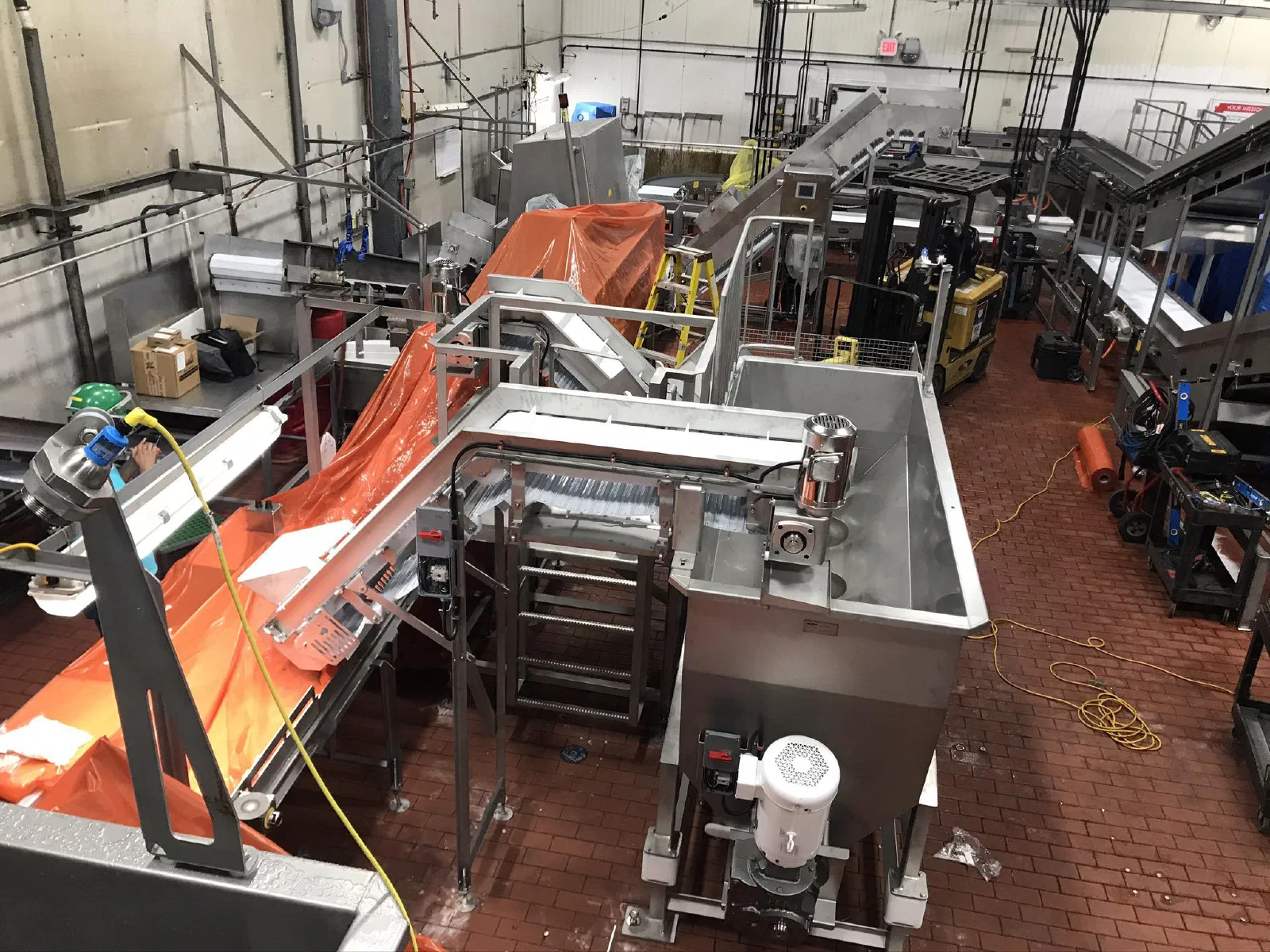
The 6,000 lb accumulator needed about 109 cubic feet of product, based on a bulk density of 55 lb per cubic foot, but the bin is built at 173.4 cubic feet. Raw meat heaps at around a 45 degree angle of repose instead of leveling, so a bin sized only to the product’s volume would hold much less than its rated weight. Dual 16 inch screws, built in opposite hands, discharge the bin evenly across its width instead of drawing down a channel over one screw.
Opportunities and struggles
The biggest challenge wasn’t any single machine but where everything had to go. The facility was completely packed, and nearly every piece had to fit around installed equipment that wasn’t moving, which is why there were four layout drawings. It was also a heavy washdown environment, so tight packing had to be balanced against keeping everything open, drainable, and accessible for cleaning. There was no clever solution; we worked through it piece by piece, and I learned that’s often what a large retrofit really is.
Specific skills
- SolidWorks
- collaboration with in-house machine and weld shops
- process line layout across a large area
- bulk solids handling and accumulator sizing
- angle of repose and bulk density calculation
- screw conveyor design
- recirculation loop design
- integration with third-party analytical equipment
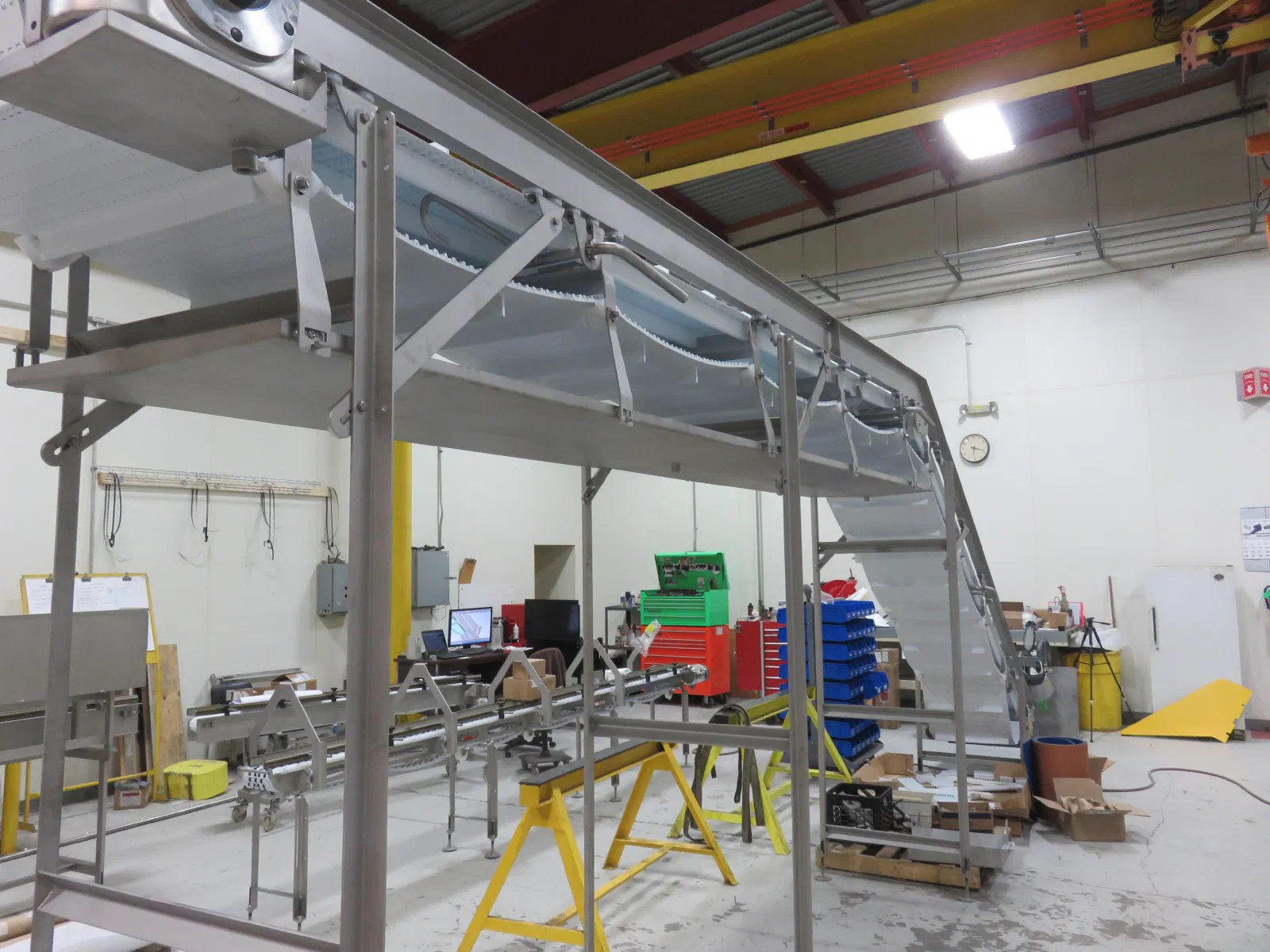
- sanitary stainless conveyor construction