FIRST Robotics Mentorship
Fifteen years mentoring high school robotics teams in engineering, design, and strategy, after four years as a student on one.
- Employer
- FIRST Robotics
- Role
- Engineering, design and strategy mentor
- Industry
- STEM education
- Period
- 2007 to now
- Scale
- Nineteen years in FIRST, fifteen of them mentoring, teams of 10 to 15 middle and high school students
Where it started
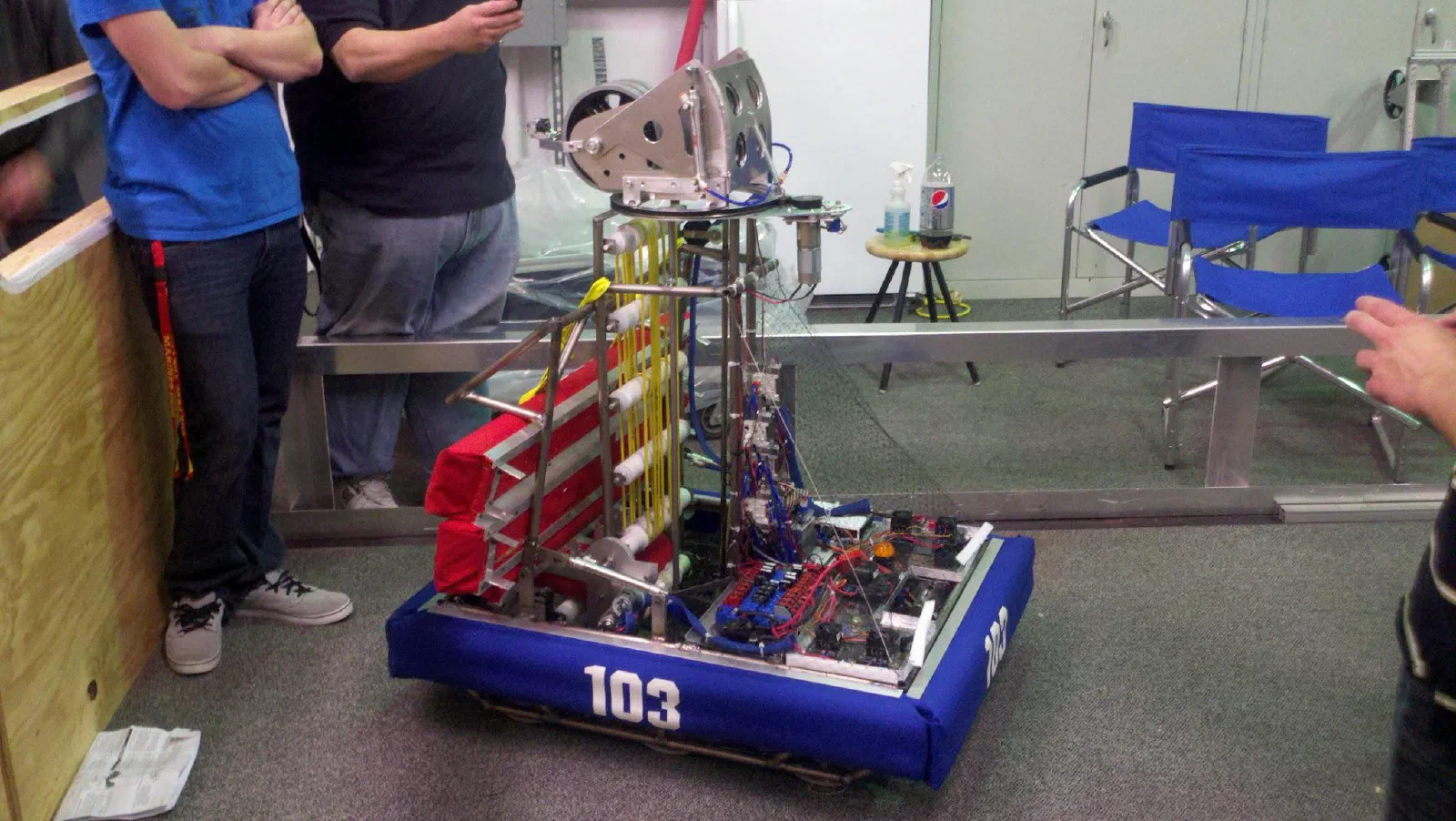
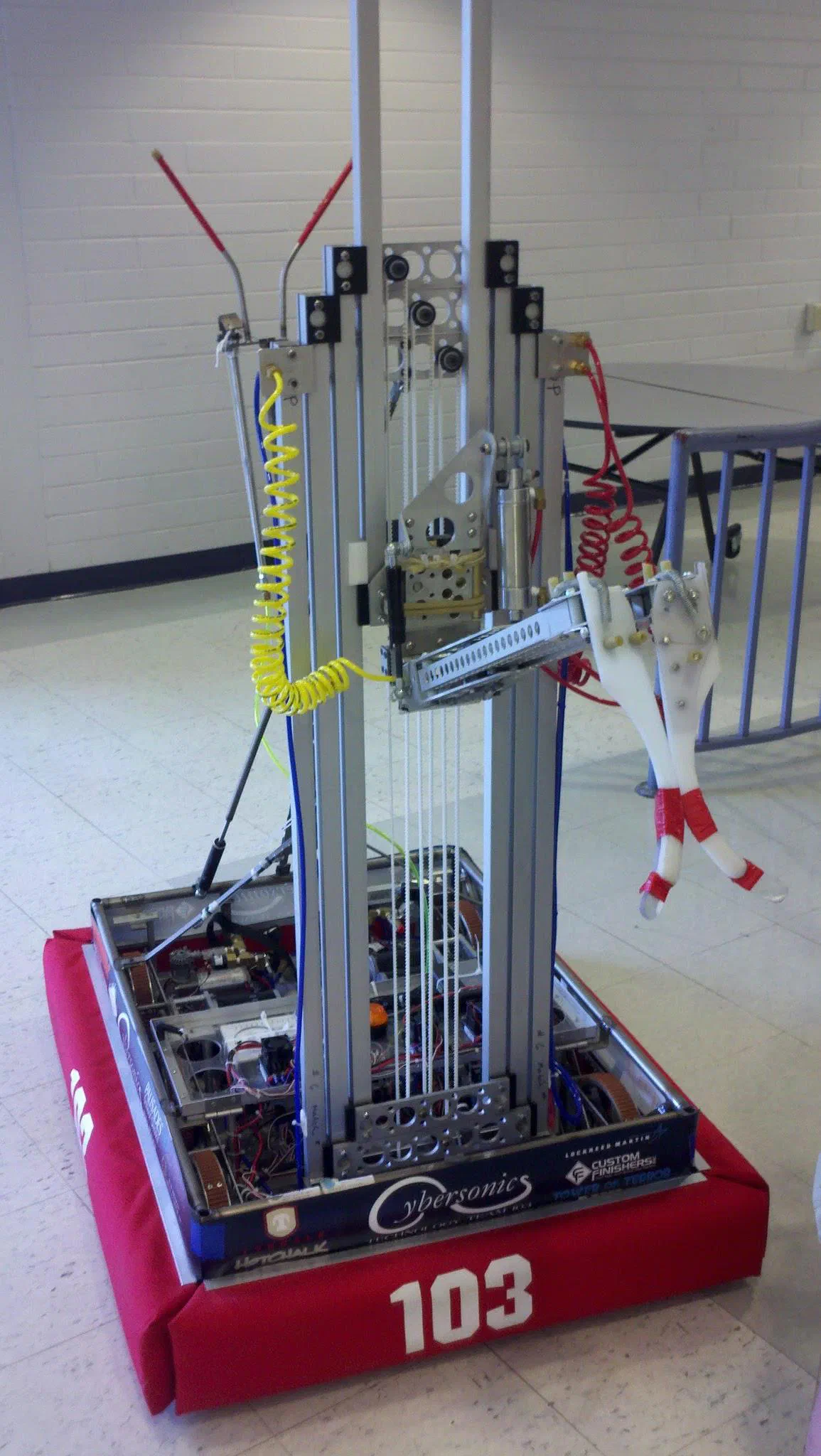
I joined FRC 103, the Cybersonics, as a student in 2007 and have been mentoring since I graduated in 2011. I mentored 103 until 2020 and FRC 272, the Cyber Crusaders, since then, along with two FTC teams. Each team has ten to fifteen middle and high school students. I’ve also volunteered at many robotics events over the years.
What mentoring is
My role is engineering, design, and strategy. The goal is helping students understand what they’re building and why one approach beats another, without building the robot for them. I also review the software team’s code for how the robot should behave, though I leave the programming to them.
Teaching
Over the years I’ve written and delivered eight presentations, covering CAD from introductory to advanced parametric modeling, mechanical design, and manufacturing processes. I teach 2D CAD before 3D so students can test whether a mechanism is feasible before spending days modeling it. I also set up in-house CNC capability with CAM templates, so students could make their own parts.
I use analysis as a teaching tool. When a calculation decides whether a mechanism can lift its load or whether the robot will tip, math stops being homework. With 272, the students also work from a requirements document that separates needs from wants, which is the same conversation I have with customers as a systems engineer.
The record
Our judged awards reflect how the robots were designed and built. Highlights include four General Motors Industrial Design Awards for 272 in five seasons, an Excellence in Engineering Award for 103 in 2019, and a 2026 trip to the FIRST Championship after 272 finished eleventh of 164 teams in the Mid-Atlantic district.
Opportunities and struggles
I would let the students fail more. Over the years I’ve often taken on large parts of the work myself to get a robot finished, which felt like helping at the time. In the long run it took away a lesson they could only learn by experiencing it, that what you get out is proportional to what you put in. My own presentations tell students to fail fast and fail often, and this taught me that knowing a principle and applying it to my own behavior are two different skills.
Specific skills
- teaching CAD and mechanical design to students
- curriculum authorship and delivery
- requirements definition, needs versus wants
- design review with novice engineers
- reviewing code for intended behaviour
- Onshape and SolidWorks instruction
- manufacturing process instruction
- setting up CNC capability and CAM templates
- project scheduling and season planning
- long-term volunteer commitment
- engineering analysis as a teaching method
- competition robot mechanism design
- structural and mechanical analysis
- fixture and shop equipment design