Frozen Block Separator
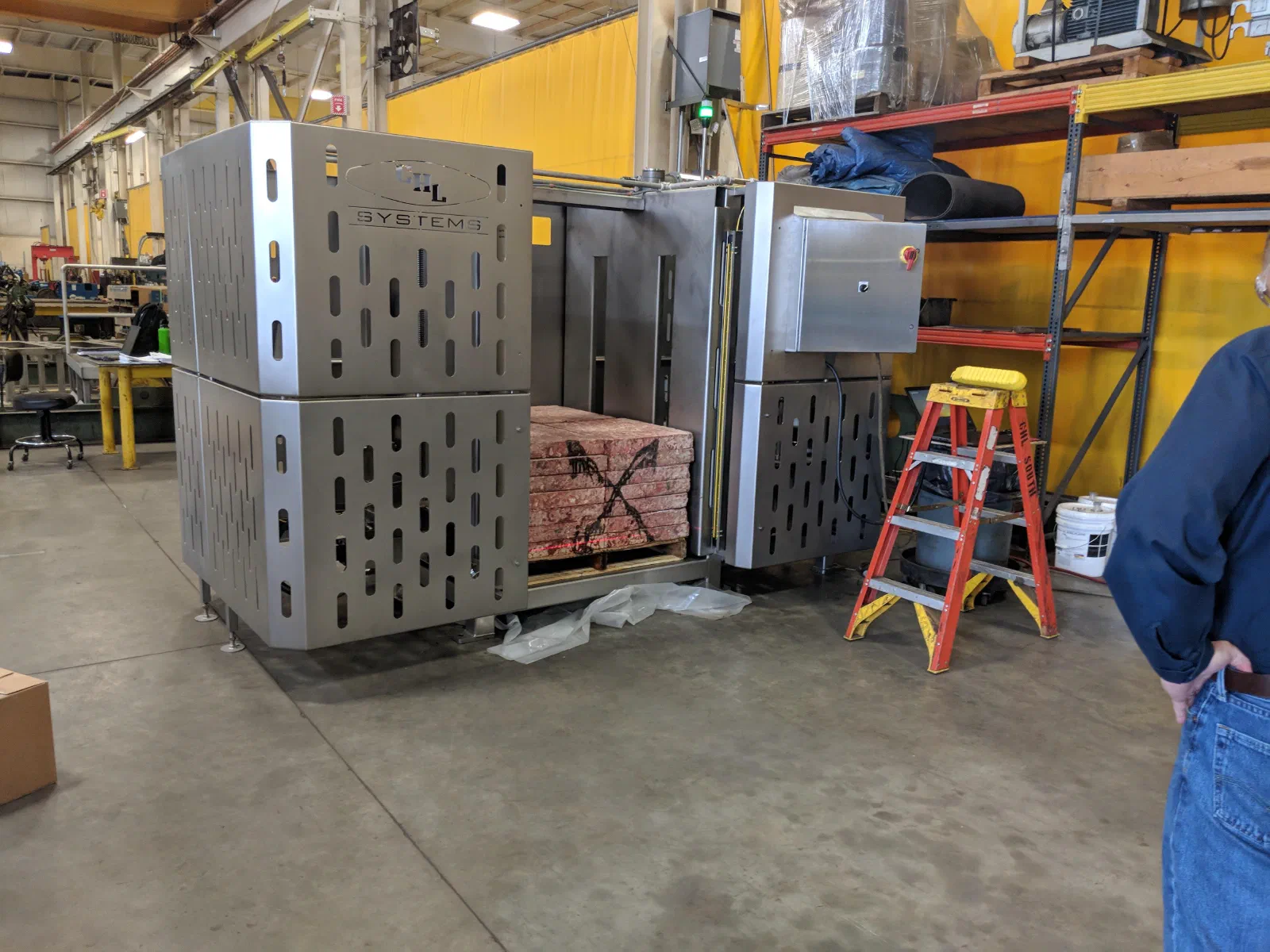
A hydraulic machine that replaced a jackhammer job nobody could keep staffed, and went on to become a standard CHL product.
- Employer
- CHL Systems
- Role
- Design Engineer, originating designer
- Industry
- Pet food
- Period
- 2018 to 2020
- Scale
- 10 hp HPU at 971 psi and 15 gpm, four cylinders, 731 lb carriage
The job nobody wanted
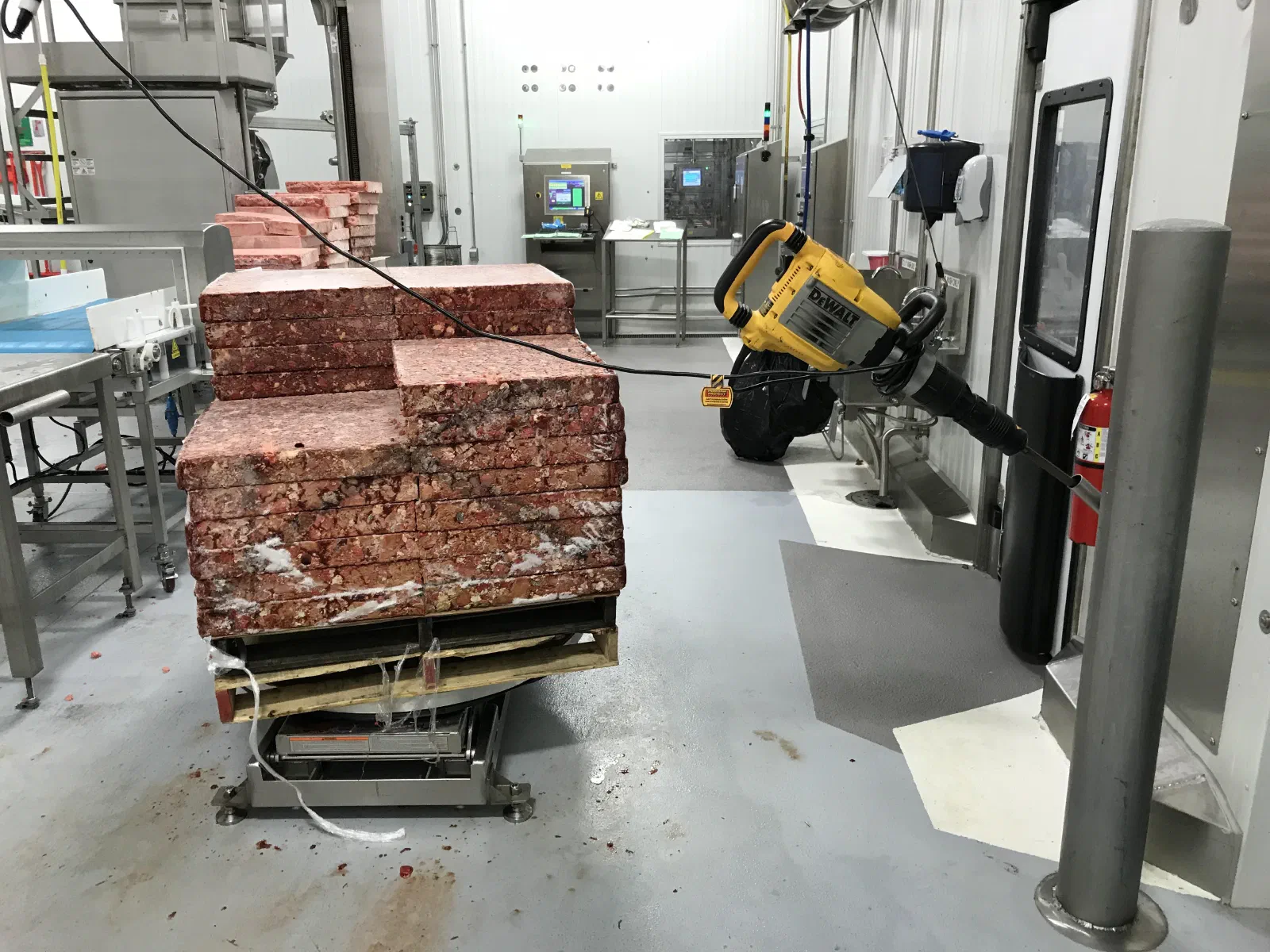
A pet food manufacturer had an operator in a Tyvek suit standing in a cold room for ten hours a day, breaking apart frozen blocks of product with an air-powered jackhammer. The blocks left their supplier separate, but they thawed slightly and refroze together in transit, so every delivery arrived as one solid mass. The work was cold and exhausting, and the plant couldn’t keep the position filled.
The test that decided the design
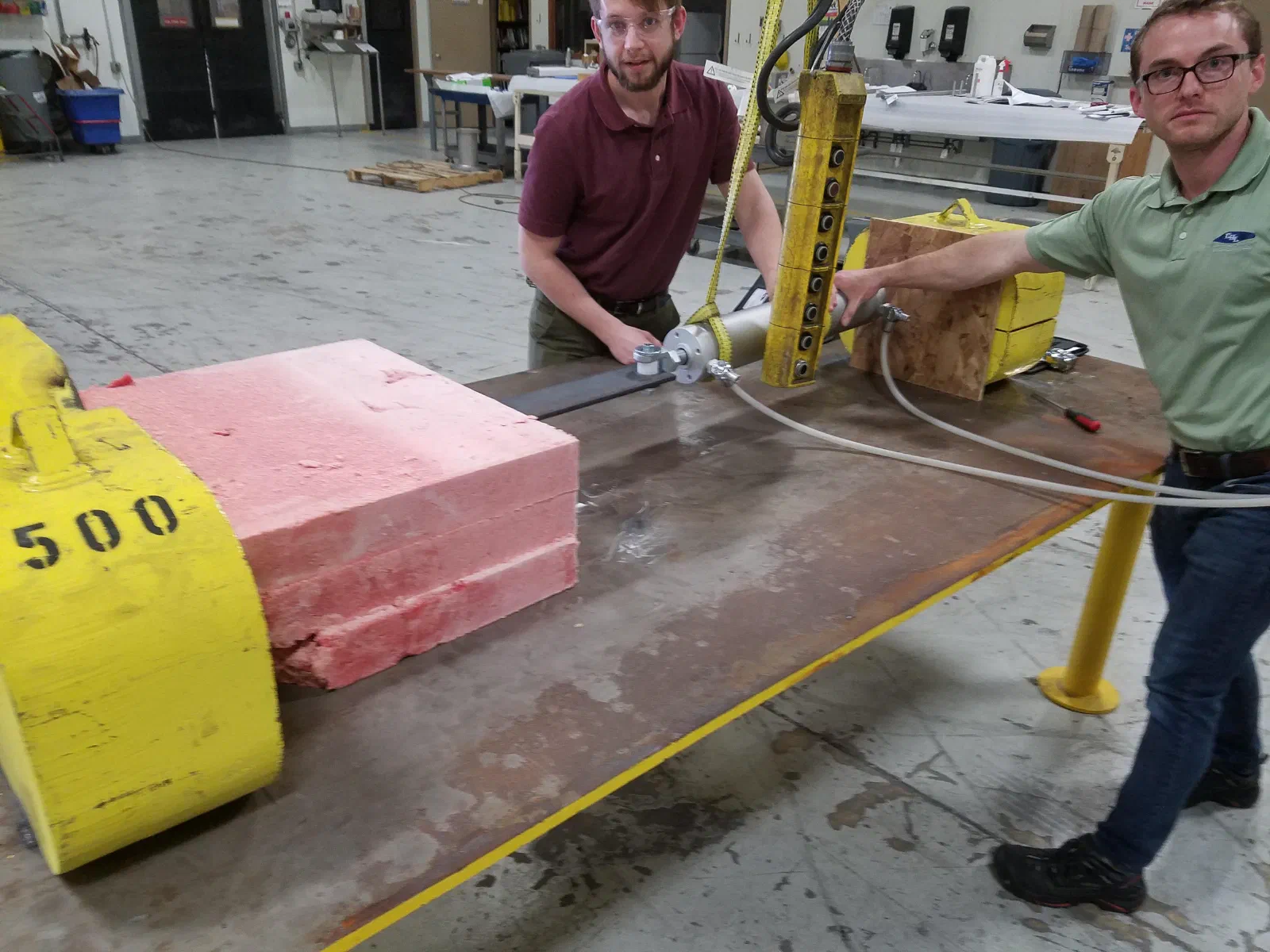
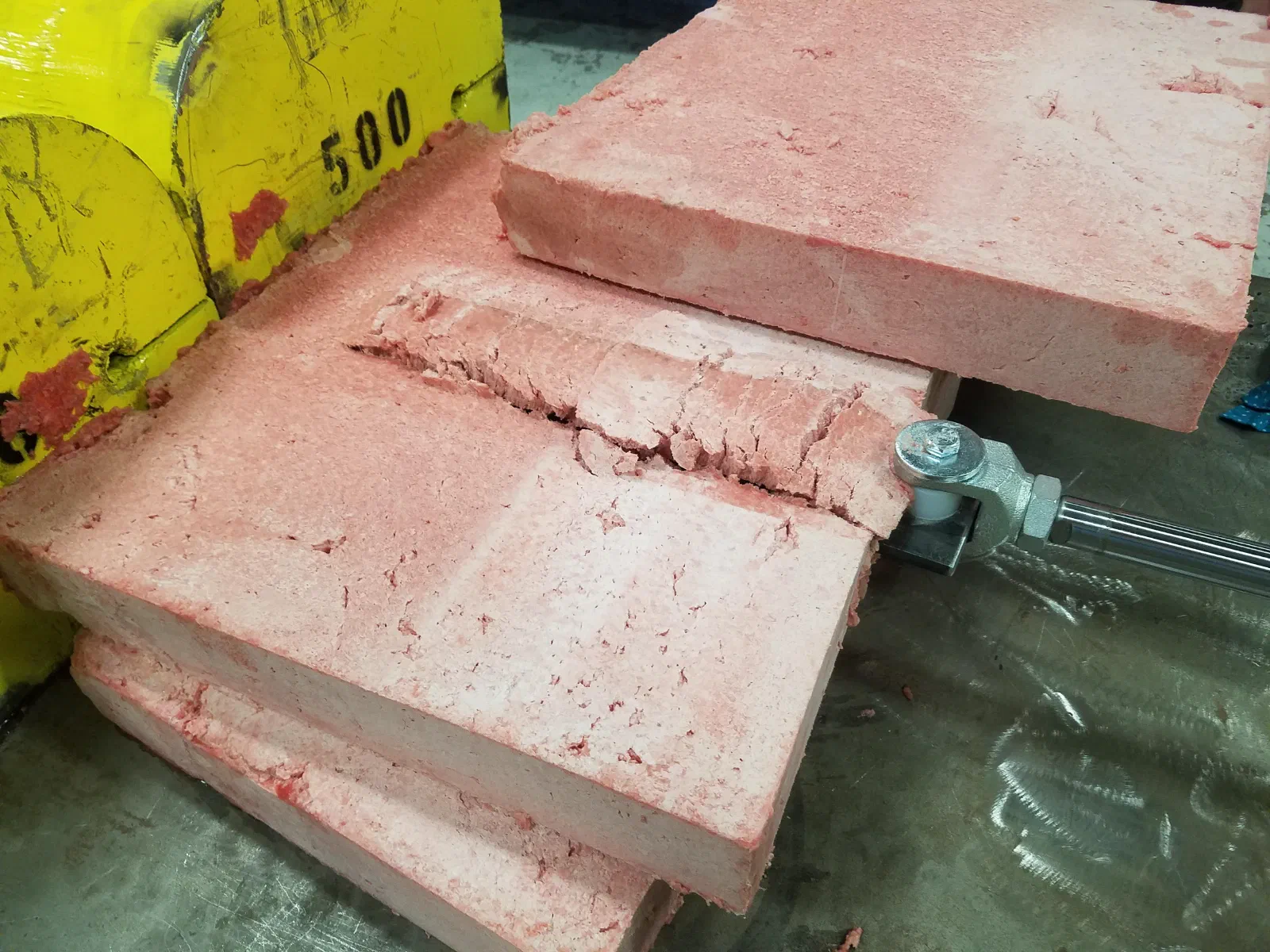
Before sizing anything, we tested what it actually takes to split a frozen block, pushing real product against a 500 lb reaction weight with a cylinder and a gauge in line. Our test rig was pneumatic, and when the block finally split, the whole rig lurched violently. Compressed air stores energy, and all of it releases the moment the resistance disappears. Hydraulic fluid is incompressible, so a hydraulic ram simply stops when the block gives way. That test is what led us to a hydraulic machine.
The machine
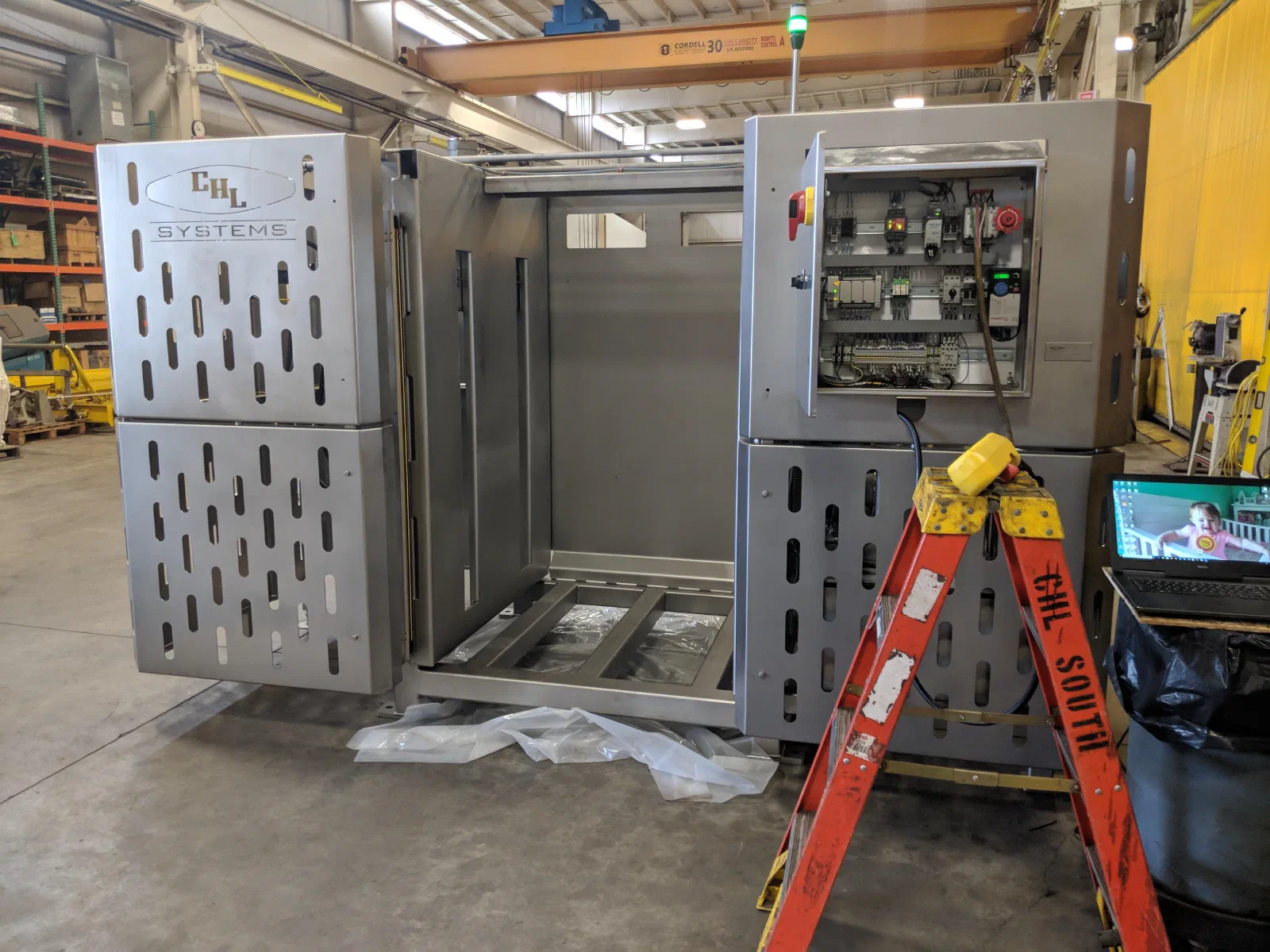
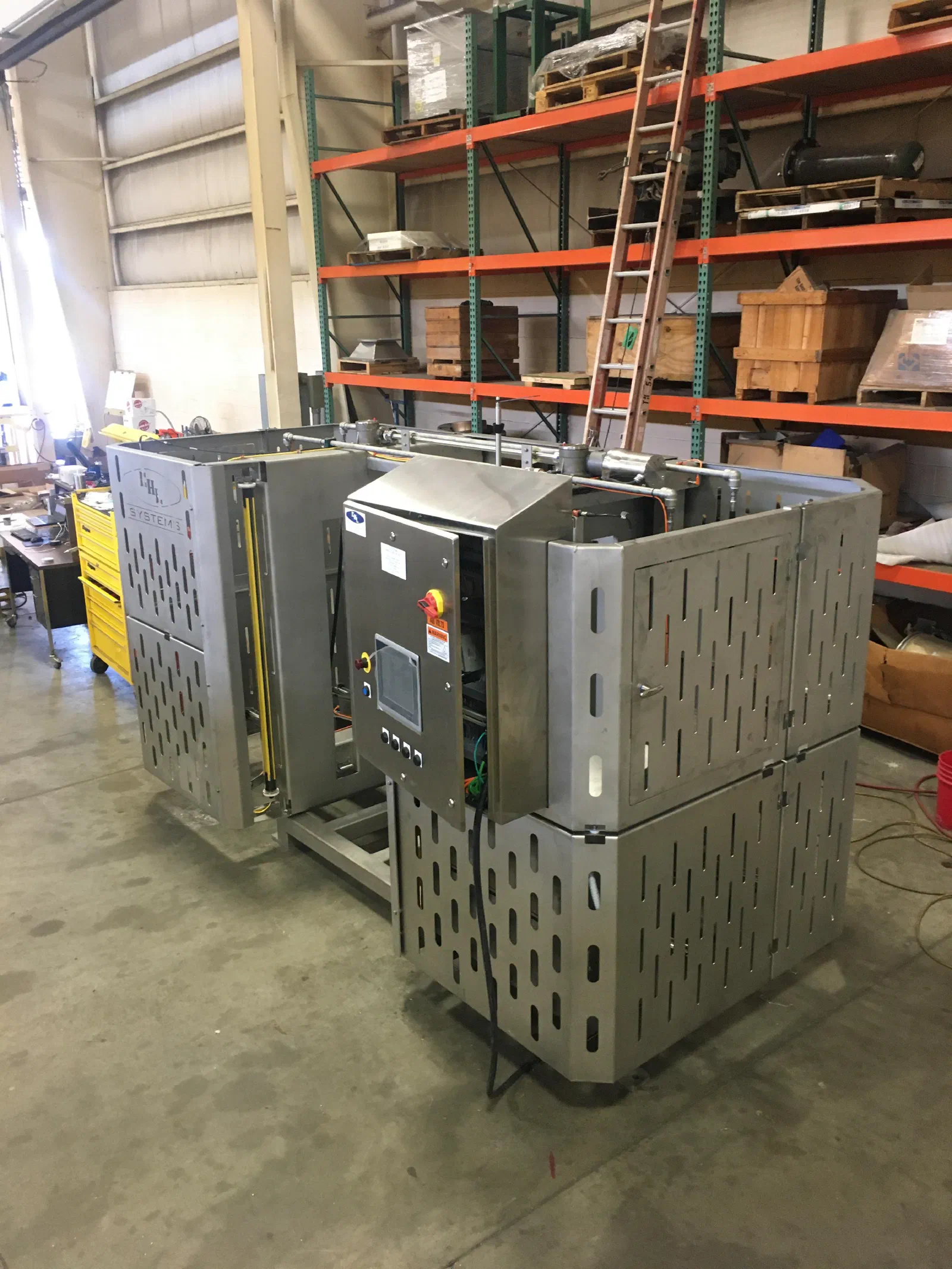
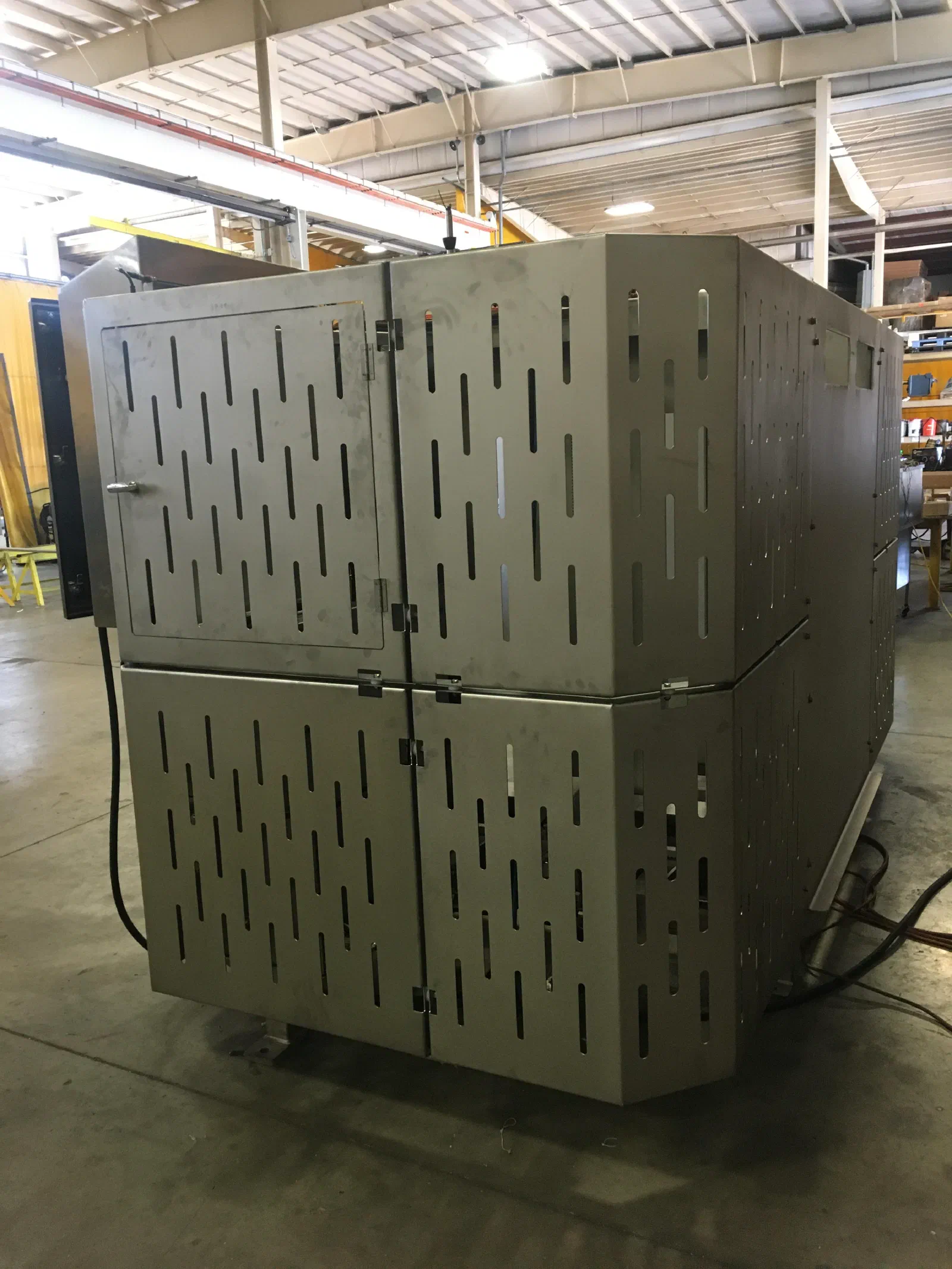
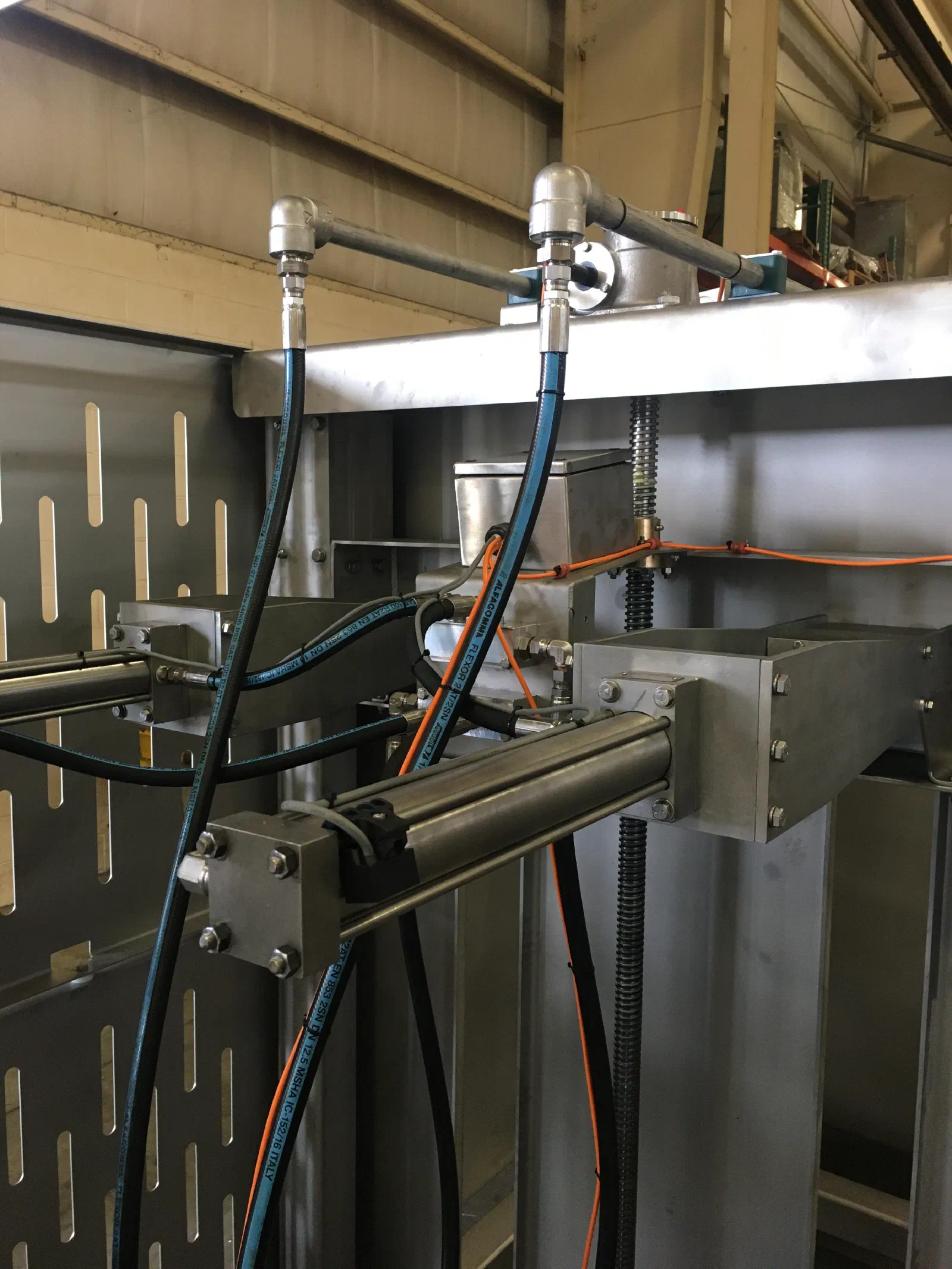
I specified the hydraulic power unit, a 10 hp pump at 971 psi and 15 gpm driving four cylinders against a 731 lb carriage. I compared bore sizes from 3/4 inch to 2 inch, trading force against cycle time, and we went with the 2 inch bore since splitting force mattered more than speed. Jack screws and a servo handle positioning. The machine is stainless and washdown rated with replaceable wear parts, and the guarding is layered with physical guards, a laser safety curtain, and light curtains.
How it developed
We built the first unit for the customer to run in production, and their feedback shaped the second design. CHL went on to offer it as a standard product, and at least four had sold by the time I left.
What I learned
This project taught me to test early and let the results change the plan. It also showed me that the best way to deal with a stored energy hazard is to design it out, rather than guard around it afterward.
Specific skills
- SolidWorks
- collaboration with in-house machine and weld shops
- hydraulic system sizing
- empirical design validation through physical testing
- stored energy hazard analysis
- machine guarding and light curtain integration
- servo and jack screw drive design
- sanitary washdown machine design
- designing a one-off that became a product line