Lunchmeat Bag Case Loading
Two vision-guided robotic cells case-packing thin, flexible lunchmeat pouches, where getting the grip right took a new tooling approach.
- Employer
- JLS Automation
- Role
- Systems Engineer
- Industry
- Cured meat
- Period
- Mar 2023
- Scale
- Two robotic cells running 13 lunchmeat SKUs at up to 70 picks per minute per cell
Picking what the label camera passed
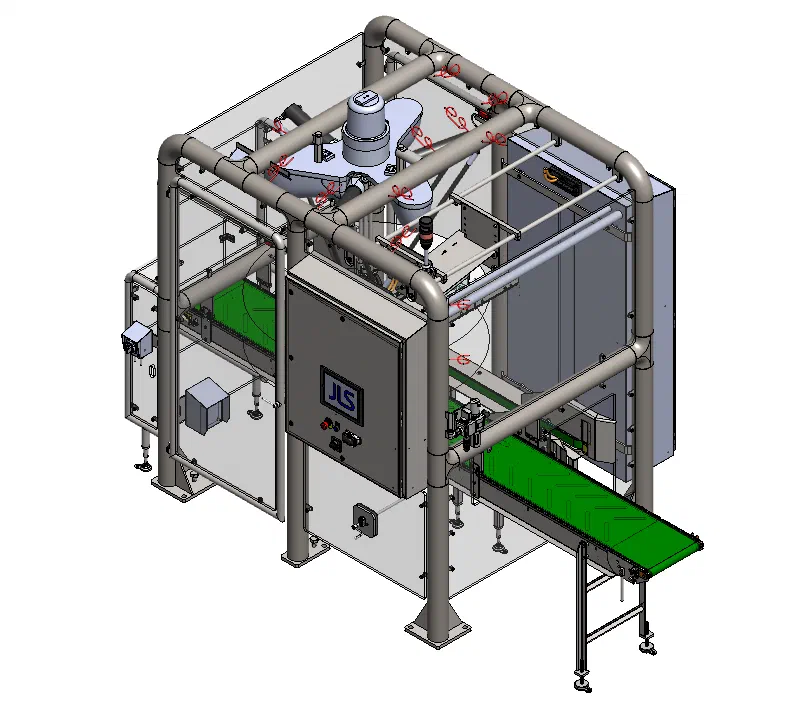
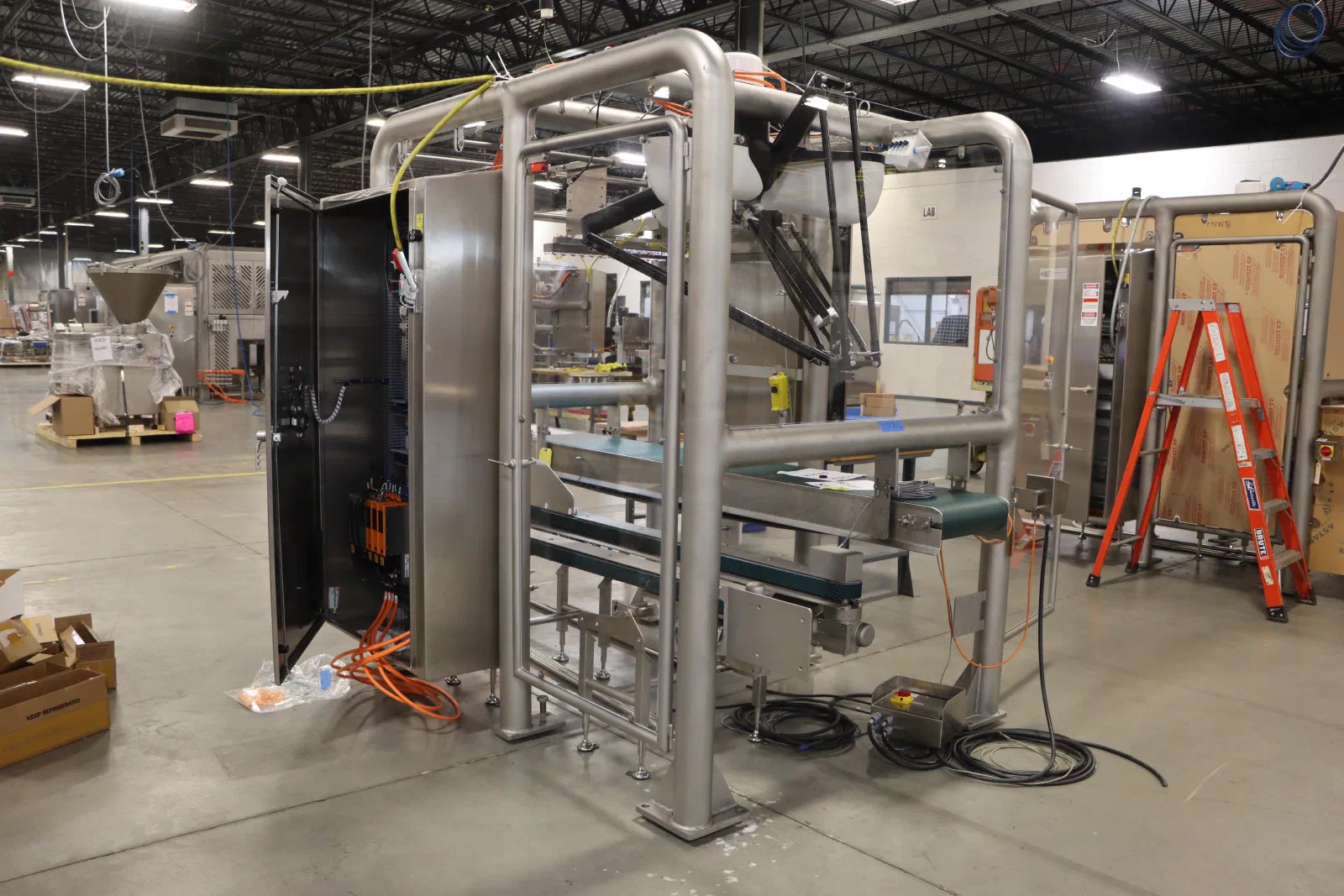
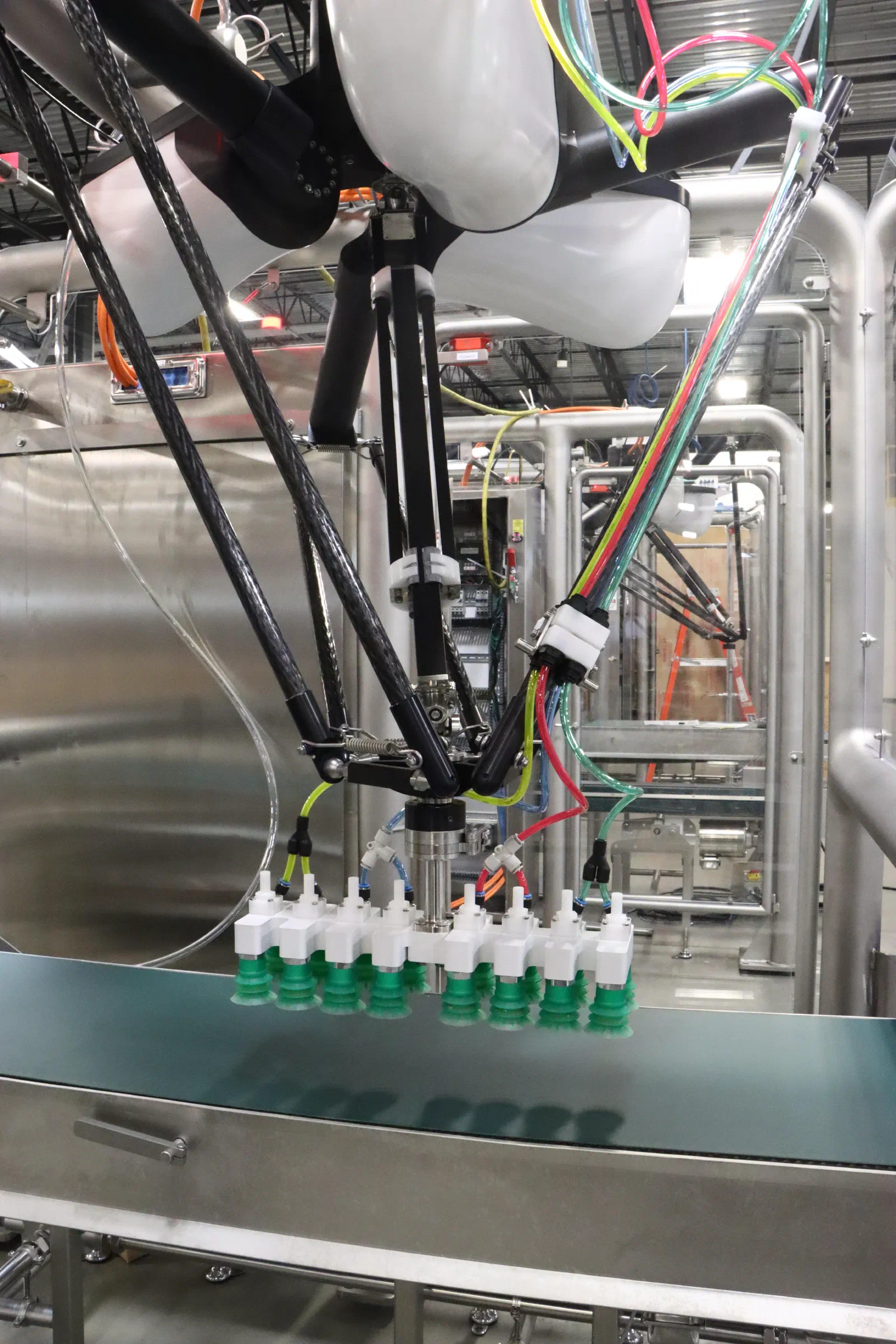
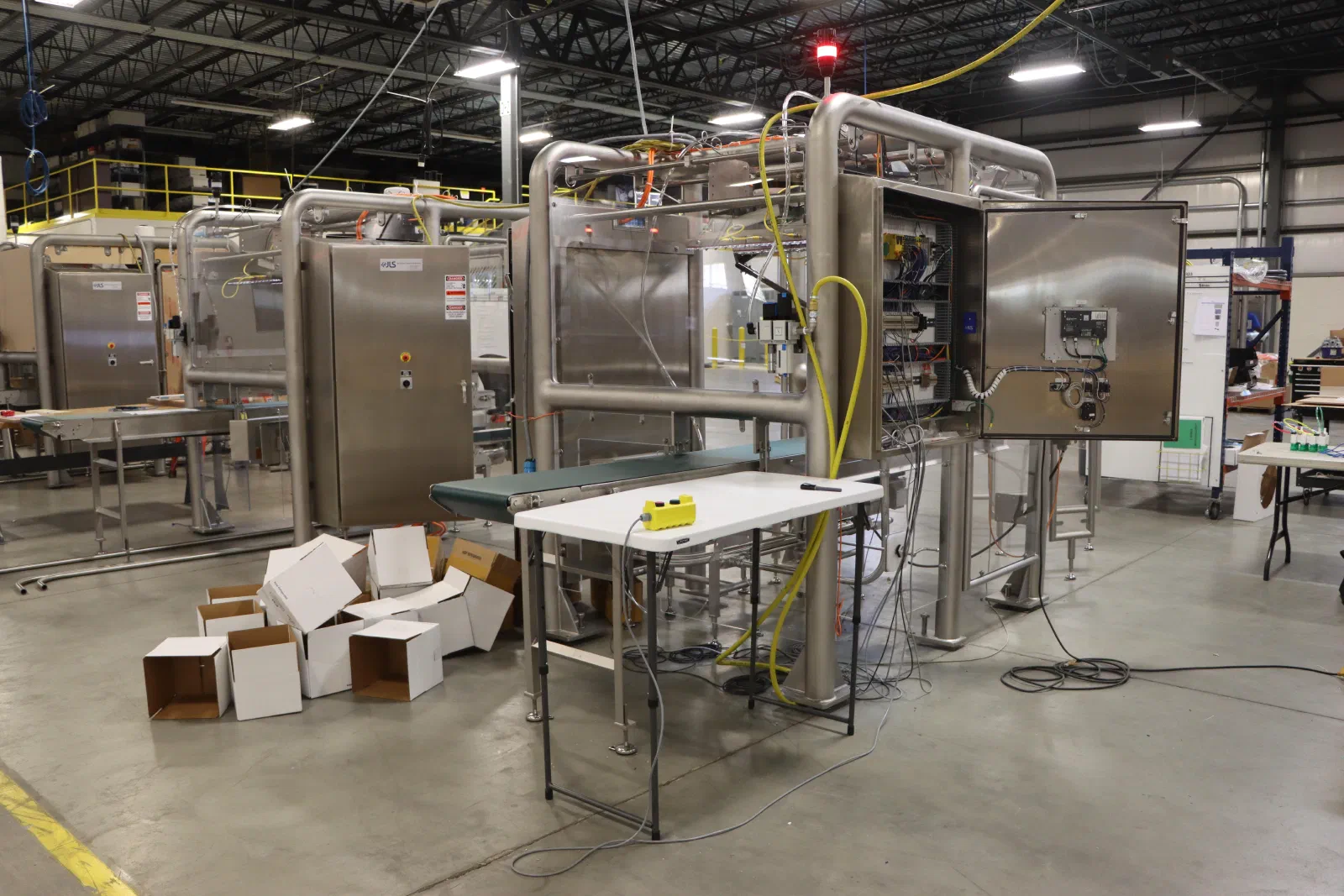
This system case-packs individual lunchmeat pouches for a meat processor’s two grab-and-go lines. Pouches come off the customer’s wrappers and through their label verification cameras onto our pick conveyor, where a vision-guided delta robot picks each one and loads it into a case. The customer needed thirteen SKUs handled without damaging the product. Our cell doesn’t inspect anything itself, so any pouch flagged by the customer’s label camera is simply left unpicked and passes through to a reject bin.
As Systems Engineer, I defined the interface with the customer’s label verification system, worked through the tooling problems described below, and carried the system through installation and commissioning.
One strong grip was the wrong idea
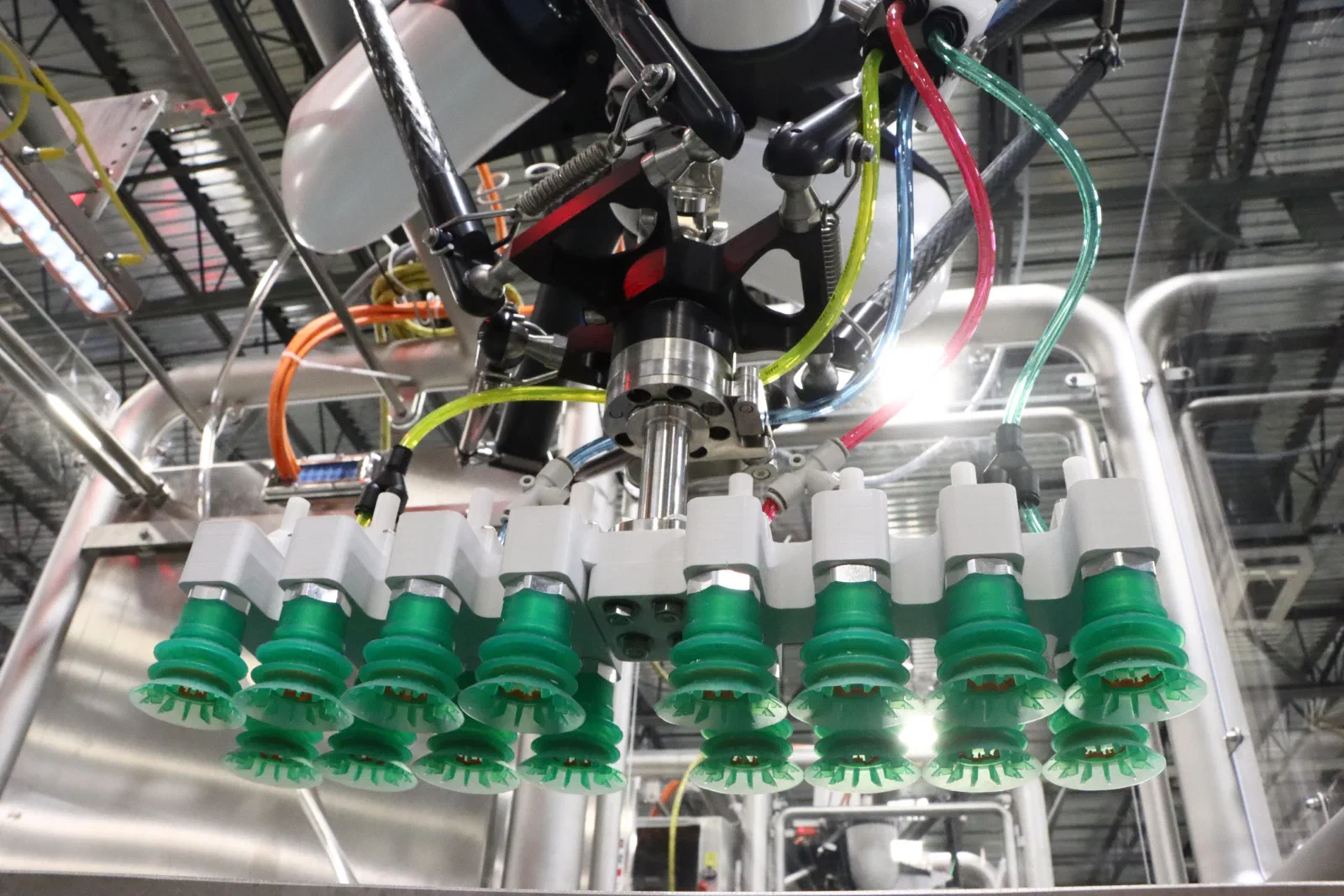
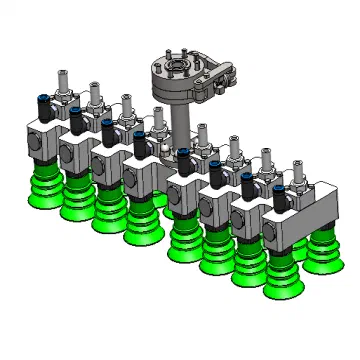
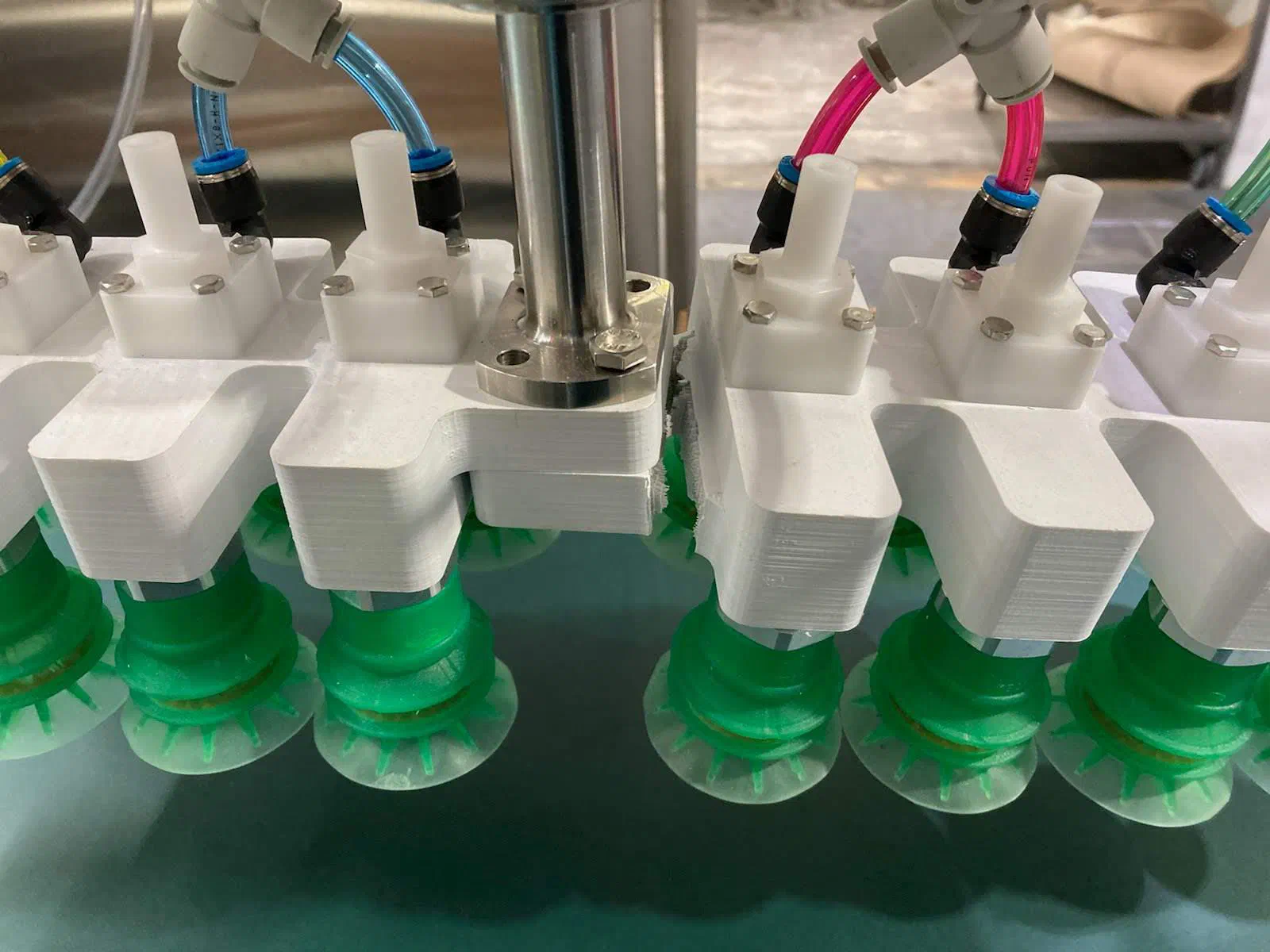
Picking a thin, flexible pouch reliably was much harder than it sounds. Our first tool used a single cone-style gripper, and no amount of iteration could get it to hold the pouch securely without damaging it. What worked was nearly the opposite approach: a bar of many small vacuum cups that spreads the holding force across the pouch. That change came late enough that we had to install with an interim tool, which made a difficult install harder.
Opportunities and struggles
- Tooling: When a delicate product won’t hold on one strong grip point, spreading the force across many small cups is often the answer. I’d reach for that approach sooner instead of iterating a single-point design past diminishing returns.
- Schedule: I would build in enough lead time for tooling to actually be finished before install, and avoid installing with an interim tool.
- What worked: The reject bypass driven by the customer’s label camera worked nearly flawlessly with only minor tuning, and adding a manual reject pushbutton made FAT testing much easier.
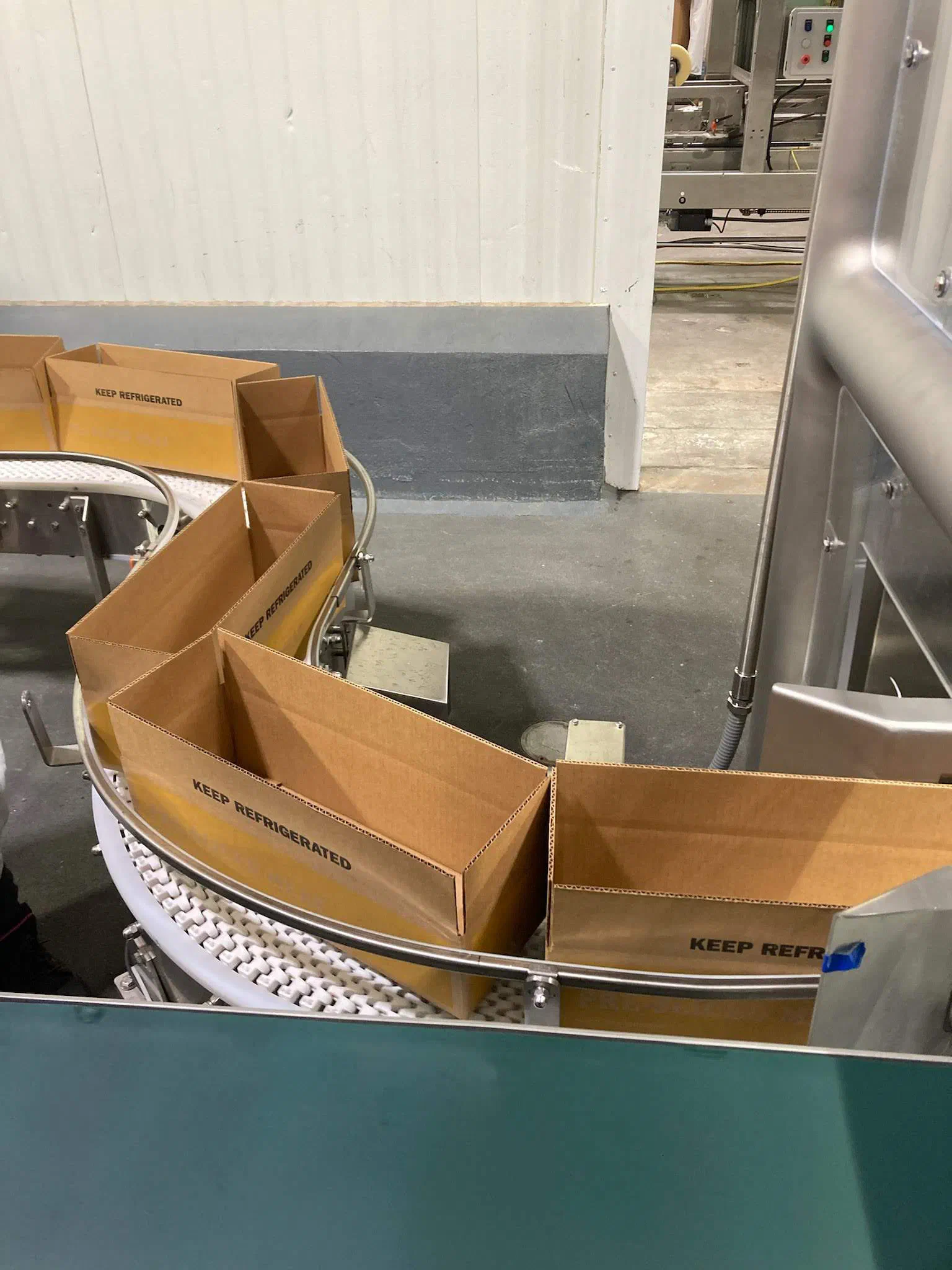
- Customer conveyance: The customer’s own conveyors had problems with tight corners and empty cases that weren’t obvious until installation. Even equipment we don’t design needs to be understood well enough to flag problems early.
Specific skills
- 2D machine layout drafting in DraftSight (AutoCAD)
- requirements capture and scope definition
- robotic cell configuration and layout design
- end-of-arm tooling development
- machine vision integration
- cross-discipline coordination
- commissioning and factory acceptance testing
- sanitary and washdown design requirements in food production