Incline Meat Auger Conveyor
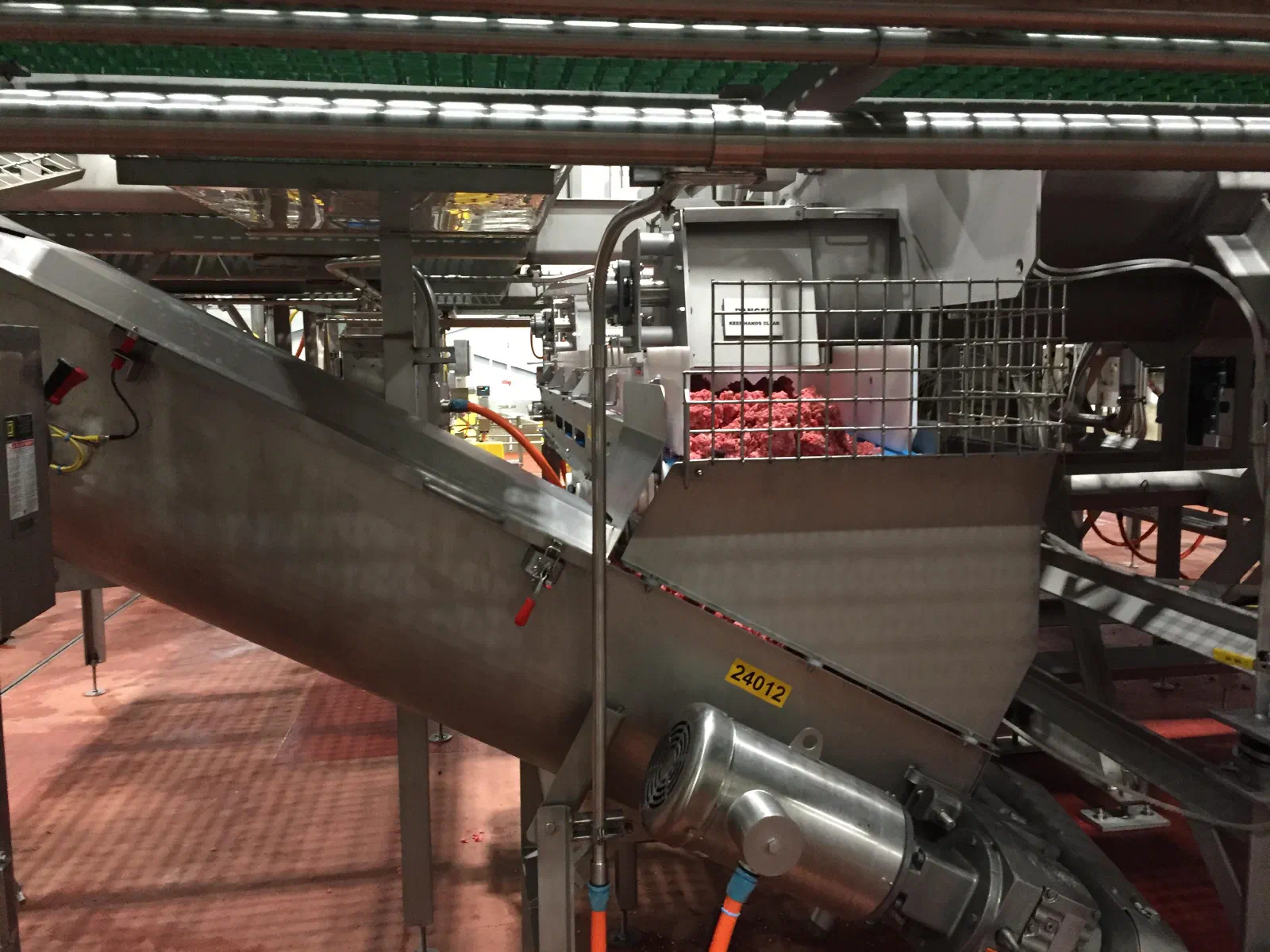
An inclined screw conveyor chosen over a belt because raw meat slides back down steep belts and screws are easier to clean.
- Employer
- CHL Systems
- Role
- Design Engineer
- Industry
- Raw meat
- Period
- 2019
- Scale
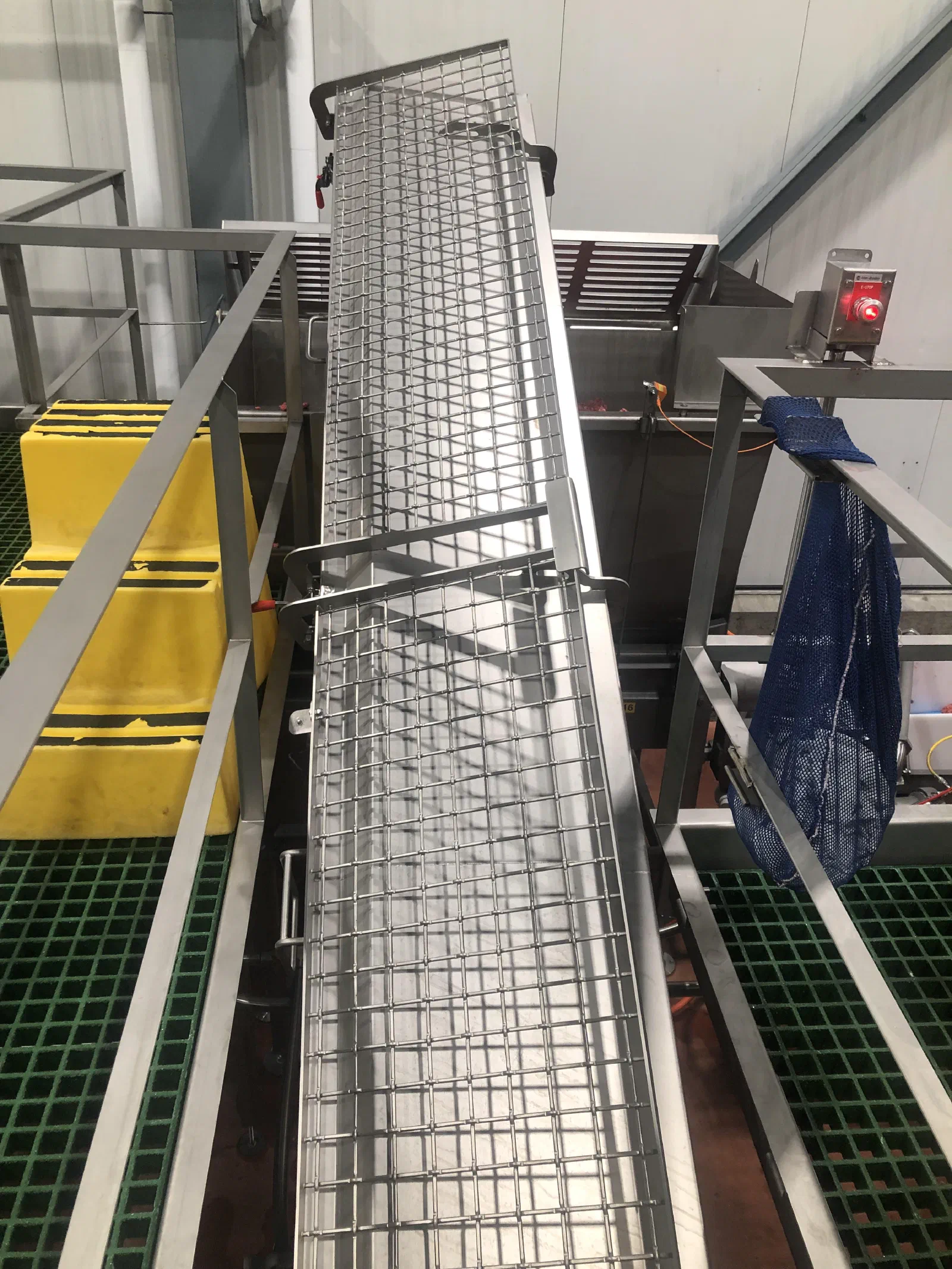
- Inclined screw conveyor with mesh guarding, elevating raw meat between process levels
Why not a belt
This conveyor lifts raw meat from one level of a process to another. The obvious answer is an inclined belt, which works for a lot of products, but not past a certain angle. Raw meat has a shallow angle of repose, so on a steep belt it slides and rolls back down. Cleats can help, but then the cleats become one more thing to clean. A screw conveyor doesn’t have that problem, since product is carried in the flights instead of resting on a surface, so it can climb as steeply as the layout needs.
Two more reasons
Cleanability mattered just as much. In a raw meat plant, everything is washed down constantly, and cleaning time is lost production. A trough and screw have far less surface and fewer places for product to hide than a belt conveyor with its return path, wearbars, pulleys, take-ups, and cleats.
A screw also has fewer moving and wearing parts. Every part that moves in a washdown environment will eventually be replaced by someone standing in cold water, so leaving parts out has a value that doesn’t show up in the purchase price.
The machine
The conveyor is a stainless trough weldment carrying the screw, with a drive at the head, a leg assembly, an intermediate bearing hanger, a cover, and a discharge chute. Mesh guarding runs the length of the incline, enclosing the screw and drive without hiding the machine from the operators who watch it run. It was one conveyor in a much larger program of more than thirty pieces of equipment and platforms.
What I learned
This project was more about selecting the right technology than designing something new. It taught me to choose conveyance based on how the product actually behaves, not on what’s most familiar.
Specific skills
- SolidWorks
- collaboration with in-house machine and weld shops
- screw conveyor design
- conveyor technology selection against product behavior
- angle of repose reasoning
- sanitary and cleanability driven design
- stainless trough and weldment fabrication