Meat Tray Bagging System
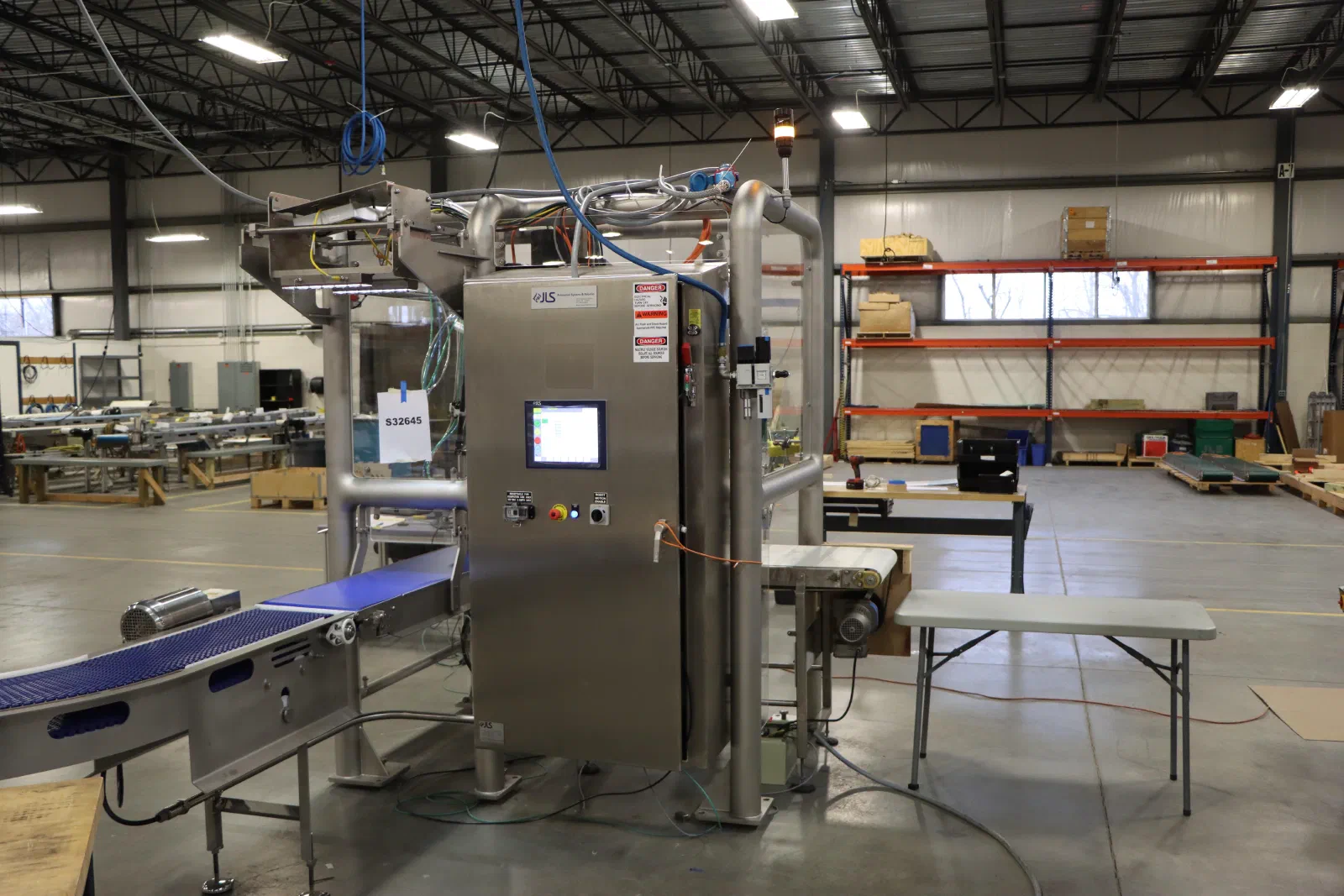
A vision-guided robot arranging wrapped meat trays into the multi-tray patterns a vacuum bagger needs, across about fifteen SKUs.
- Employer
- JLS Automation
- Role
- Systems Engineer
- Industry
- Raw meat
- Period
- Sep 2021 to Feb 2022
- Scale
- One robotic cell building bagger infeed patterns of two to six trays, across roughly 15 SKUs at 12 to 60 pieces per minute
Building the pattern the bagger can’t
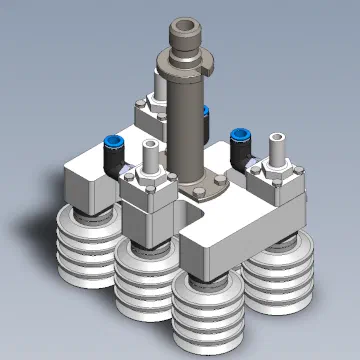
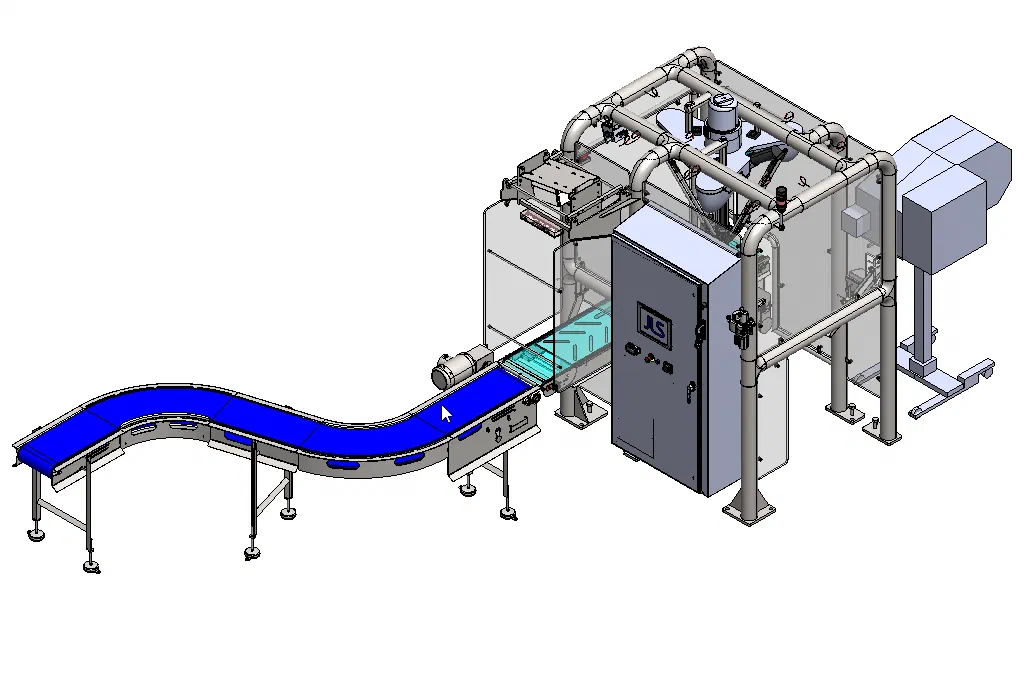
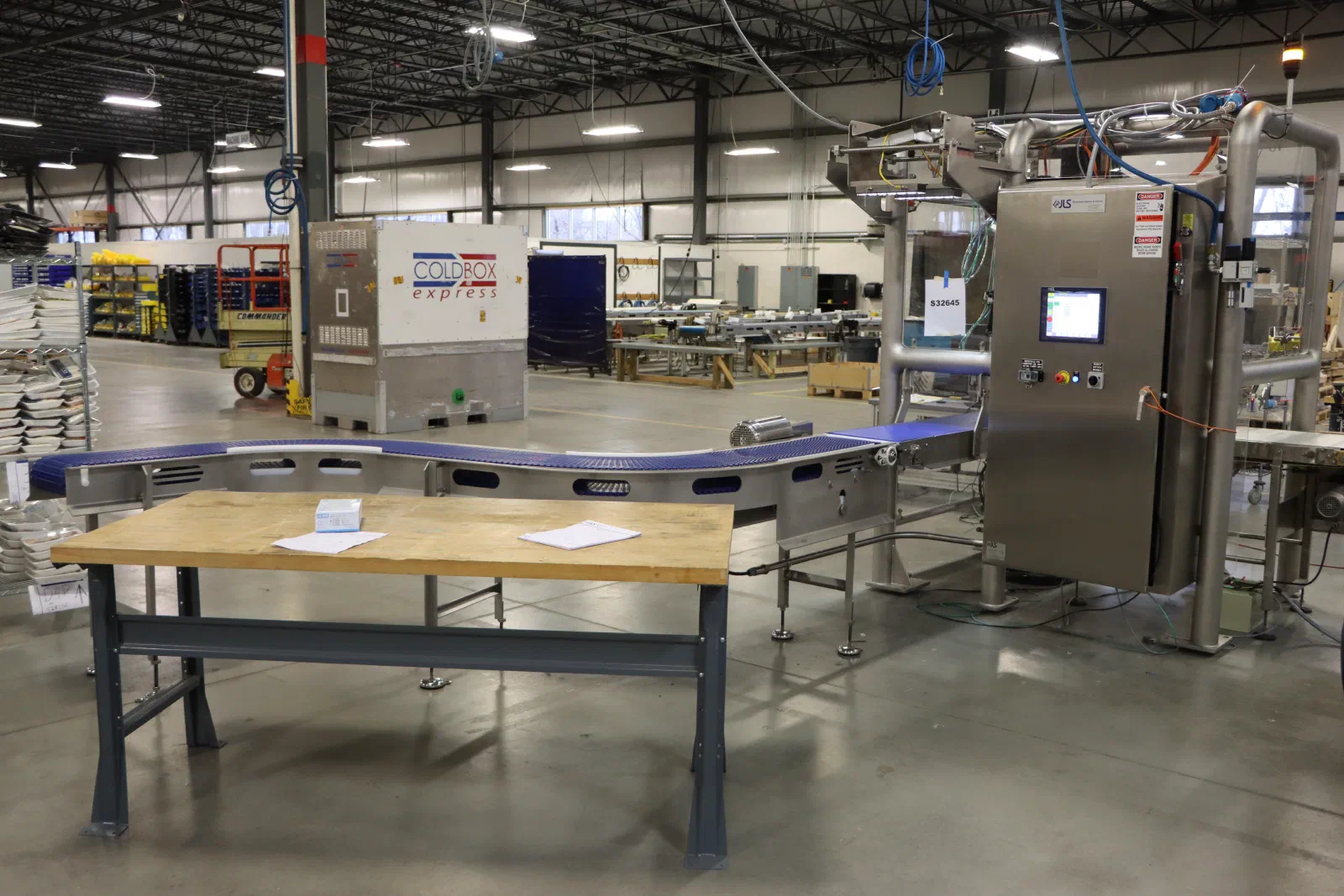
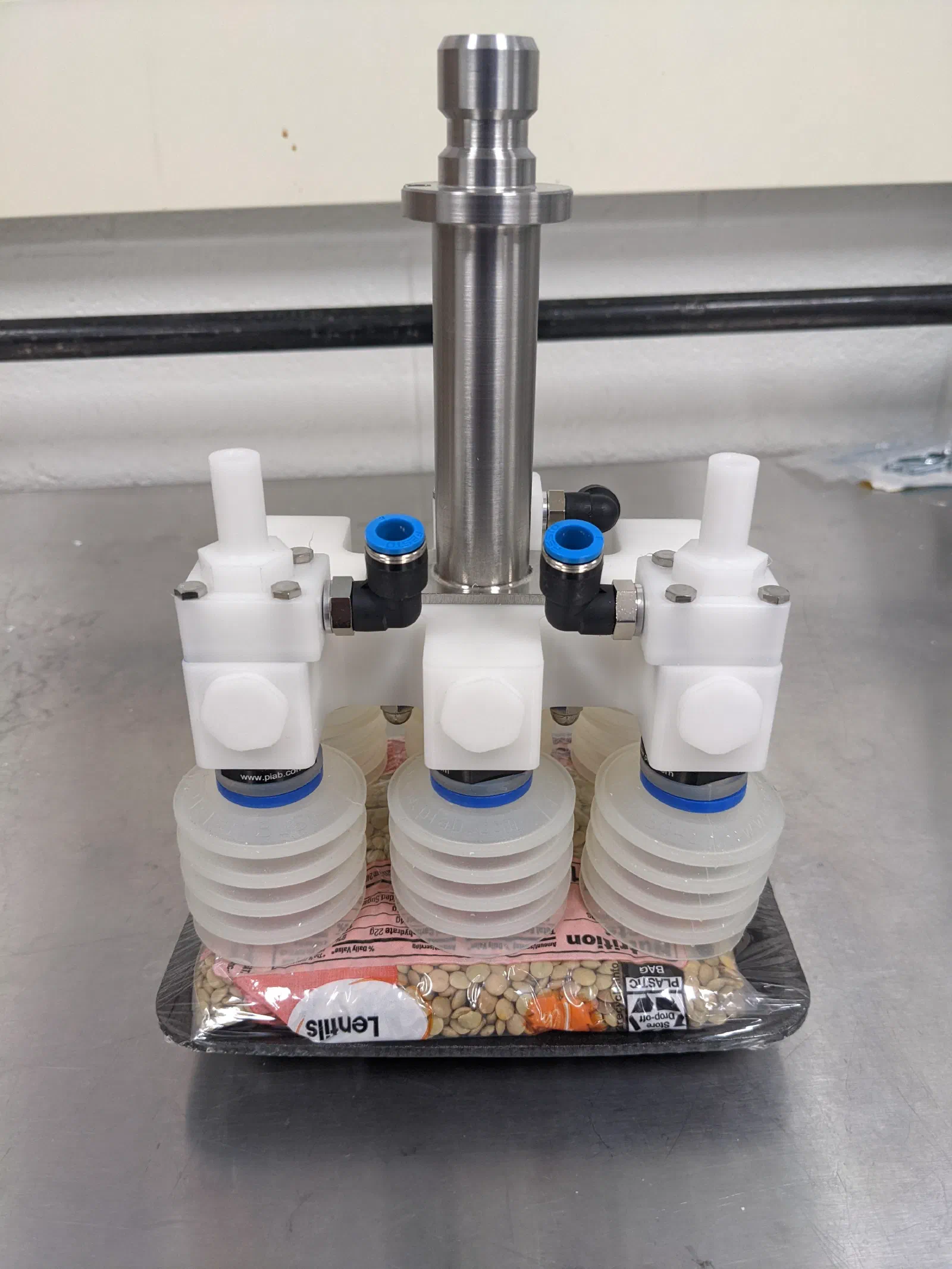
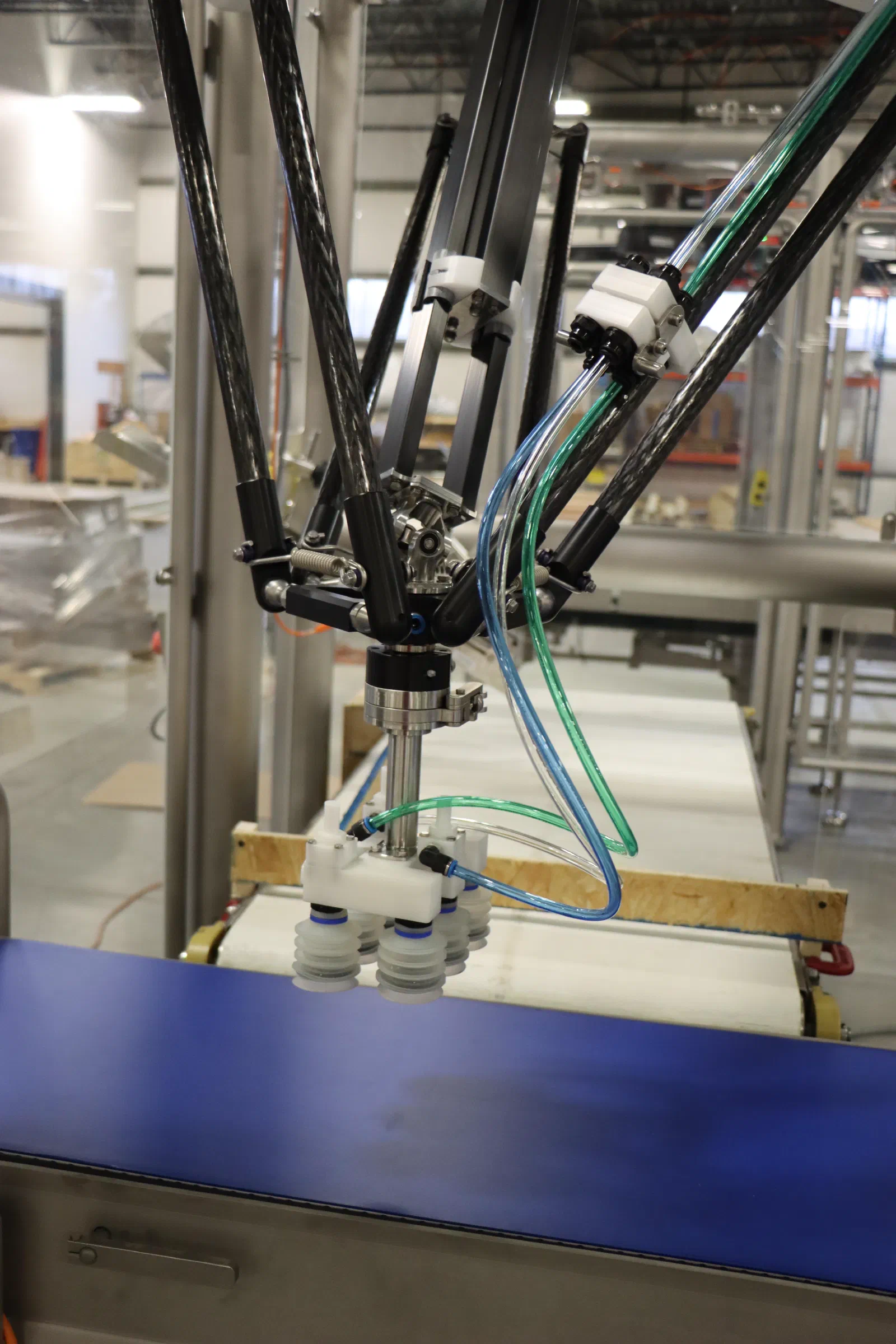
This cell feeds a raw meat processor’s vacuum bagging machine. Wrapped trays of beef arrive single file onto our pick conveyor, and a vision-guided delta robot arranges them into the pattern the bagger needs, from a single pair up to six trays shingled together, depending on the product. Once a pattern is complete, it indexes into the bagger. The customer had about fifteen SKUs with different pack counts and sizes, and building those patterns by hand wasn’t practical at the rates involved.
As Systems Engineer, I defined how the cell would interface with the bagger, configured the vision-guided pattern building, and coordinated the mechanical and software work. I also worked on a corrosion issue that surfaced in the field about a year after startup.
Fifteen degrees off square
The robot was mounted at a 15 degree offset to the frame instead of square to it. That ran into a gap in our motion software, which didn’t support soft motion limits for a robot mounted off the standard orientation, so the geometry turned into a software problem we had to work around. The cell also had to share floor space with the customer’s bagger without blocking its maintenance access.
Opportunities and struggles
- Footprint: The cell ended up bigger than it needed to be. Overlapping our pick conveyor with the bagger’s conveyor and using more of the robot’s vertical range could have cut a foot or two of frame.
- Robot mounting: I’d avoid an off-square mount unless there is a real reason for it.
- Software reuse: We wrote a fully custom handshake for this job when our existing thermoformer handshake would probably have worked. I now check for reusable logic first.
- Upstream control: We never wired our stop condition back to the customer’s upstream conveyor, so backups had to be cleared by hand. That’s something to plan for at the start.
- Materials: Corrosion appeared within a year and took more than one visit to fix. Material and finish choices in a raw meat environment have to hold up well past acceptance testing.
Specific skills
- 2D machine layout drafting in DraftSight (AutoCAD)
- requirements capture and scope definition
- robotic cell configuration and layout design
- machine vision integration
- pattern-building pick-and-place logic
- cross-discipline coordination
- commissioning and factory acceptance testing
- sanitary and washdown design requirements in food production