Medical Device Sterilizing Line
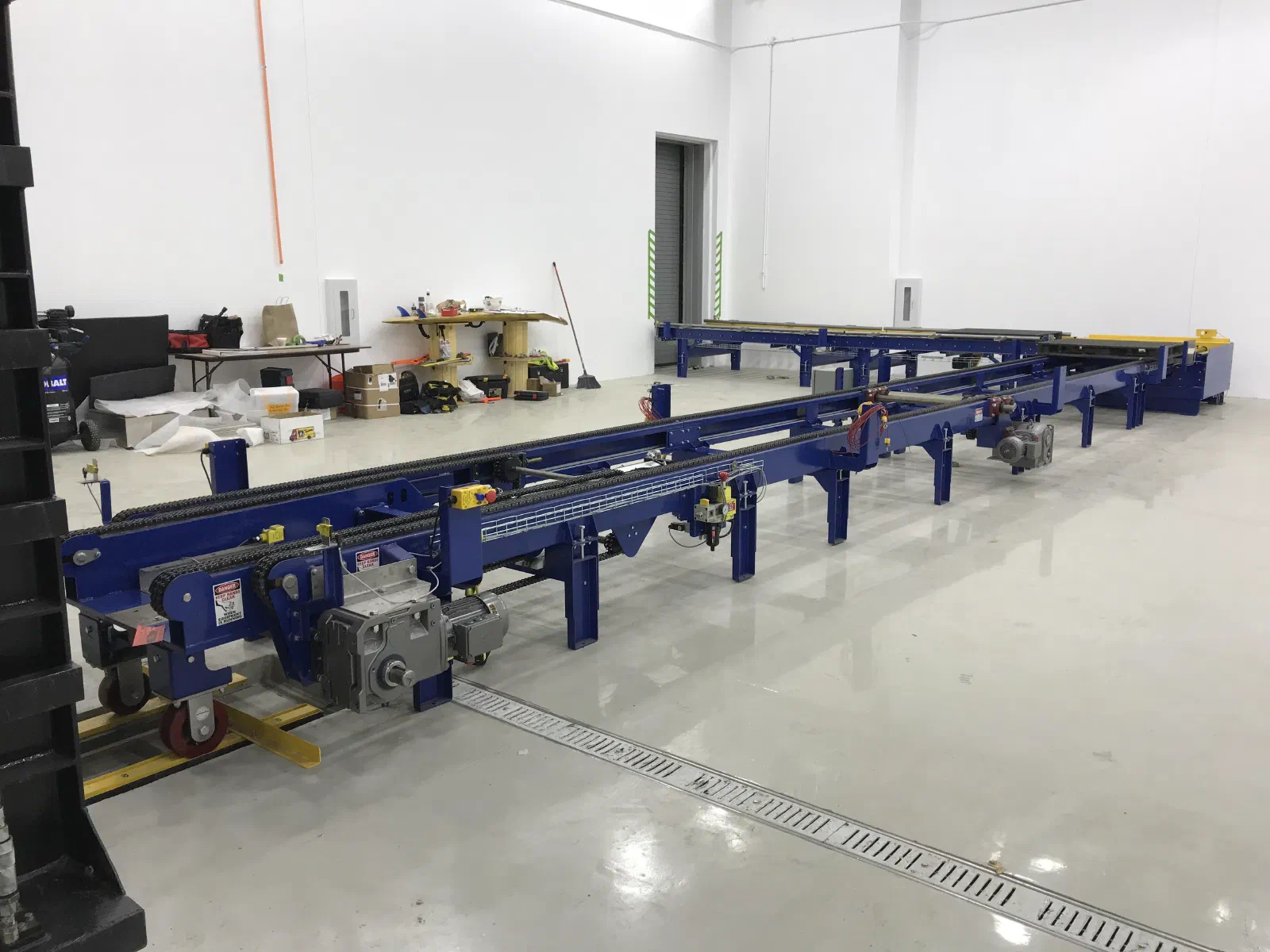
A thirteen-station heavy pallet line through explosive-atmosphere sterilizing chambers, which I took over mid-project and commissioned.
- Employer
- CHL Systems
- Role
- Design Engineer, took over mid-project through commissioning
- Industry
- Medical devices
- Period
- 2018 to 2019
- Scale
- Thirteen conveyor stations, ten 1,400 lb pallets at a time
The line
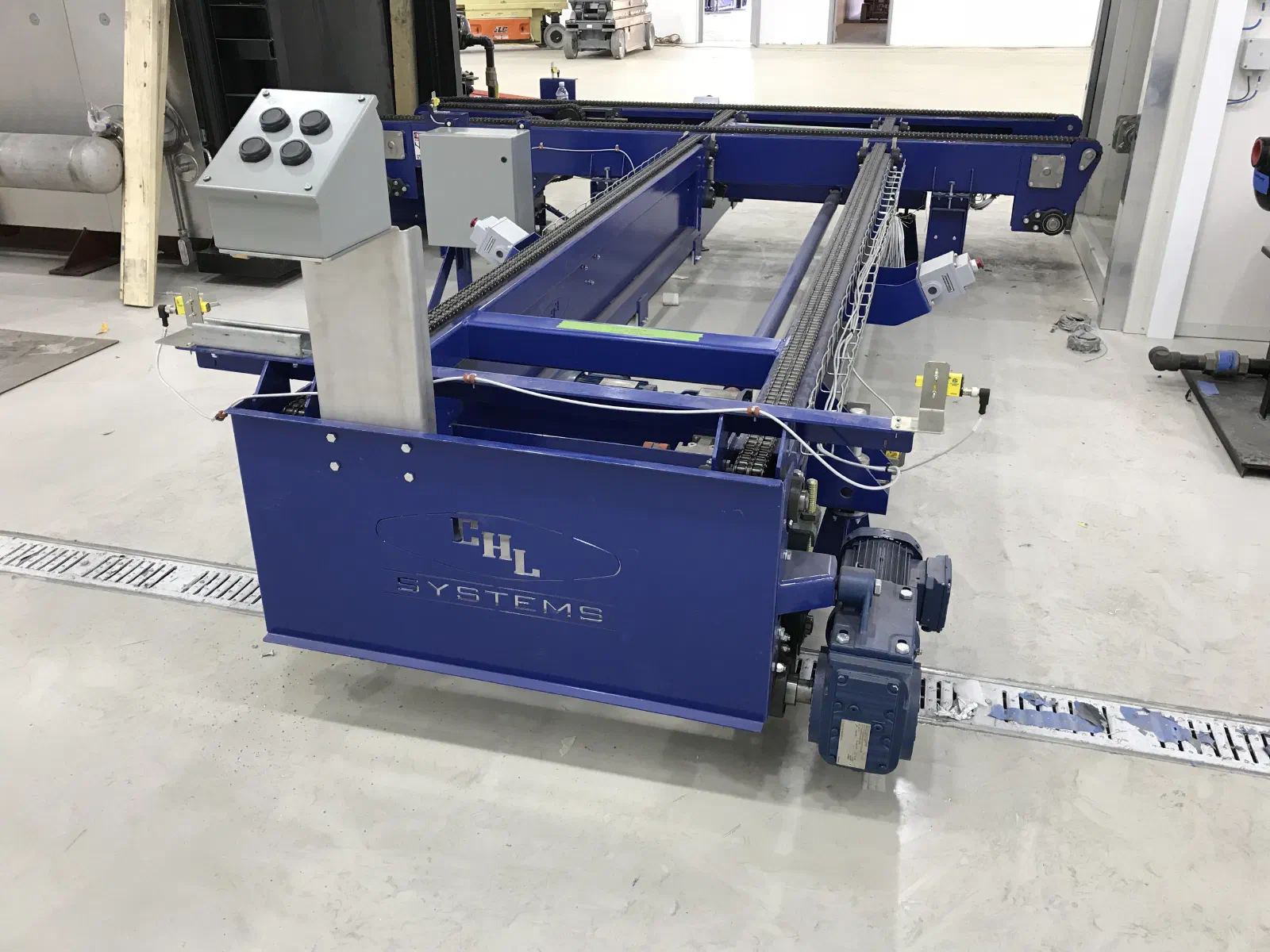
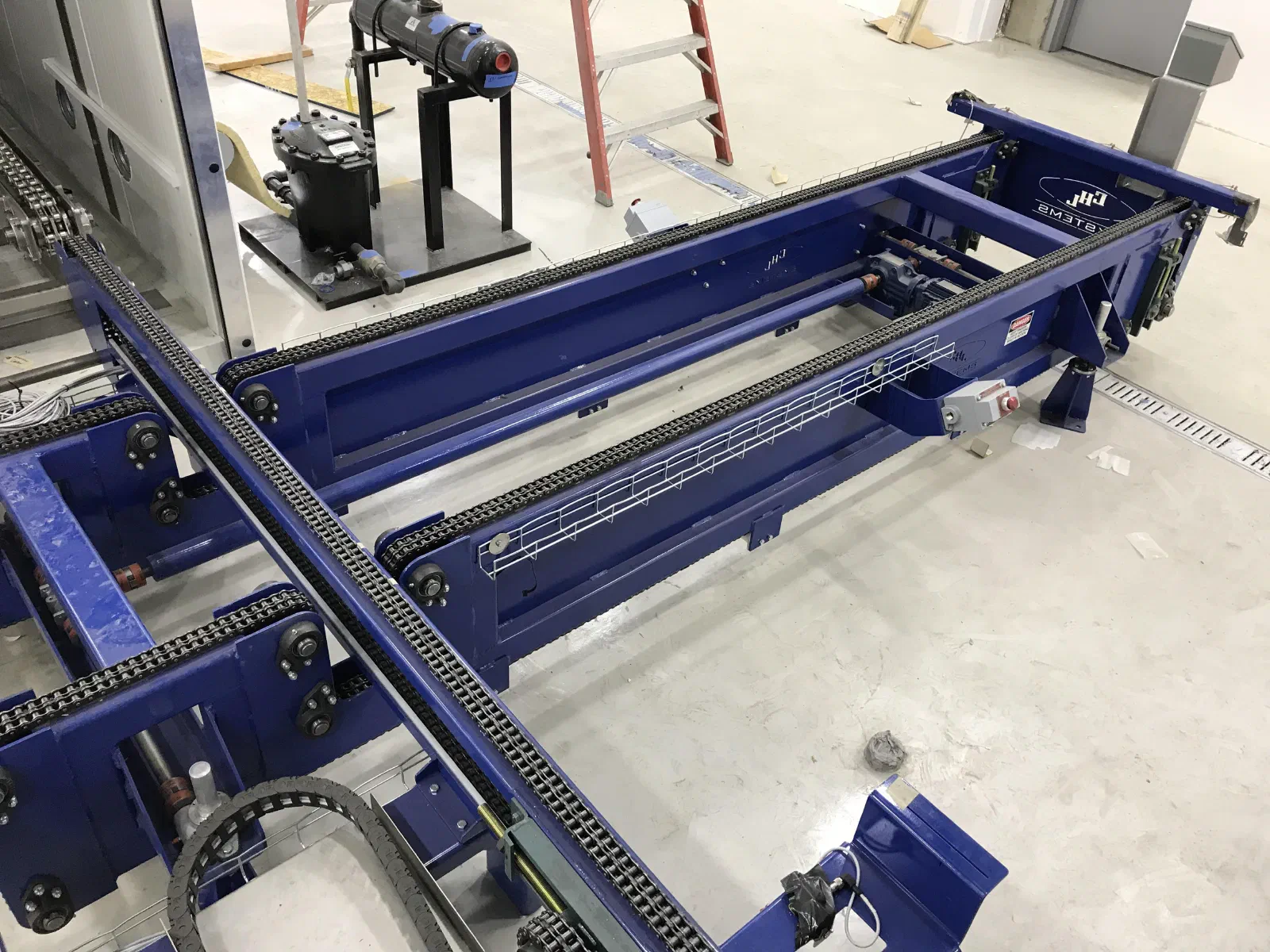
This line carries pallets of medical devices through sterilization and out again, across thirteen conveyor stations including loading, staging, the sterilizer chamber, an aerator chamber, and unloading. It moves ten pallets at a time at 1,400 lb each, so about 14,000 lb of product per load on chain-driven roller conveyor.
No motor in the chamber
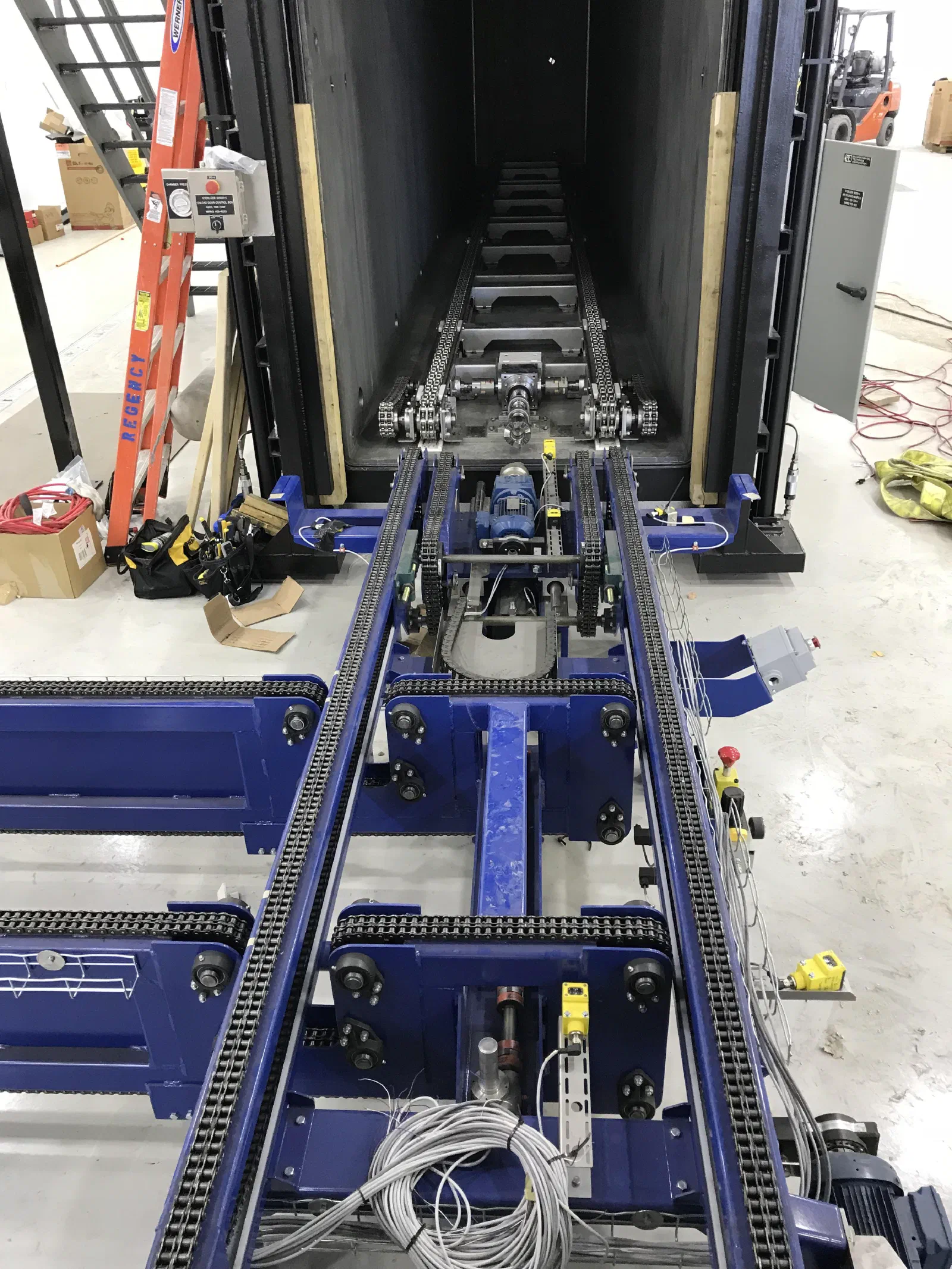
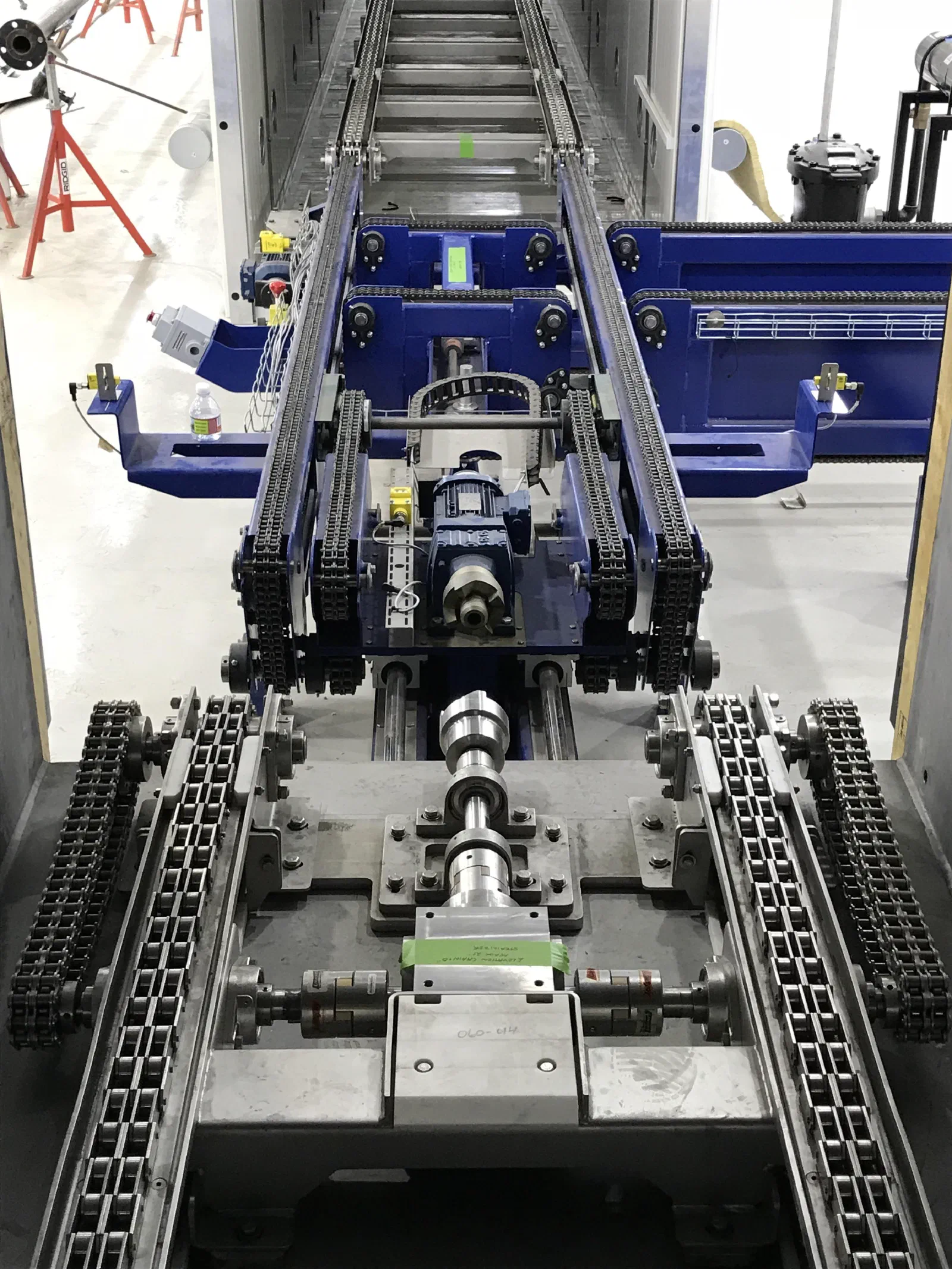
The sterilizing chemical is extremely flammable and explosive, so there can be no ignition source inside the chambers at all. That rules out a motor, or anything else that switches, arcs, or gets hot. The chamber conveyors instead have only a gearbox and a coupler. On the conveyor just outside the chamber, a cylinder extends and engages a power take-off coupler that drives the chamber conveyor, keeping every powered component outside the hazardous area.
The line also includes an in-line validation spur between the chambers, where a sample of product is pulled and checked before the full load spends hours in the aerator.
Taking it over
I didn’t design this line. The original engineer left the company before installation, and I took over the remaining work and much of the testing. Just before shipping, I was responsible for solving several major open problems, and the worst was stick-slip.
Opportunities and struggles
With 14,000 lb of pallets on a long chain, the chain stretched like a rubber band. Tension built while the load sat still, and when static friction broke, the pallets lurched forward and stopped again, which would likely have thrown product off. We first tried driving part of the run through a power take-off, but the stretch simply carried through that chain too, since the total chain length in the load path hadn’t changed. The fix was splitting one long conveyor into two shorter ones. It took additional controls and cost money, but it completely resolved the stick-slip and gave us more control over the pallets.
This project taught me that even steel is elastic at that scale, and that picking up someone else’s machine means quickly understanding decisions you didn’t make.
Specific skills
- SolidWorks
- collaboration with in-house machine and weld shops
- designing for flammable and explosive atmospheres
- power take-off drive design
- heavy pallet conveyance
- stick-slip and chain stretch diagnosis
- taking over an in-flight project
- commissioning and field testing