Pharmaceutical Bottle Lifter
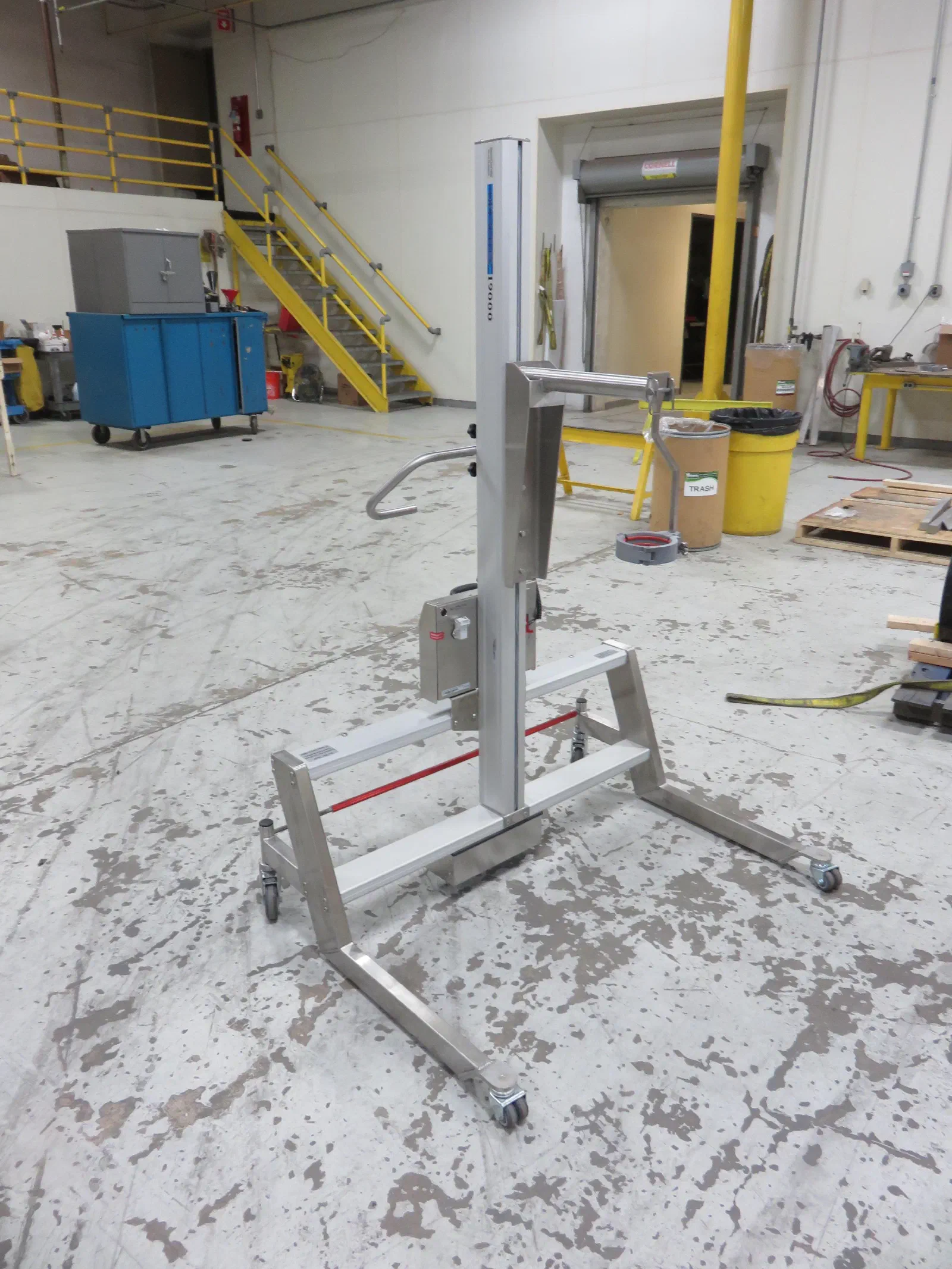
A sanitary clamp and lift bar that let a machine lift heavy, awkward bottles of liquid so operators no longer had to.
- Employer
- CHL Systems
- Role
- Lead Designer
- Industry
- Pharmaceutical
- Period
- 2018 to 2019
- Scale
- Hand tool scale, lifting liquid-filled bottles overhead by machine instead of by hand
The problem
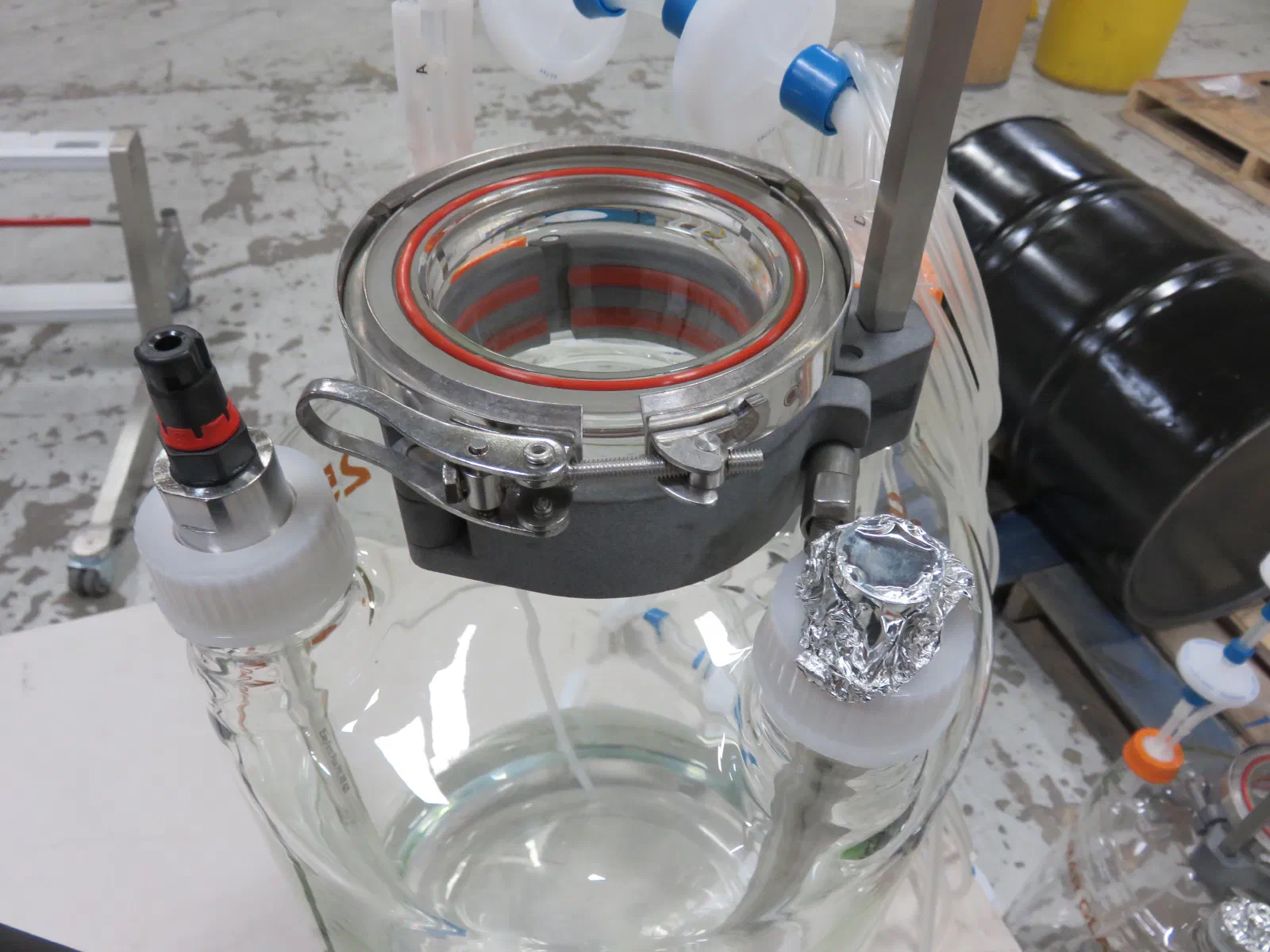
In a small batch pharmaceutical operation, operators were moving filled bottles onto carts by hand. The bottles were rigid, delicate, heavy with liquid, and had no natural place to grab, so they tipped and broke, and every move was an awkward heavy lift. The fix was to let a lift machine pick them up from above, which needed a clamp that could hold a bottle nothing was designed to hold.
The clamp
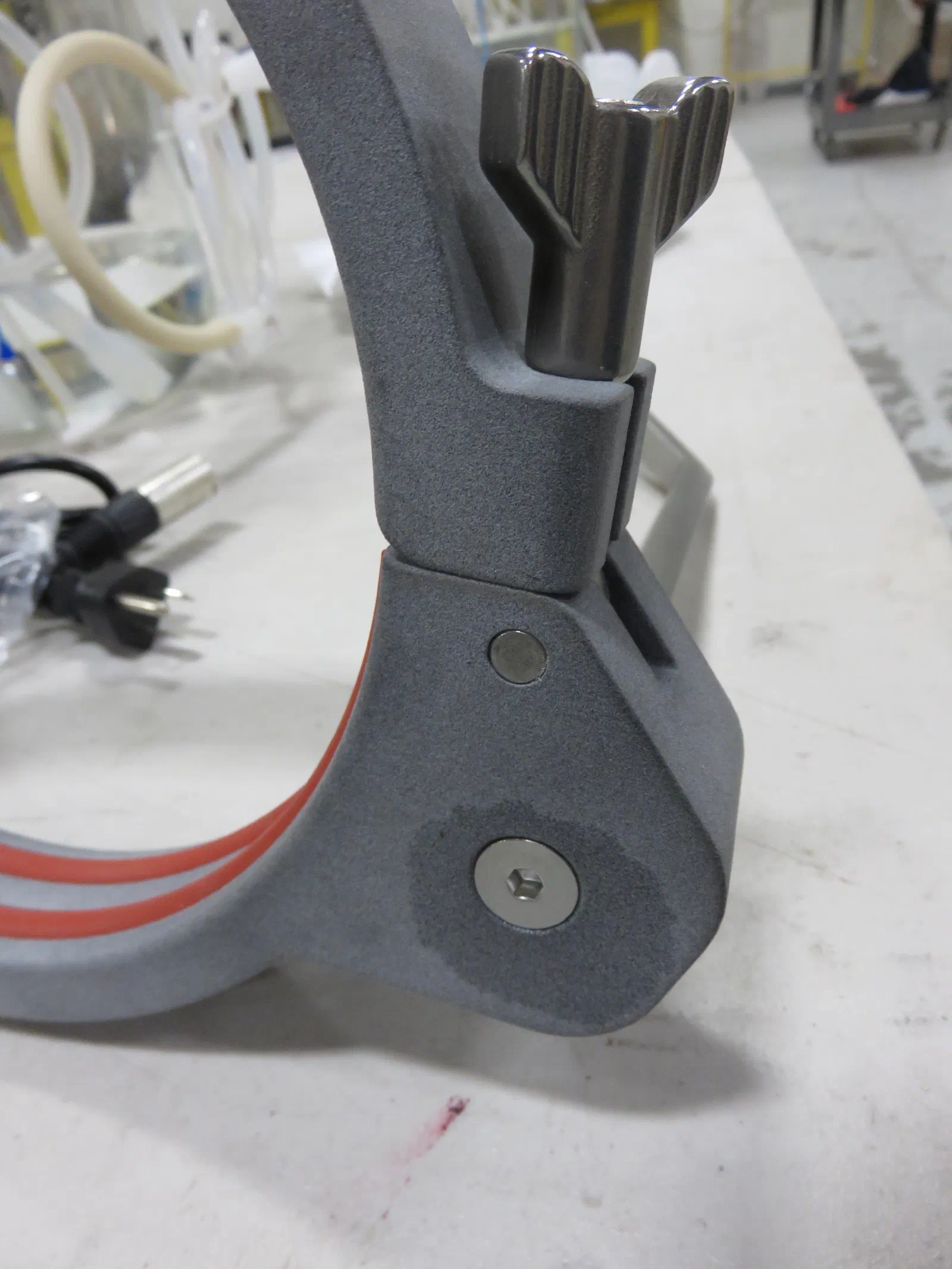
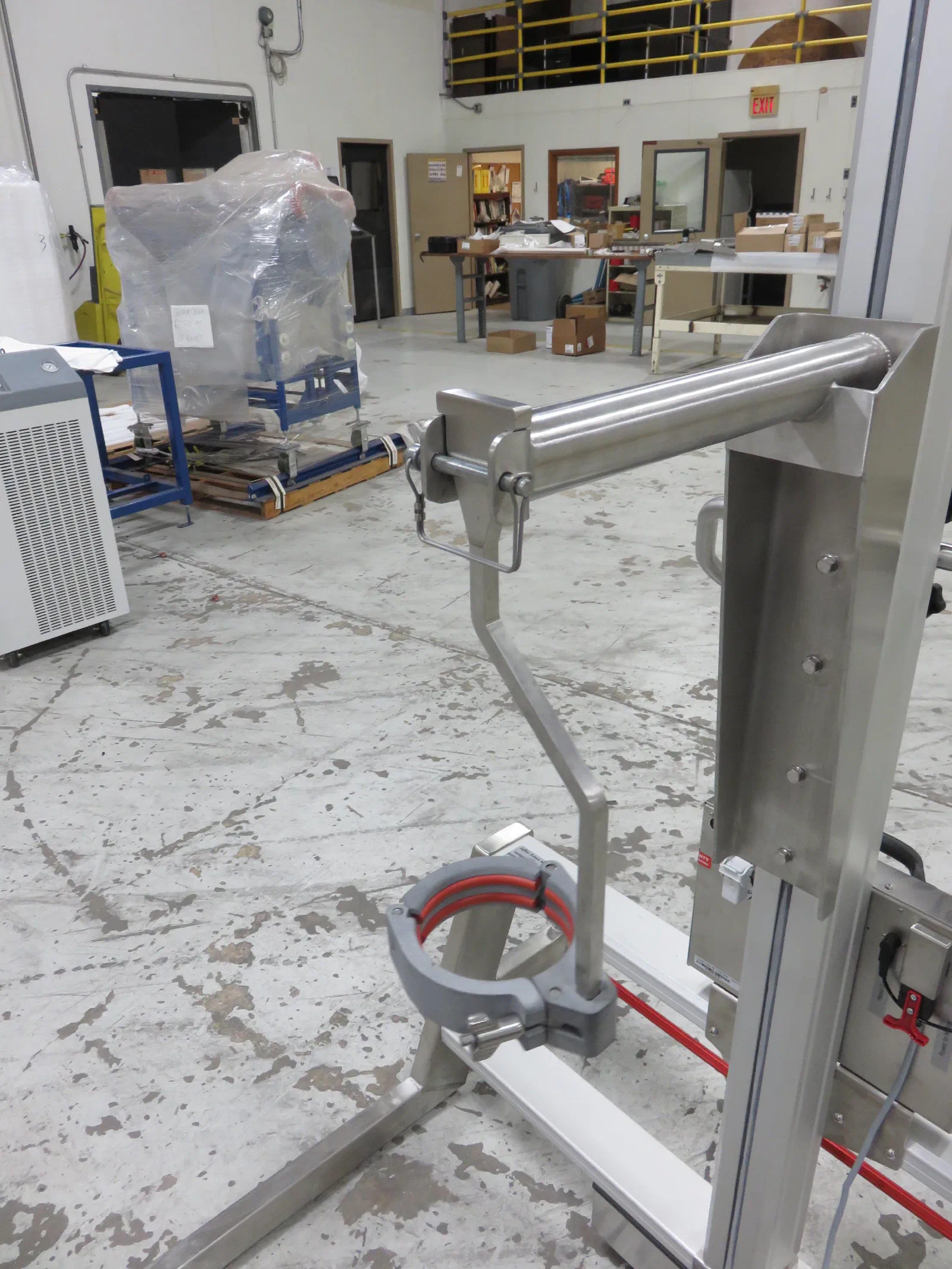
As lead designer, I had to make the gripping interface do three things that pull against each other: spread the load so the glass didn’t crack, hold the weight without slipping, and conform to awkward bottle geometry. The production units use machined UHMW bodies with rubber o-ring material as the grip, which spreads contact, adds friction, and takes up the shape the rigid clamp can’t. To keep bottles from tipping once lifted, a metal bar mounts to the clamps and curves up so the lift point sits directly above the bottle’s center of mass.
We had built something similar before, but this version replaced the purchased hinge with an integrated one. That removed crevices that were hard to clean and gave the clamp the opening range the bottles needed.
How it was proven
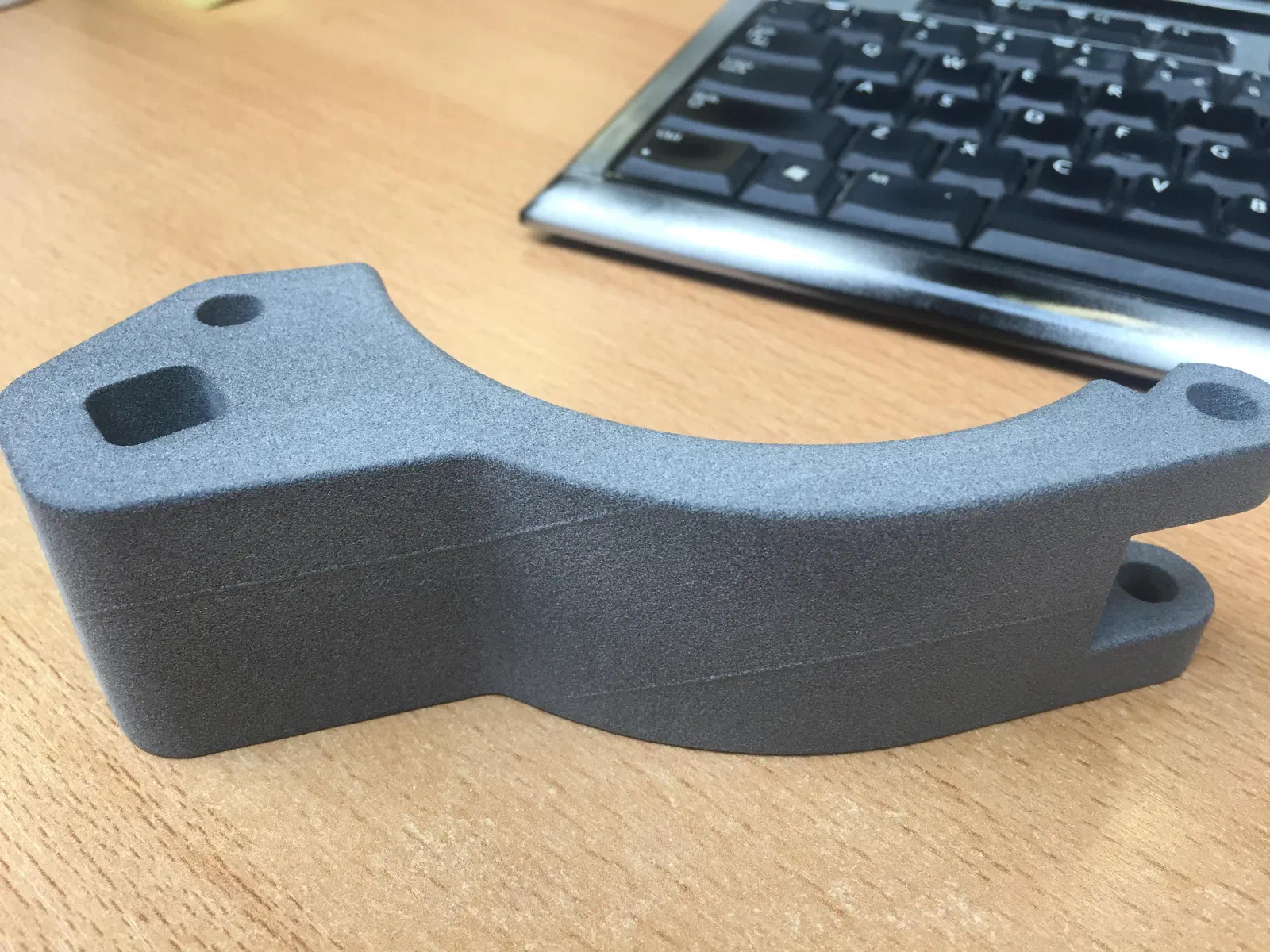
We validated the design with 3D printed pre-production units before anything was machined, using Kynar PVDF clamps, soft silicone grip rings, and Delrin arms. Printing let us iterate the awkward geometry in days instead of waiting on a machine shop queue. Once the grip and balance were proven on real bottles, the production units were machined in UHMW.
Opportunities and struggles
I designed the validation parts the way you design for 3D printing, and two features didn’t translate well to machining: the hinge region and a square post hole, which is awkward to cut with a round milling cutter. Before releasing for production, I reworked both with help from our machinists, and the result was much easier to make. I learned to design for the production process from the start, and that the cheapest place to catch these problems is a conversation with the person who will cut the part.
Specific skills
- SolidWorks
- collaboration with in-house machine and weld shops
- lead designer on a full product cycle
- sanitary design
- integrated hinge design
- material selection for compliant interfaces
- additive prototyping to machined production
- manual handling and ergonomic risk reduction
- design validation through pre-production units