Confectionery Pilot Line Conveyor
A nearly hundred foot marshmallow pilot line conveyor with depositors and a sugar bed, designed into a space still under construction.
- Employer
- CHL Systems
- Role
- Design Engineer
- Industry
- Confectionery
- Period
- 2019
- Scale
- 36 in belt, 95 ft 11-1/2 in long, with fondant depositing and a sugar bed
What a pilot line is for
The customer’s production lines are large, heavily automated, and great at making the products they already make. Stopping one to test something new costs real production. A pilot line lets them develop and test new products without interrupting the lines that pay the bills, so it has to be representative enough that results carry over to full scale, while staying flexible.
The line
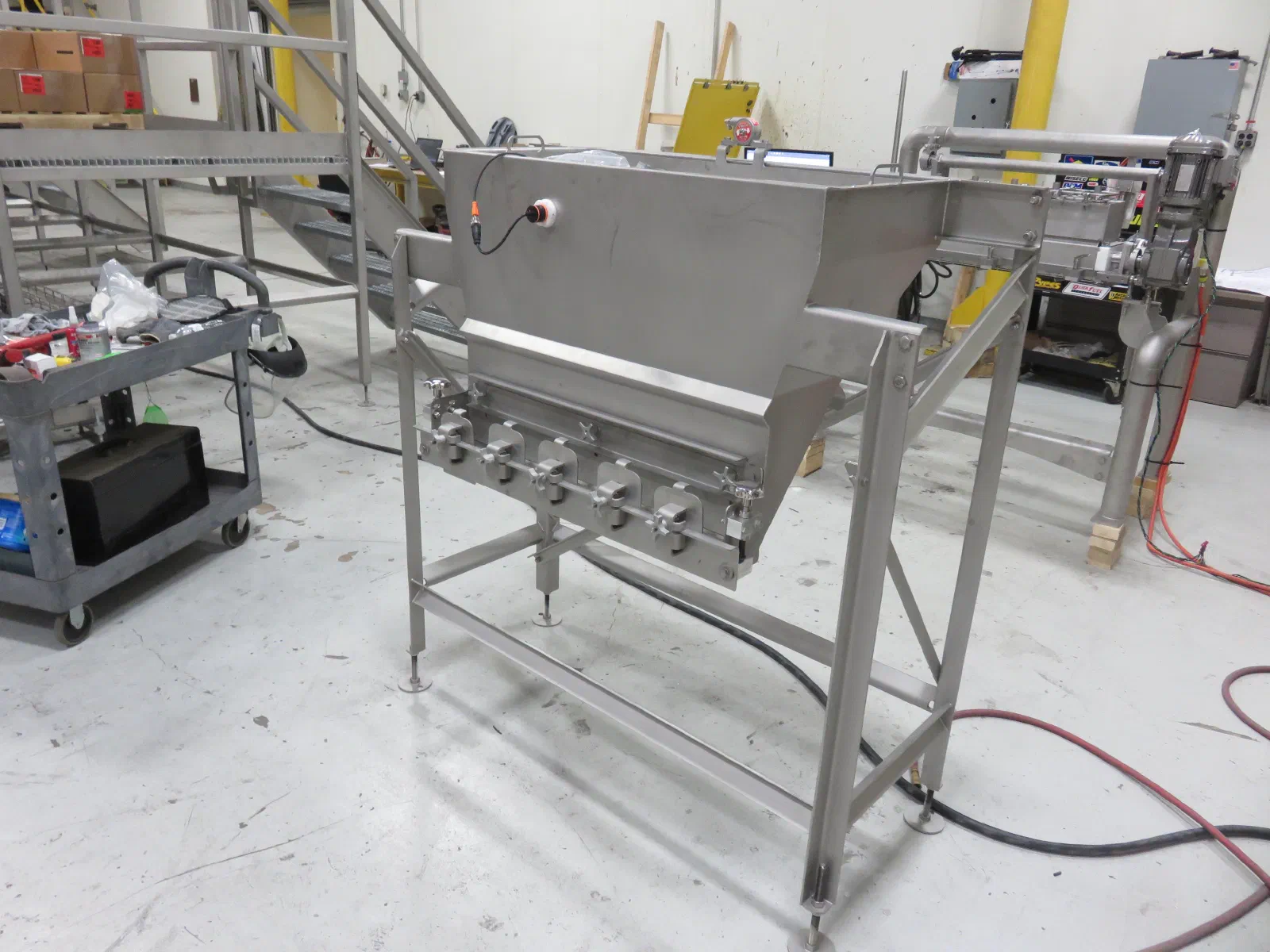
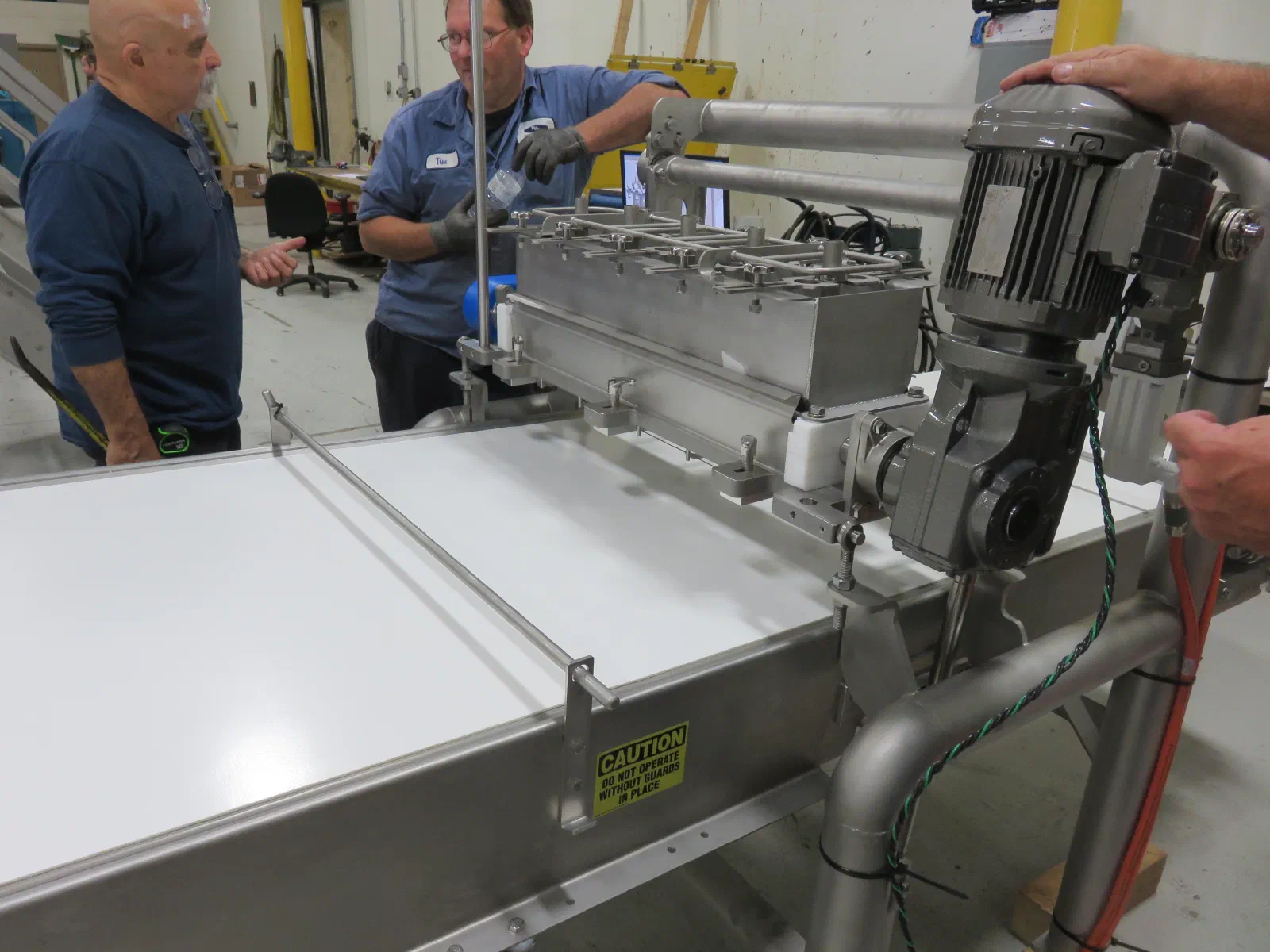
This is a marshmallow pilot line. A chute lays down a sugar bed, 2D and 3D depositors place the product, and a fondant section has its own hopper, roller, and side dams. The main belt is 36 inches wide and nearly 96 feet long on a stainless frame, with four take-ups to handle tensioning. At that length, belt tensioning stops being a detail, since long belts stretch, and take-ups that can’t follow the stretch lead to tracking problems and early wear.
Opportunities and struggles
- Sugar: Sugar gets everywhere and is very abrasive. Anywhere product repeatedly contacted a surface, we specified abrasion-resistant materials, since a conveyor that would last years elsewhere can wear out quickly in a sugar bed.
- Existing hardware: We had to carry over and integrate components from the old pilot line, including a sugar aerating and coating cover. Integrating equipment we hadn’t designed and couldn’t fully document took several site visits.
- A building still being built: The customer was renovating that part of the facility while we designed, so we had to design for what the space would become, not what it was. Construction finished just as the equipment arrived, with no chance to measure first. Late in the drawings, we had to reduce the return conveyor’s angle because equipment near the ceiling didn’t leave enough height. I learned how much a design depends on understanding someone else’s construction plans well enough to trust them.
Specific skills
- SolidWorks
- collaboration with in-house machine and weld shops
- long belt conveyor design with take-up
- depositor and hopper design
- designing R&D scale equipment
- working within building envelope constraints
- belt selection for sticky confectionery product