Rooftop Refrigeration Skid Enclosure
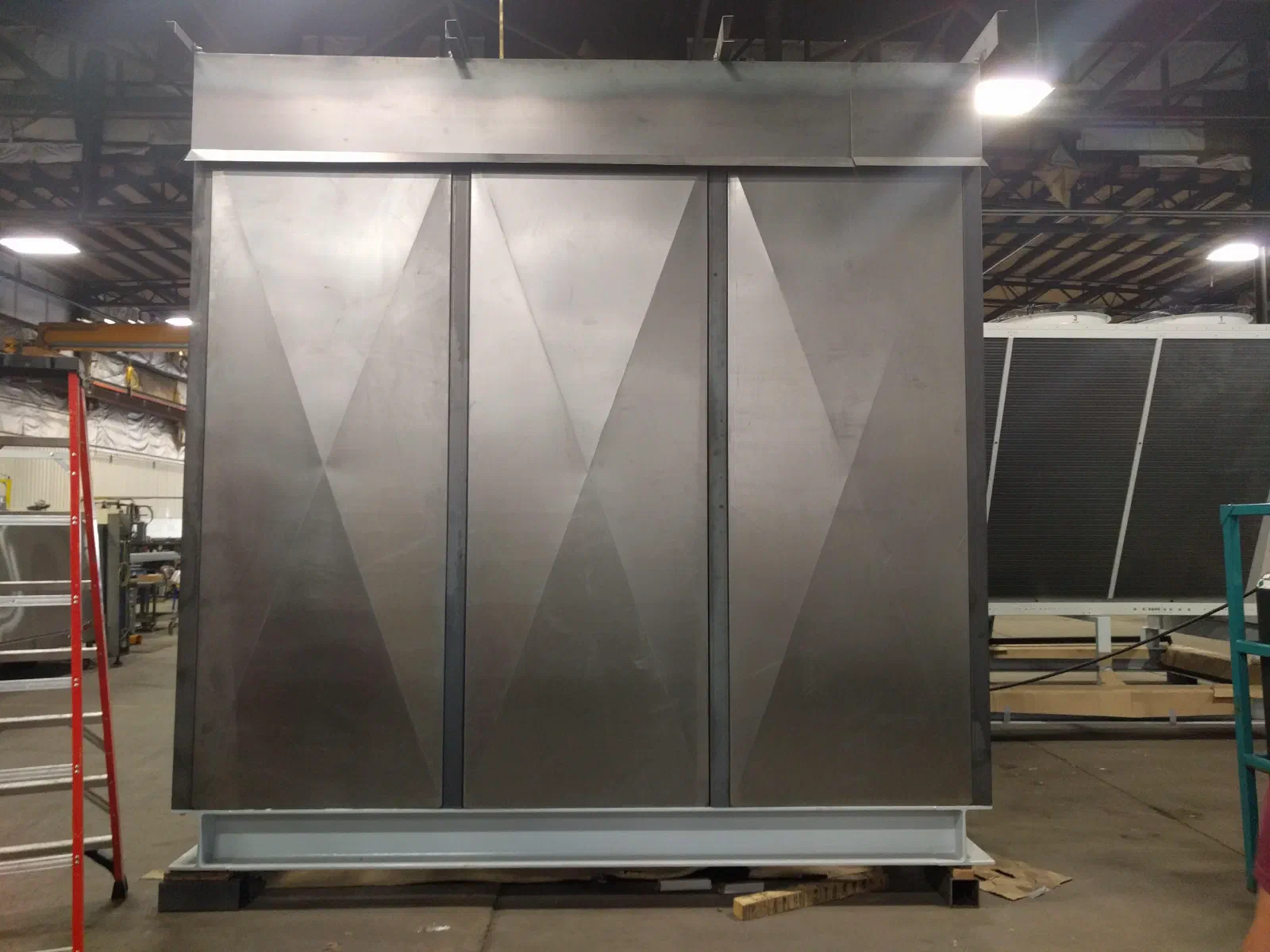
A rooftop equipment enclosure whose wind and snow analysis caught a racking collapse before it was ever built.
- Employer
- Hart Mechanical
- Role
- Mechanical Design Engineer
- Industry
- Industrial refrigeration
- Period
- 2017
- Scale
- Over 1,000 sq ft of enclosure assembly, analyzed to IBC snow and wind loads
A building on a roof
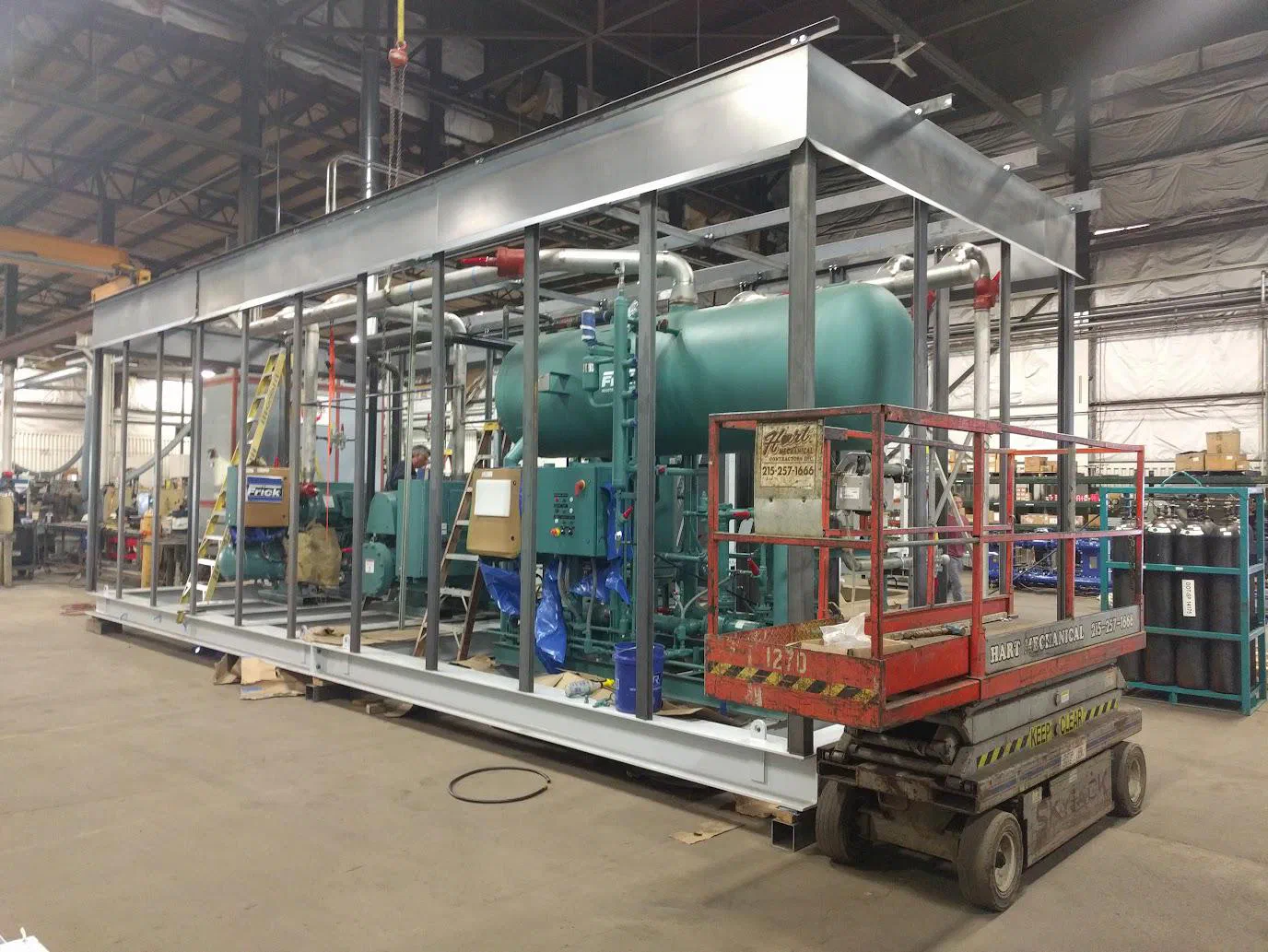
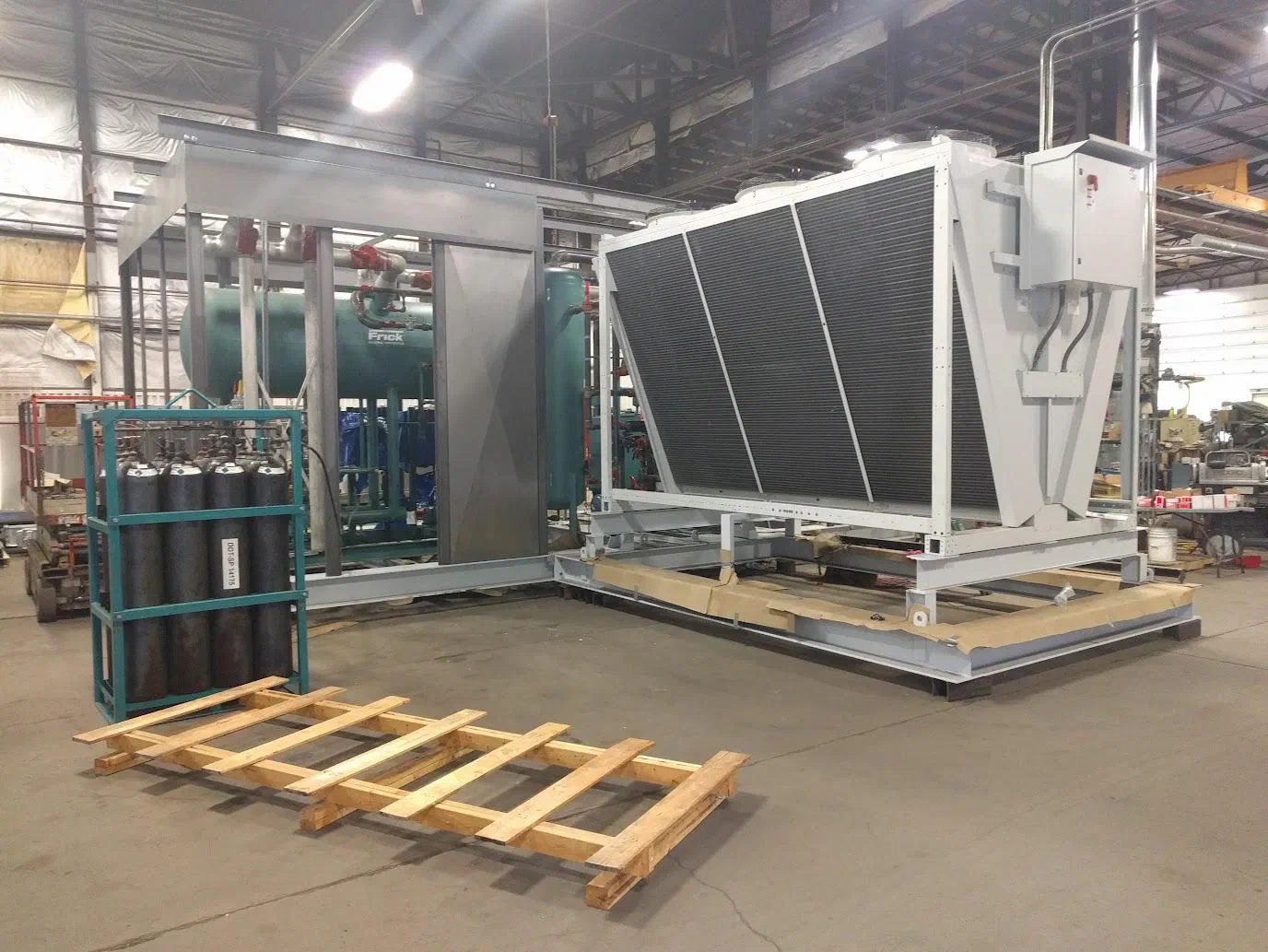
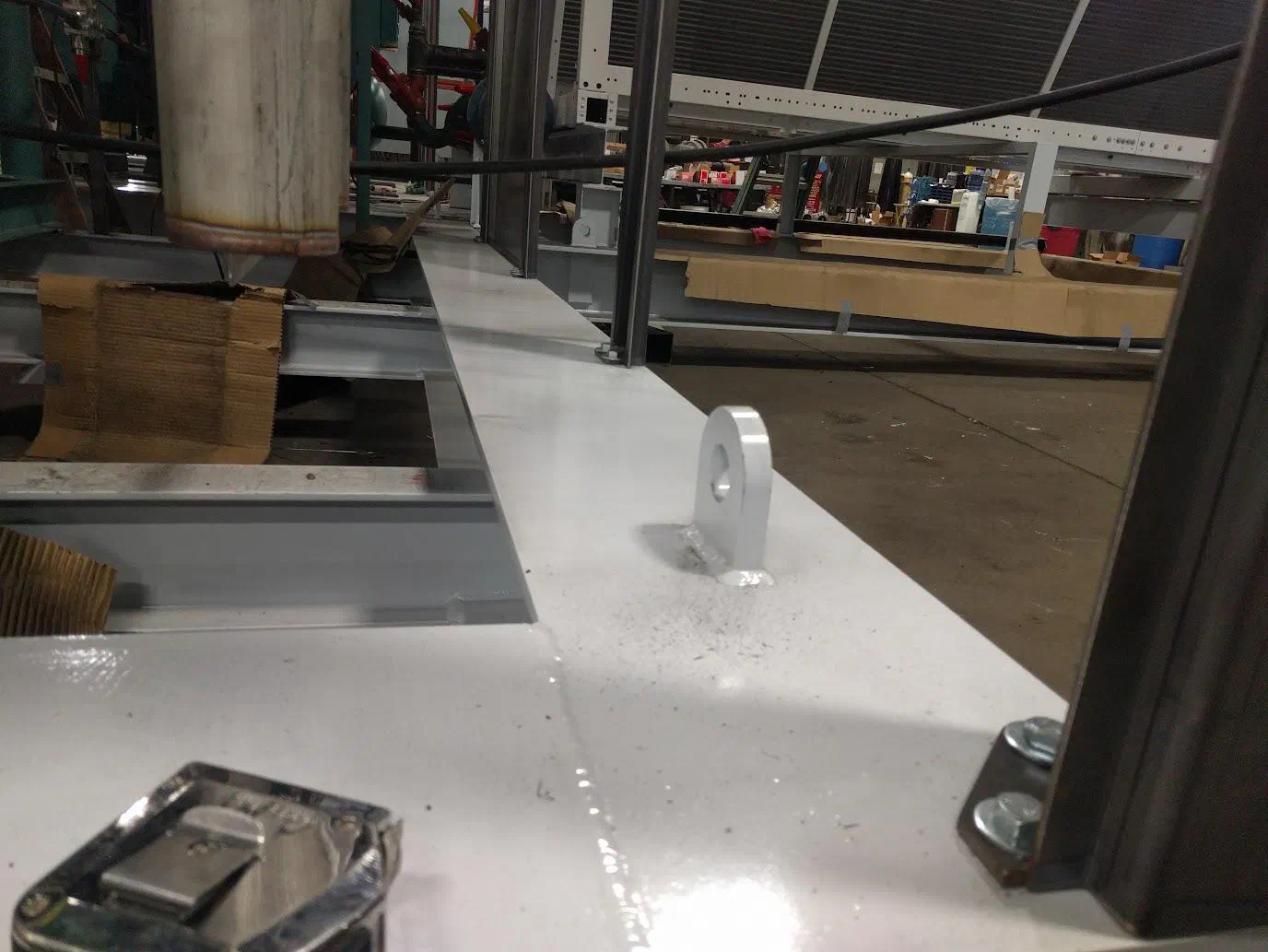
A refrigeration skid was being installed on a roof, where it would be exposed to the weather year-round and rarely visited. It needed an enclosure to protect the equipment and to give technicians a sheltered place to work on it.
Designing to the loads
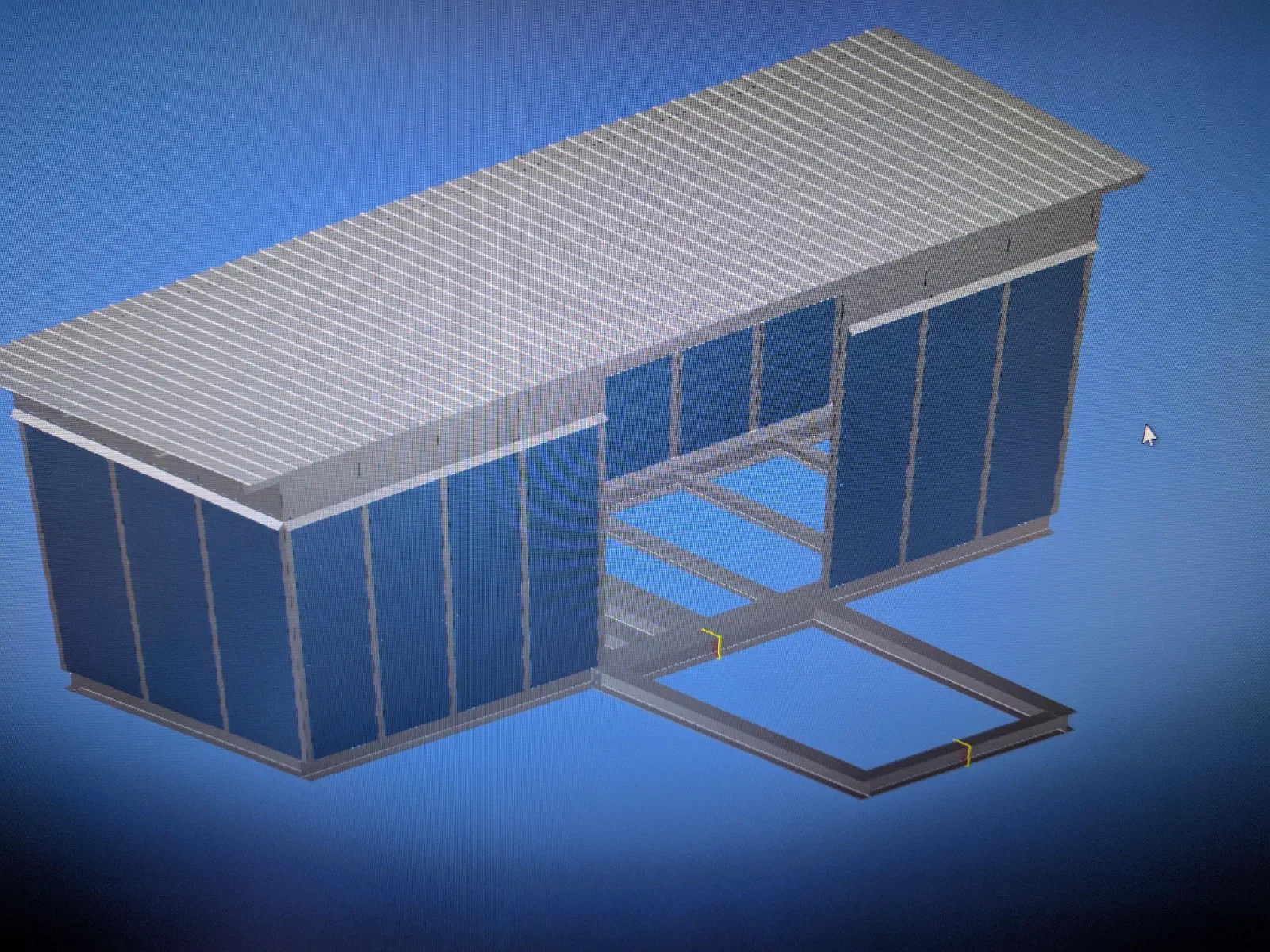
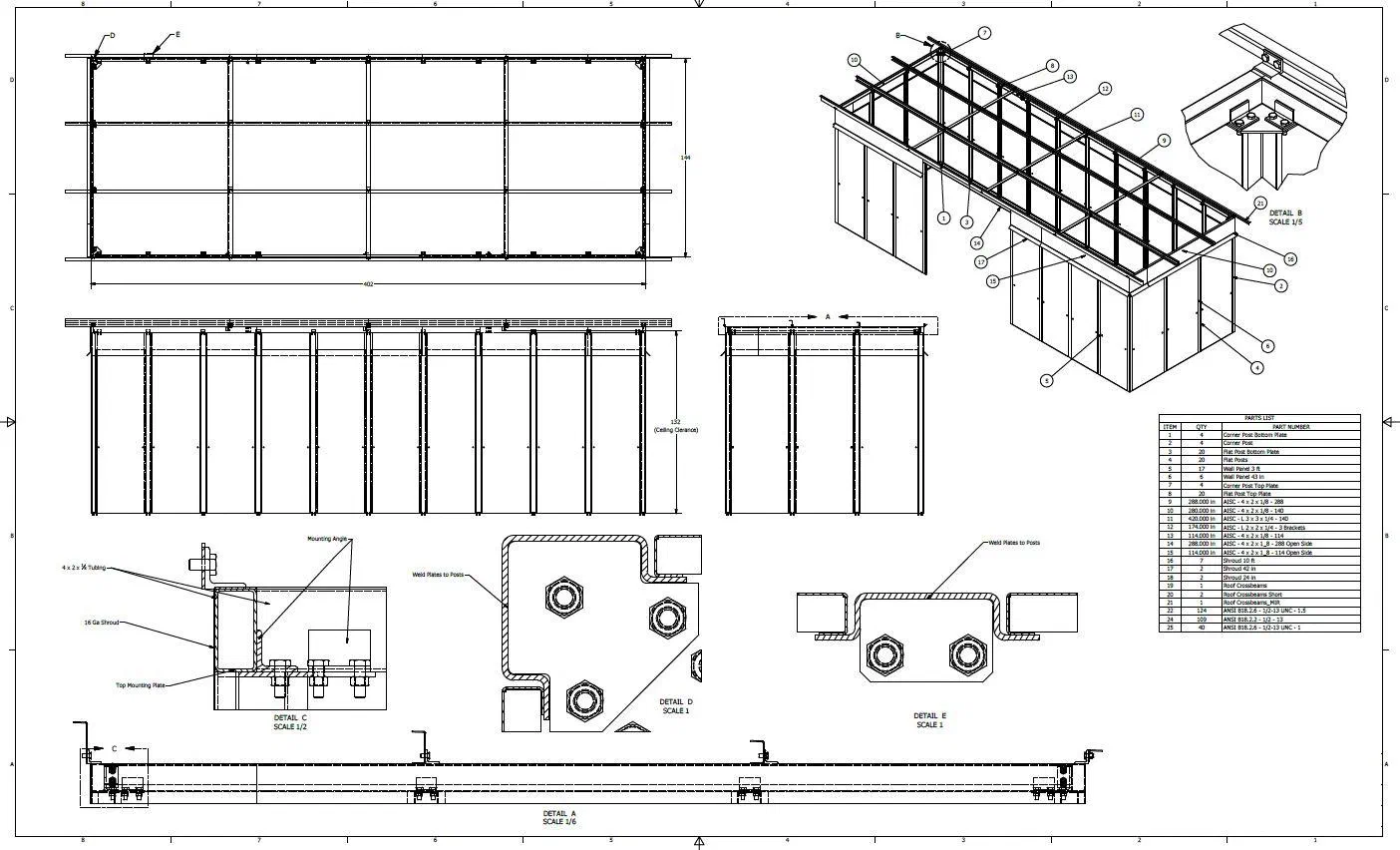
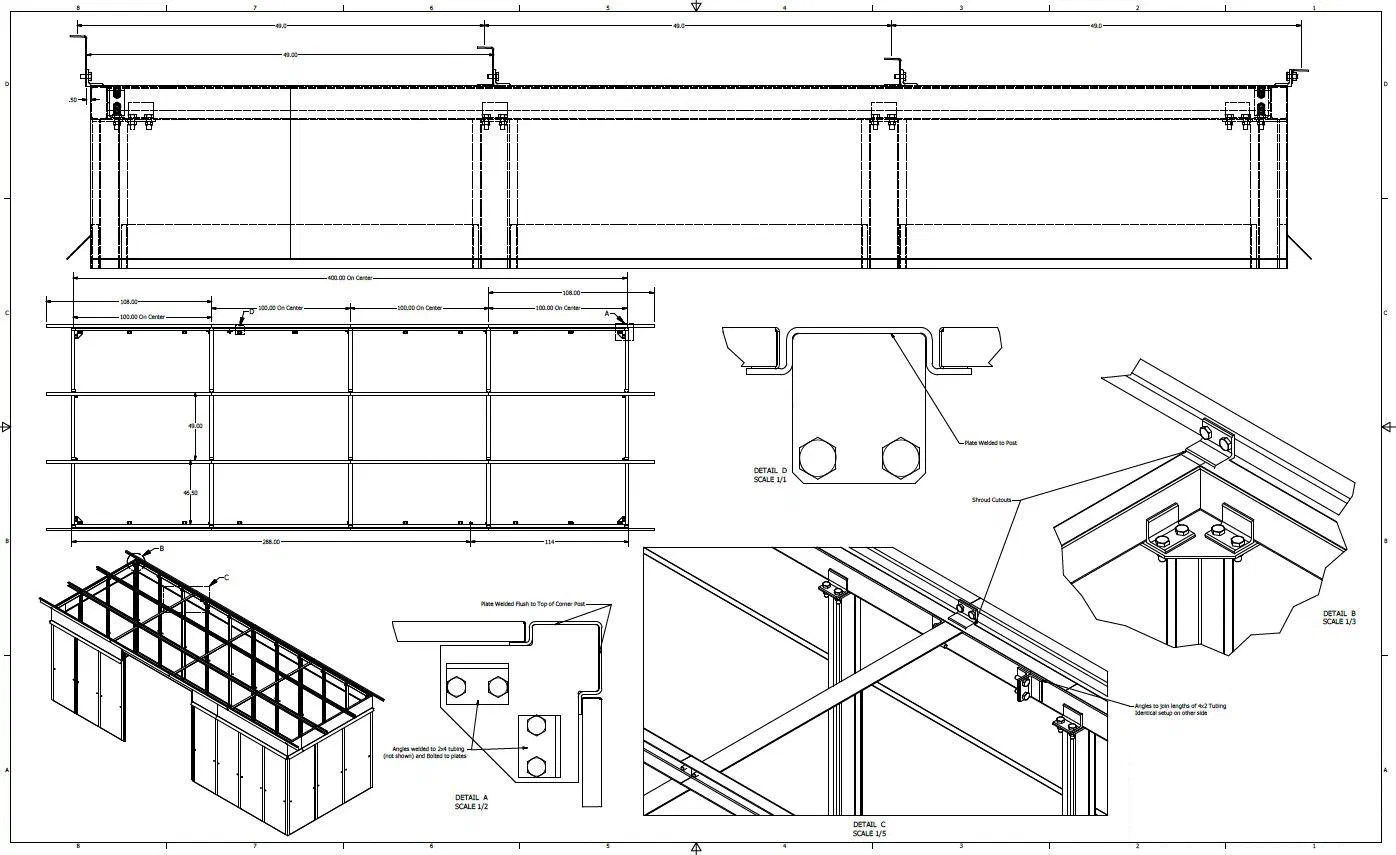
I ran structural and finite element analysis in Inventor Simulation Suite on over 1,000 square feet of enclosure assemblies, checking them against snow and wind loads per the International Building Code and the customer’s own requirements. Snow is a vertical load that can sit on a roof for weeks, while wind pushes sideways from any direction. I iterated the design based on the results, so the analysis shaped the enclosure instead of just checking it at the end.
What the analysis caught
A post and panel enclosure looks solid, but on its own it has very little resistance to racking. If you push sideways on a rectangular frame whose joints can’t carry a moment, it leans into a parallelogram and keeps going. The analysis showed the enclosure folding over like this under several load cases.
The fix was cross-bracing. A diagonal brace turns each bay into triangles, so a sideways load goes into tension or compression in the brace instead of bending the whole frame over.
Opportunities and struggles
Nothing about the unbraced design looked wrong. It could easily have been built and installed, with the problem only showing up in the first major storm, on a roof above an occupied building. This project taught me that vertical loads are intuitive and almost always get checked, while lateral stability is the one that tends to get assumed.
Working with the shop
Hart had its own machine and weld shops just downstairs, so on nearly every project I would bring preliminary drawings to the shop and ask whether the design suited our machines, fixtures, and material. Those conversations were cheap before release and saved a lot of rework after.
Specific skills
- SolidWorks
- wind load analysis
- snow load analysis
- lateral stability and cross-bracing design
- post and panel structural design
- roof-mounted equipment enclosure design
- fabrication drawing production
- collaboration with in-house machine and weld shops
- finite element analysis
- Autodesk Inventor Simulation Suite
- building code compliance (IBC)