Sausage Collate and Load
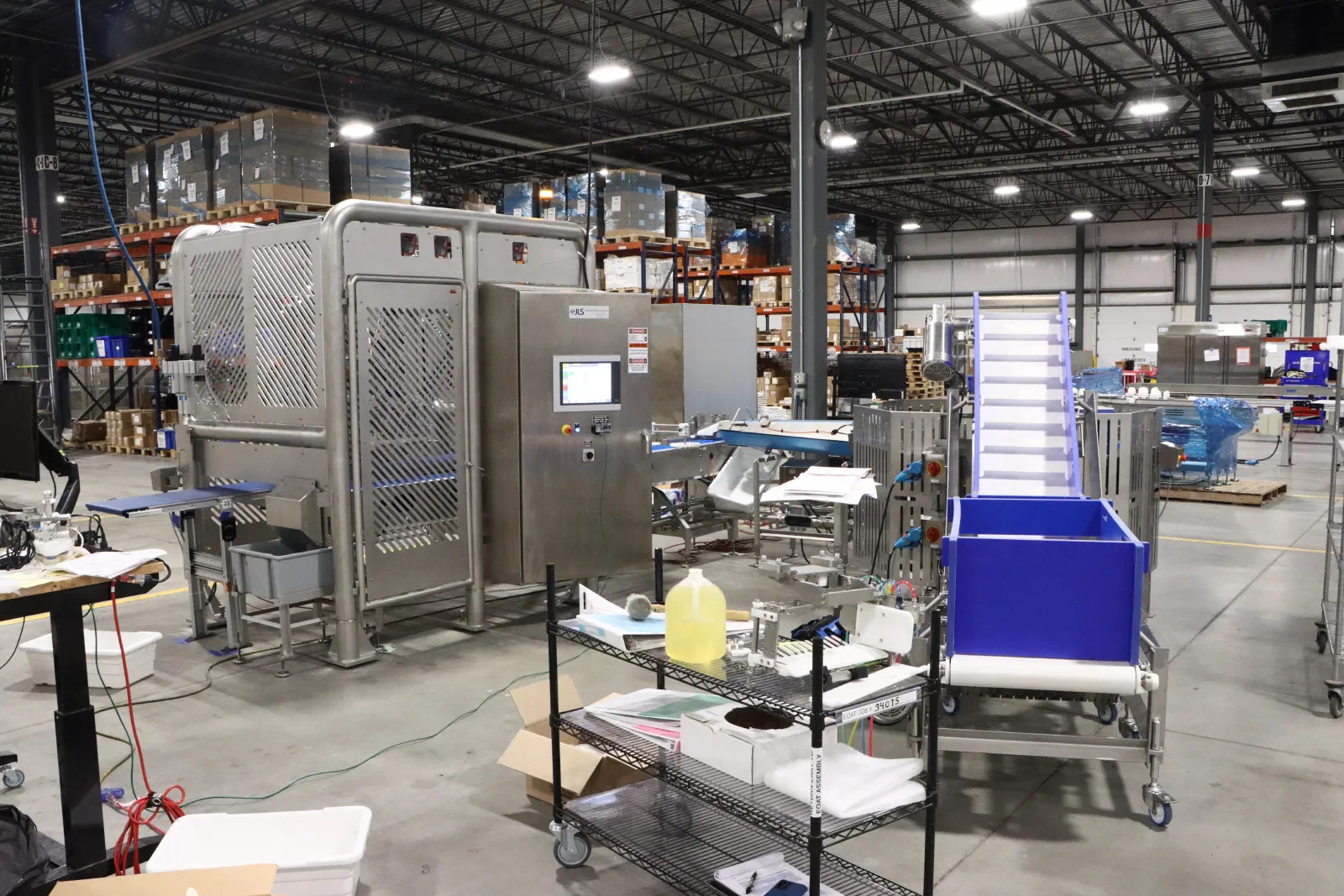
A robotic cell gang-picking cooked sausage links into a thermoformer, where the hardest problem was getting sticky product to flow.
- Employer
- JLS Automation
- Role
- Systems Engineer
- Industry
- Cured meat
- Period
- Apr 2025 to Feb 2026
- Scale
- One collate-and-load cell at 420 products per minute, gang-picking seven sausages per pocket into two thermoformer pockets at once
Fourteen cups, two pockets at a time
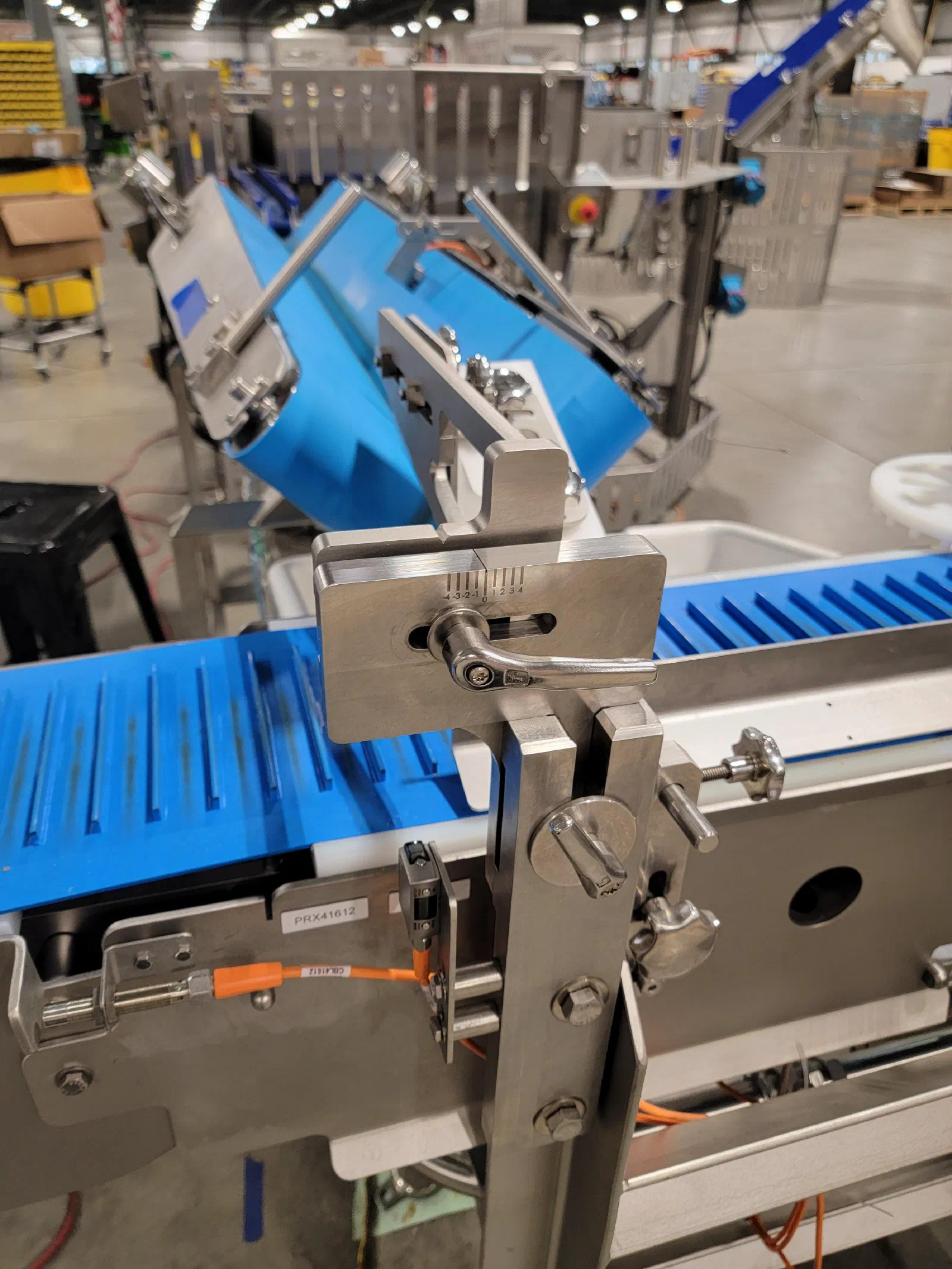
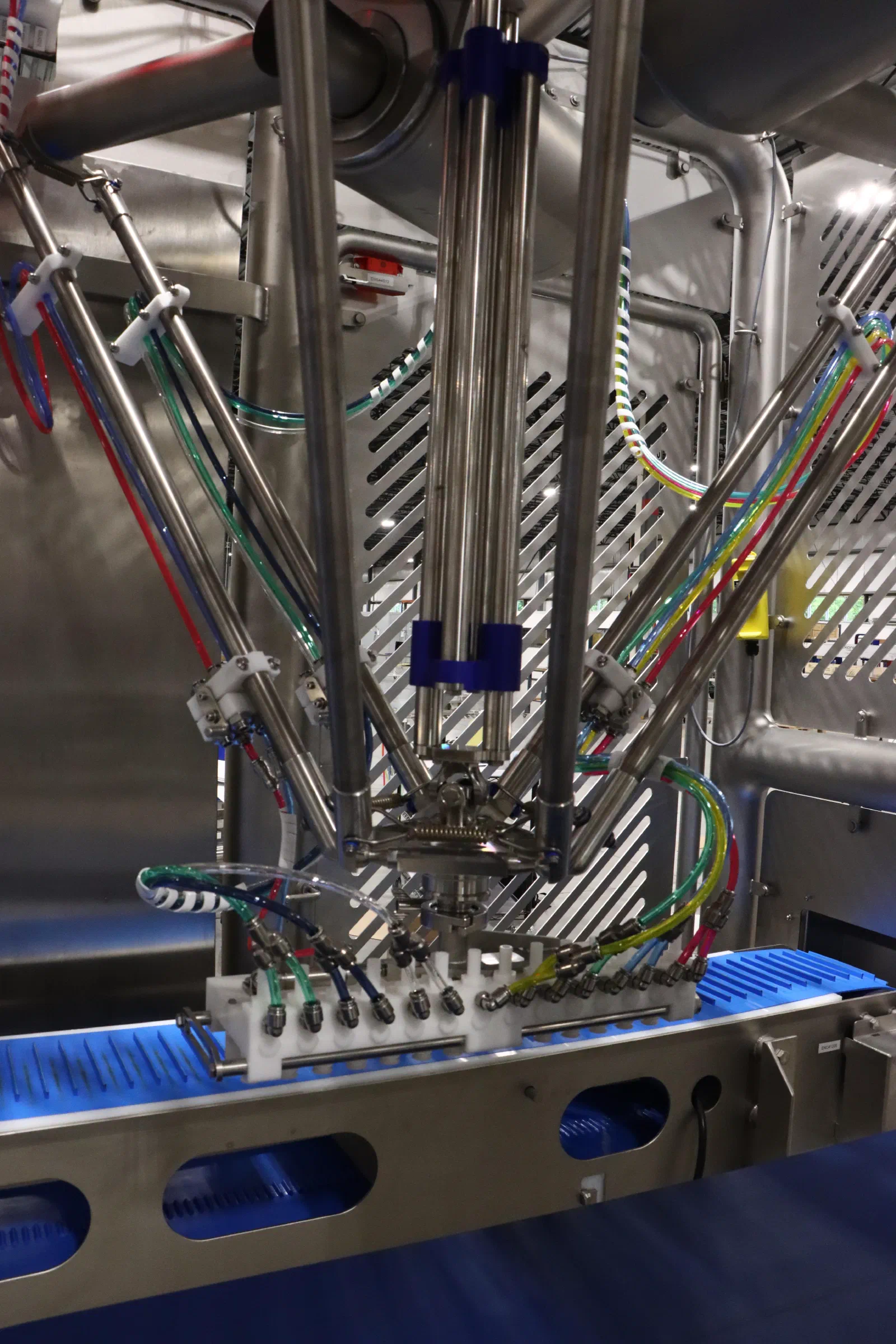
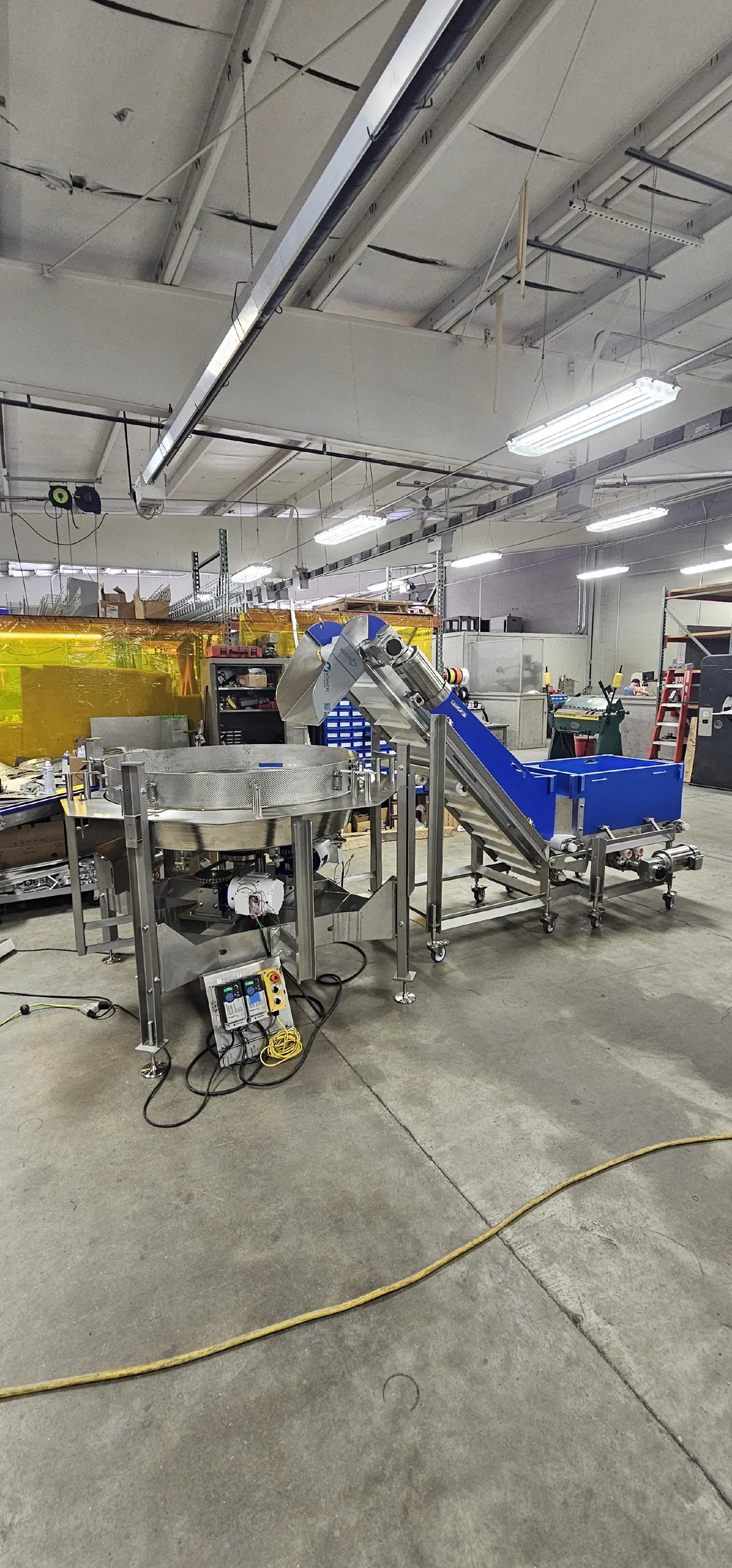
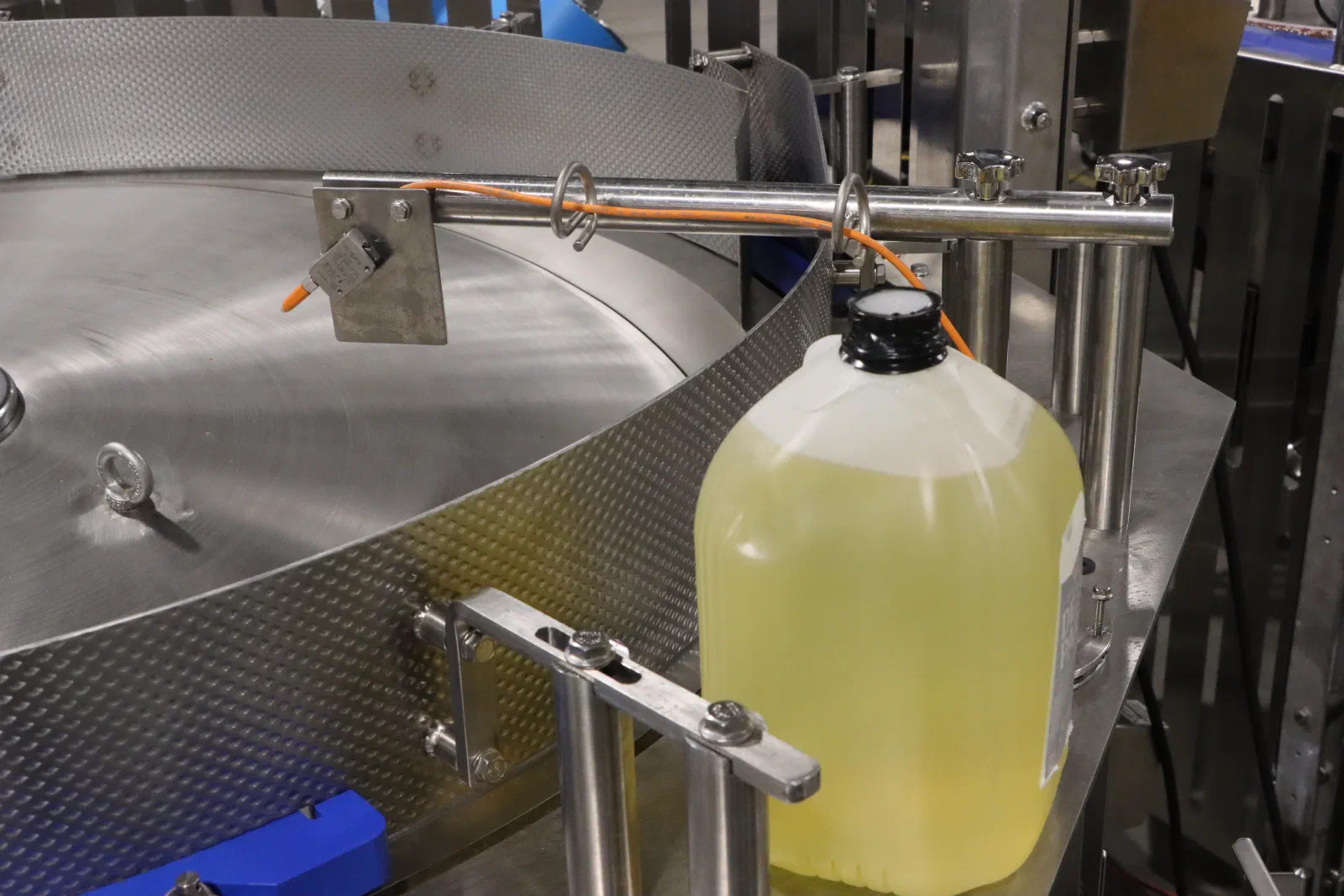
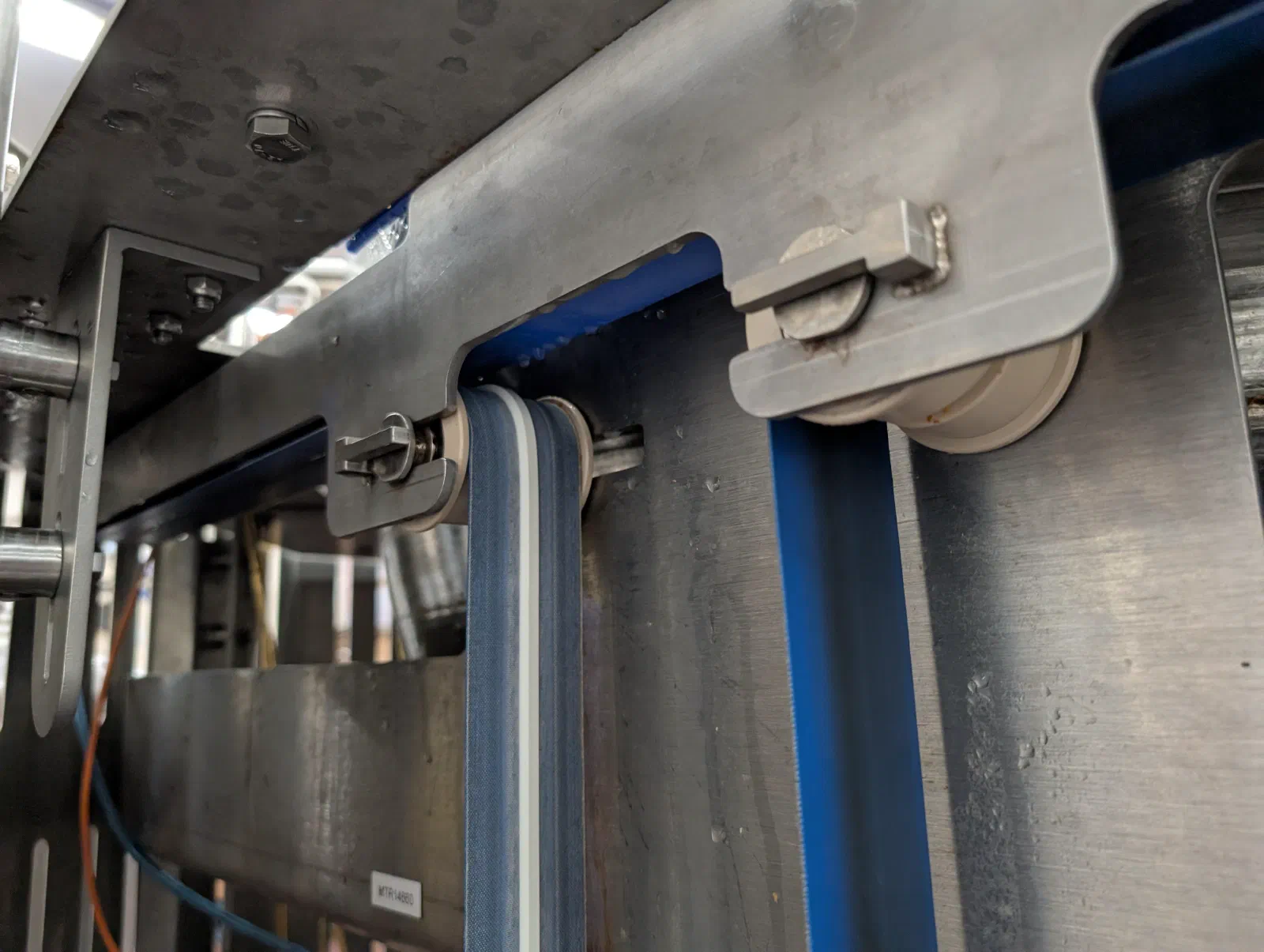
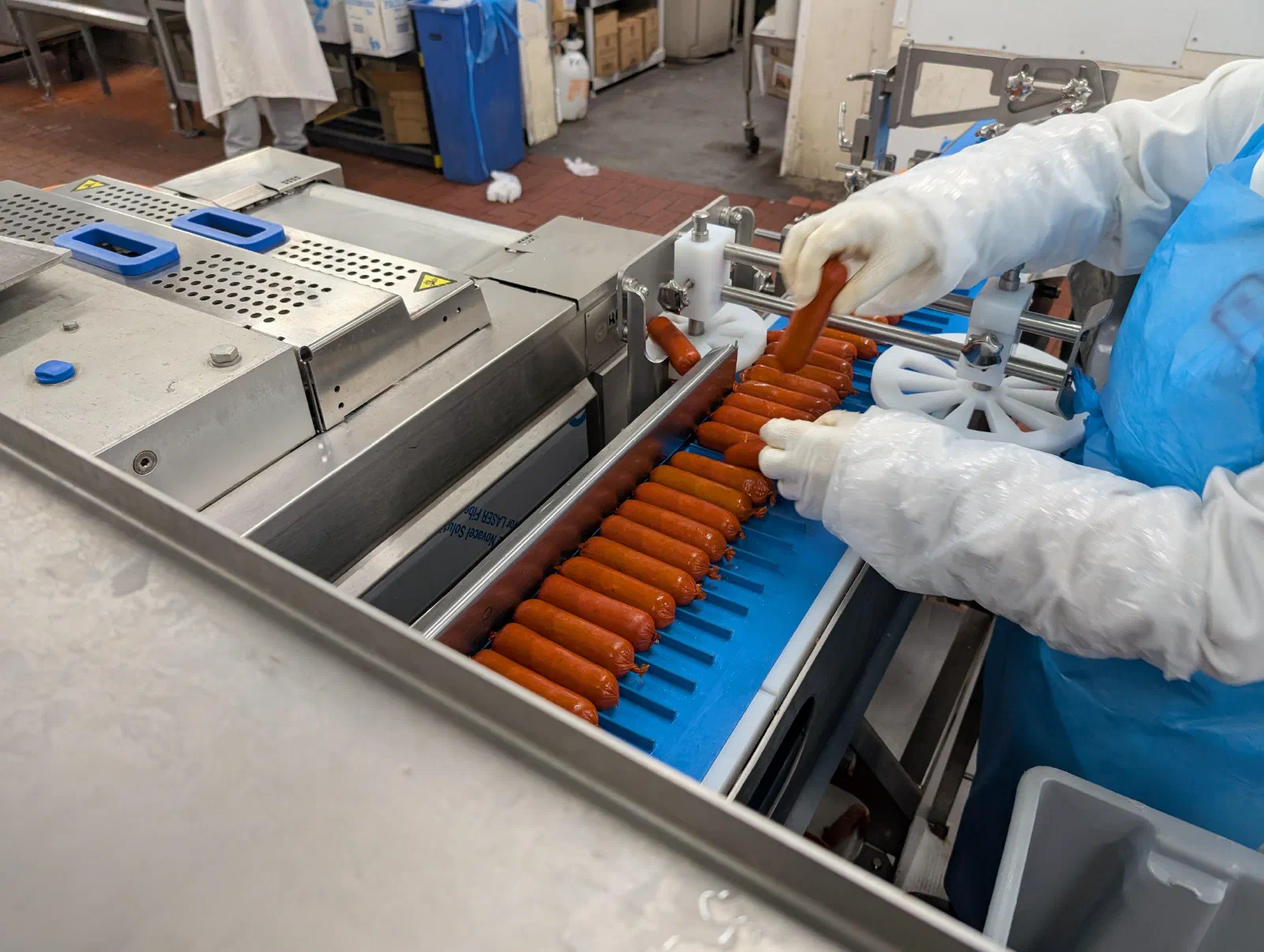
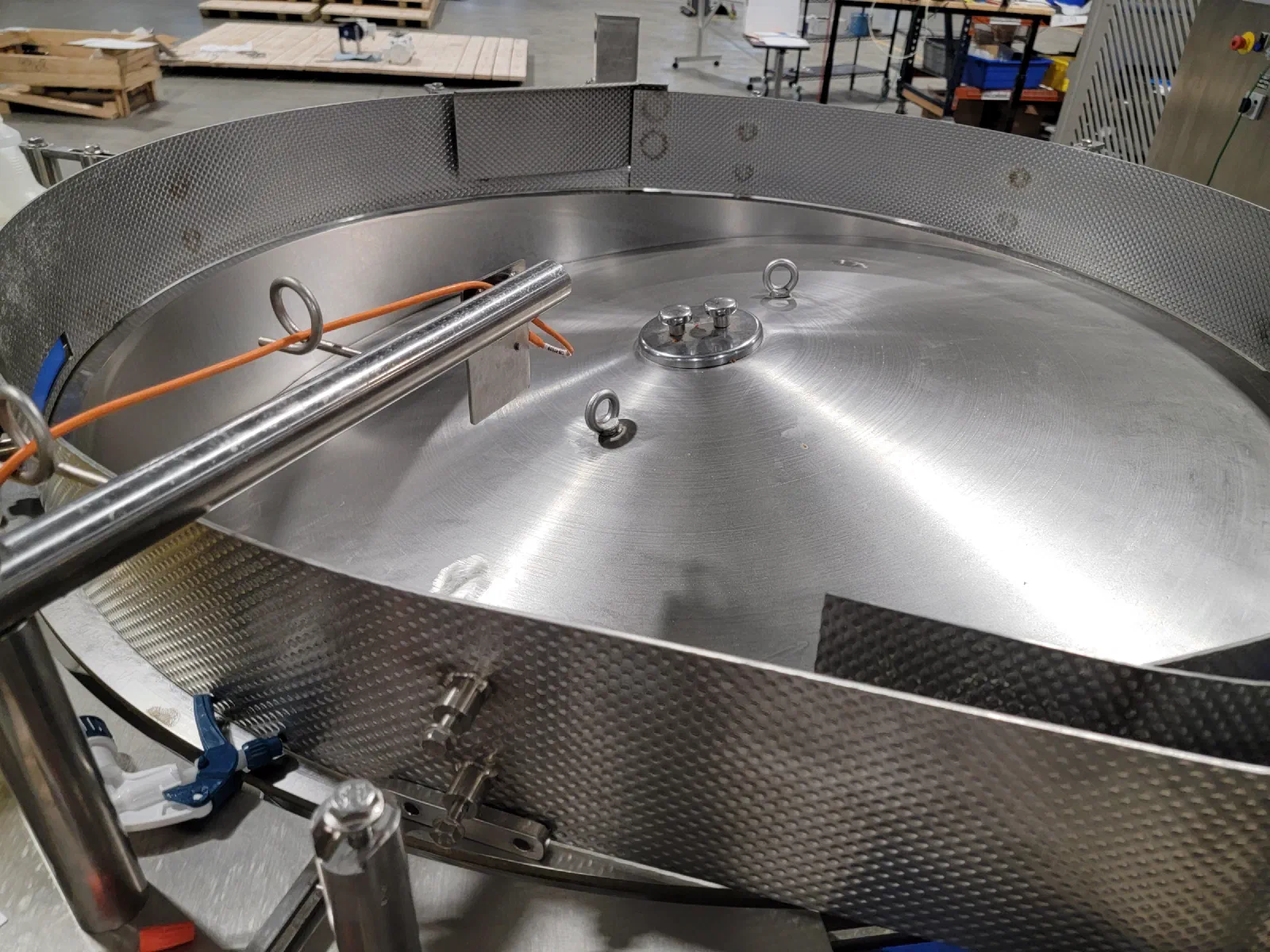
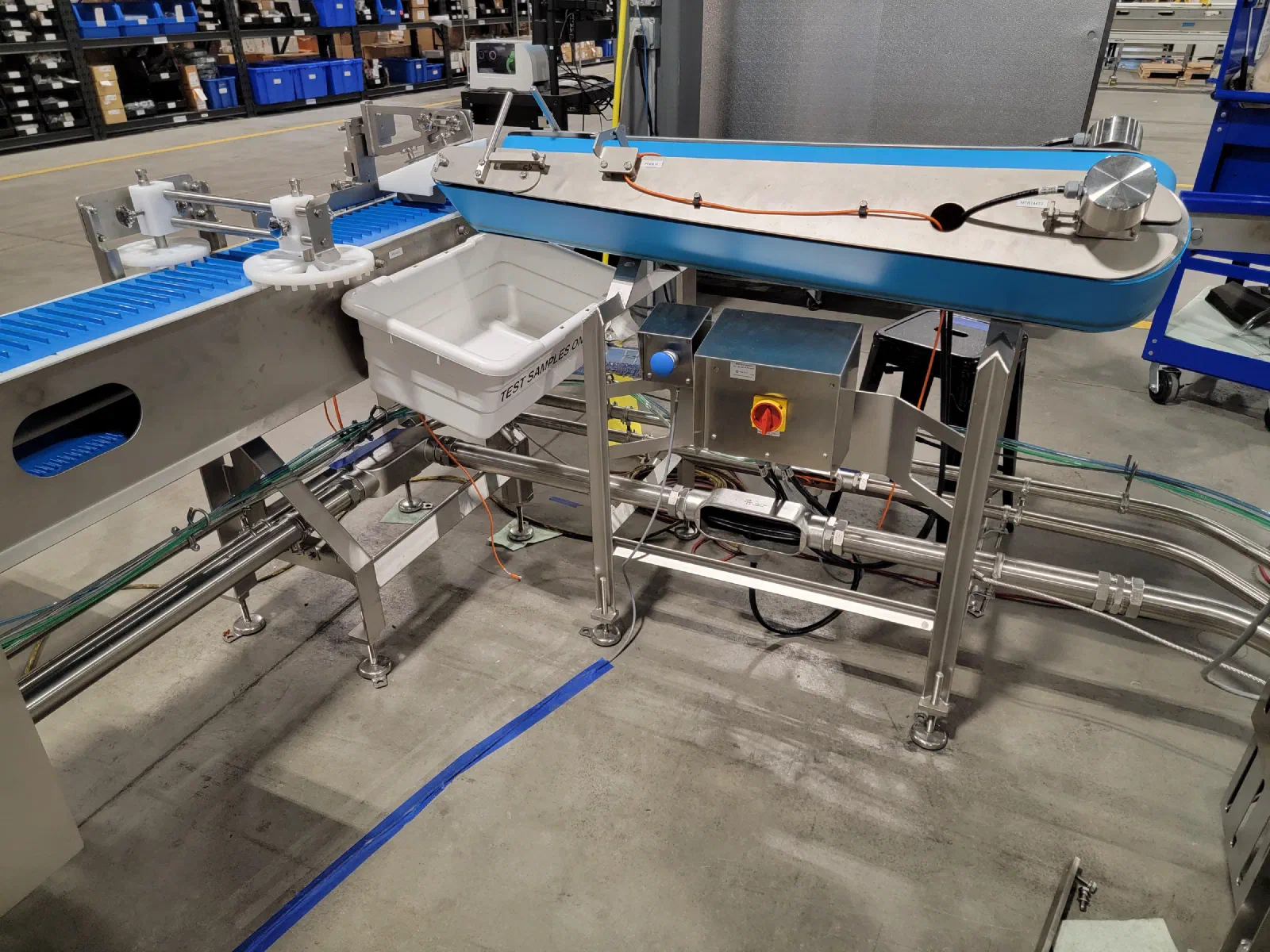
This cell collates and loads cooked sausage links for a food processor. Links come off the customer’s cutter into a bowl feeder that separates them, an indexing conveyor lines them up, and a delta robot with a fourteen-cup tool picks two groups of seven links at once, loading two thermoformer pockets at a time at 420 products per minute. An operator station downstream catches anything the robot missed.
My part in it
As Systems Engineer, I defined the scope, configured the collation and pick cell, developed the fourteen-cup gang tool, and diagnosed why product wasn’t flowing through the bowl feeder. I was moved off the project before final commissioning, so the later redesigns happened without me.
Sticky product
Cooked sausage doesn’t flow the way the bowl feeder was designed for. Links stuck to the bowl’s rails instead of moving through the chute, and no amount of robot or vision tuning downstream could fix a problem that started at the first step. The eventual fix was a mister that sprays lubricant into the bowl, but getting there took more than one hopper redesign and a motor and gearbox replacement. The original wheels meant to square up each link before the pick also didn’t perform well enough, and the pusher bar that replaced them became the standard approach on other platforms too.
I also checked the conveyor frame for deflection instead of assuming it was stiff enough. Running both a distributed and a worst-case point load gave about 0.23 to 0.37 mm of deflection over a 2.9 m span, so the frame was never the risk.
Opportunities and struggles
The biggest lesson was to test sticky, cooked product through the actual feeding hardware early, and not assume it will behave like a drier, more uniform product. When I left the project, operators were still grooming some product by hand downstream, so the flow problem wasn’t fully solved. This program’s lessons-learned record was also left mostly unfinished, which reminded me that closing out the paperwork matters as much as closing out the engineering.
Specific skills
- 2D machine layout drafting in DraftSight (AutoCAD)
- conveyor frame deflection calculation
- requirements capture and scope definition
- robotic cell configuration and layout design
- end-of-arm tooling development
- product feeding system troubleshooting
- cross-discipline coordination
- commissioning and factory acceptance testing
- sanitary and washdown design requirements in food production