Snack Stick Cartoner Loader
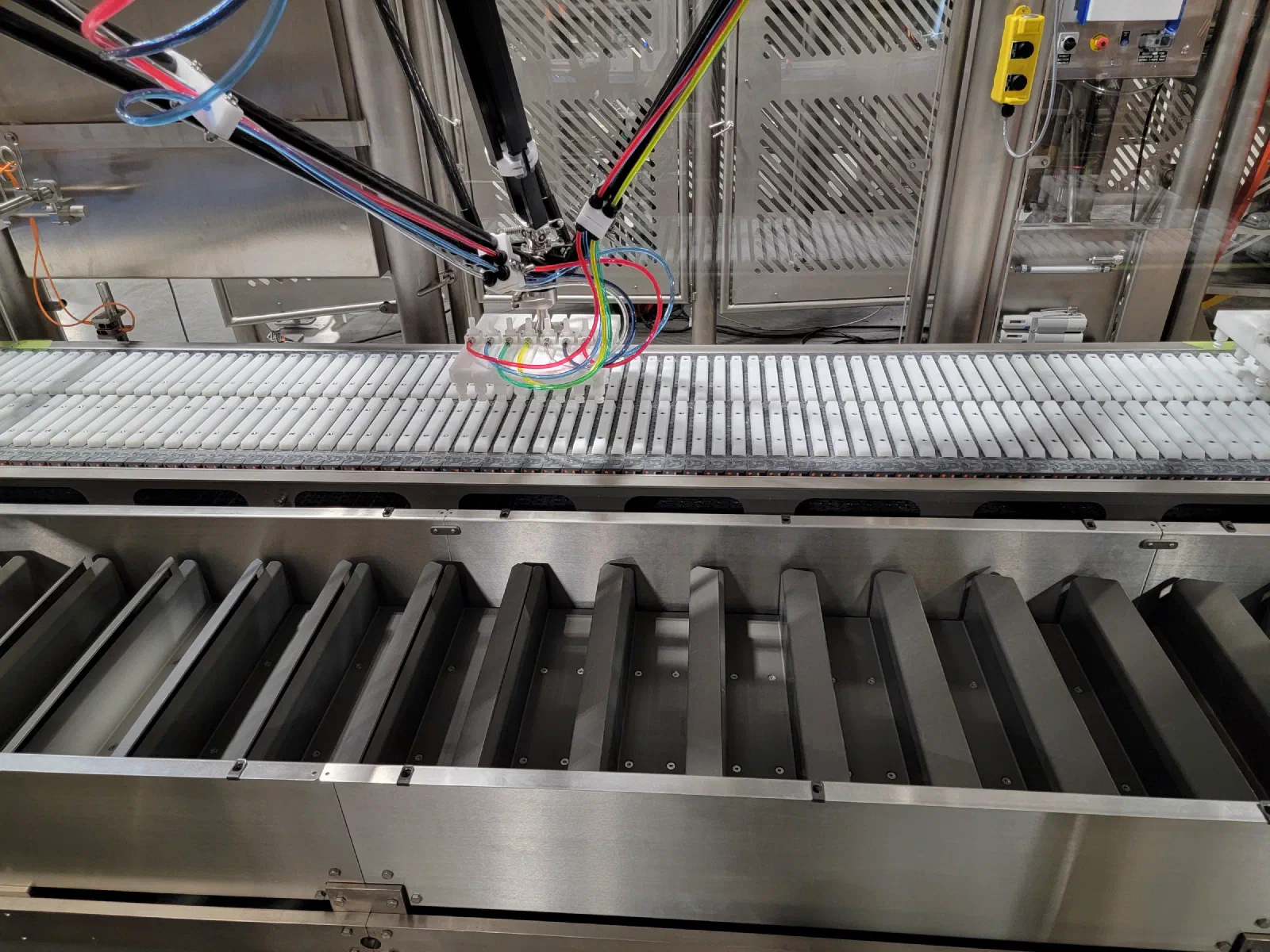
Three linked robotic systems taking meat sticks from a 22-lane thermoformer through cartoning, case packing, and palletizing.
- Employer
- JLS Automation
- Role
- Systems Engineer
- Industry
- Snack food
- Period
- Apr 2024 to Jan 2026
- Scale
- Three linked robotic systems (transfer cell, dual-head cartoner loader, case packing and palletizing), three SKUs at 660 pieces per minute
Thermoformer to pallet
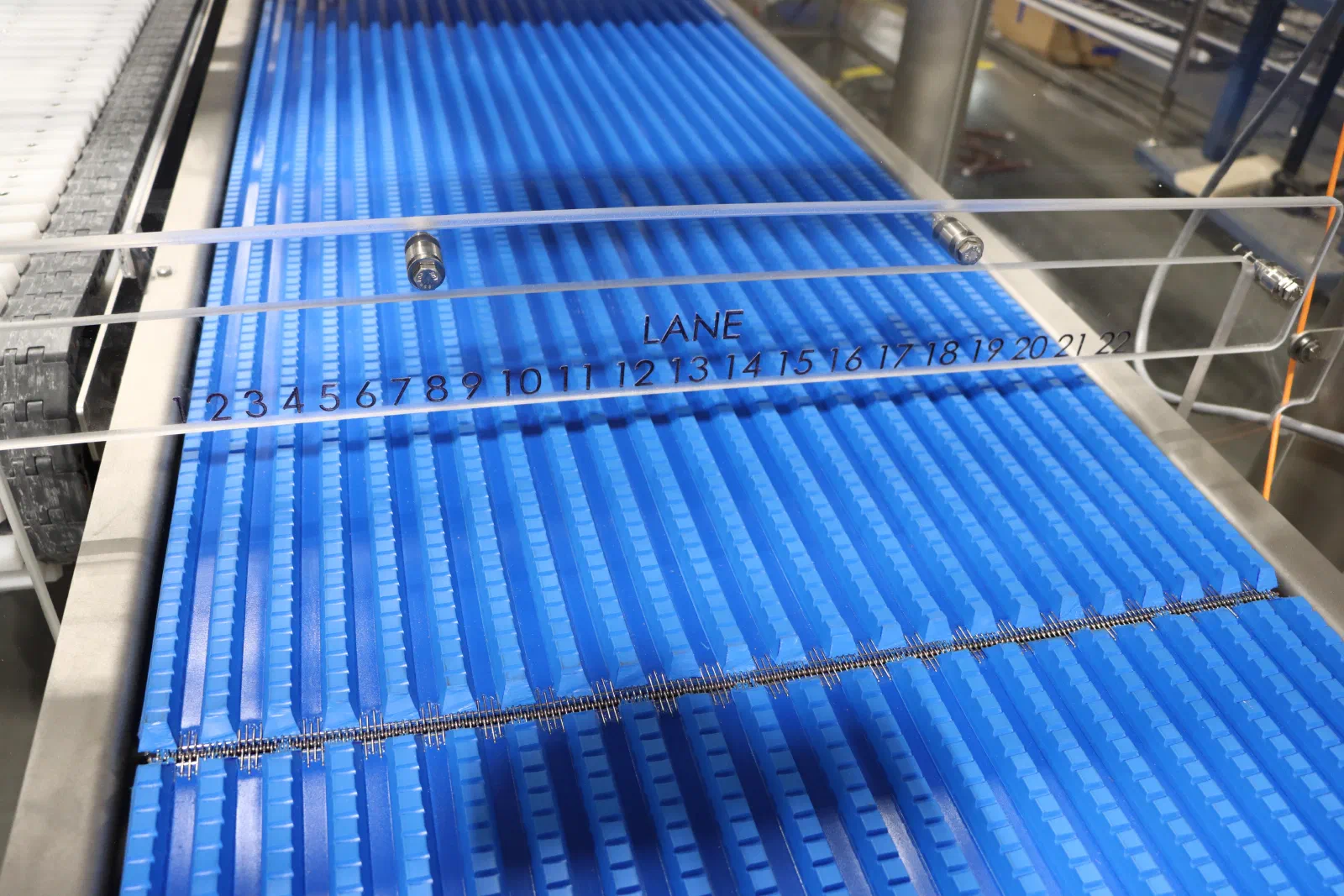
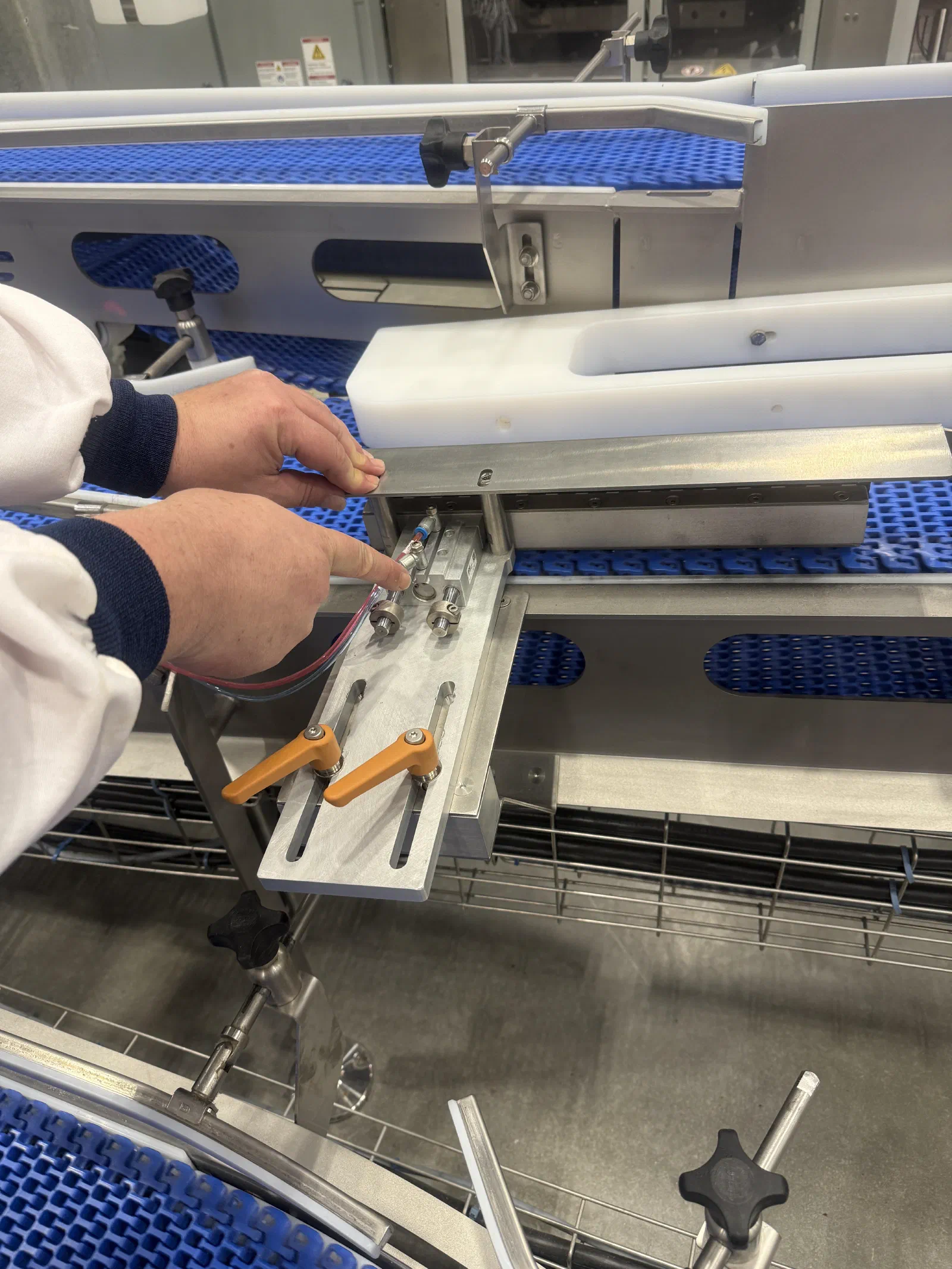
This line carries meat sticks from the customer’s thermoformer all the way to palletized cases. A robot picks each 22-lane array off the thermoformer, spreads it, and hands it to a flighted conveyor. A dual-head cell then group-picks the sticks into a cartoner the customer already owned, and two more robotic systems pack the cartons into cases and palletize them. As Systems Engineer, I defined the interfaces between the transfer cell, the loader, and the cartoner, and coordinated with the companion combo-pack line at the same plant.
Eight buckets out of ten
The cartoner’s bucket geometry only lets the loader reach eight of the ten buckets in each index. If a single stick is missing from a pick zone, the robot has to bypass up to seven good pieces rather than risk a partial carton, so the upstream transfer step has to be very tight.
The analysis behind it
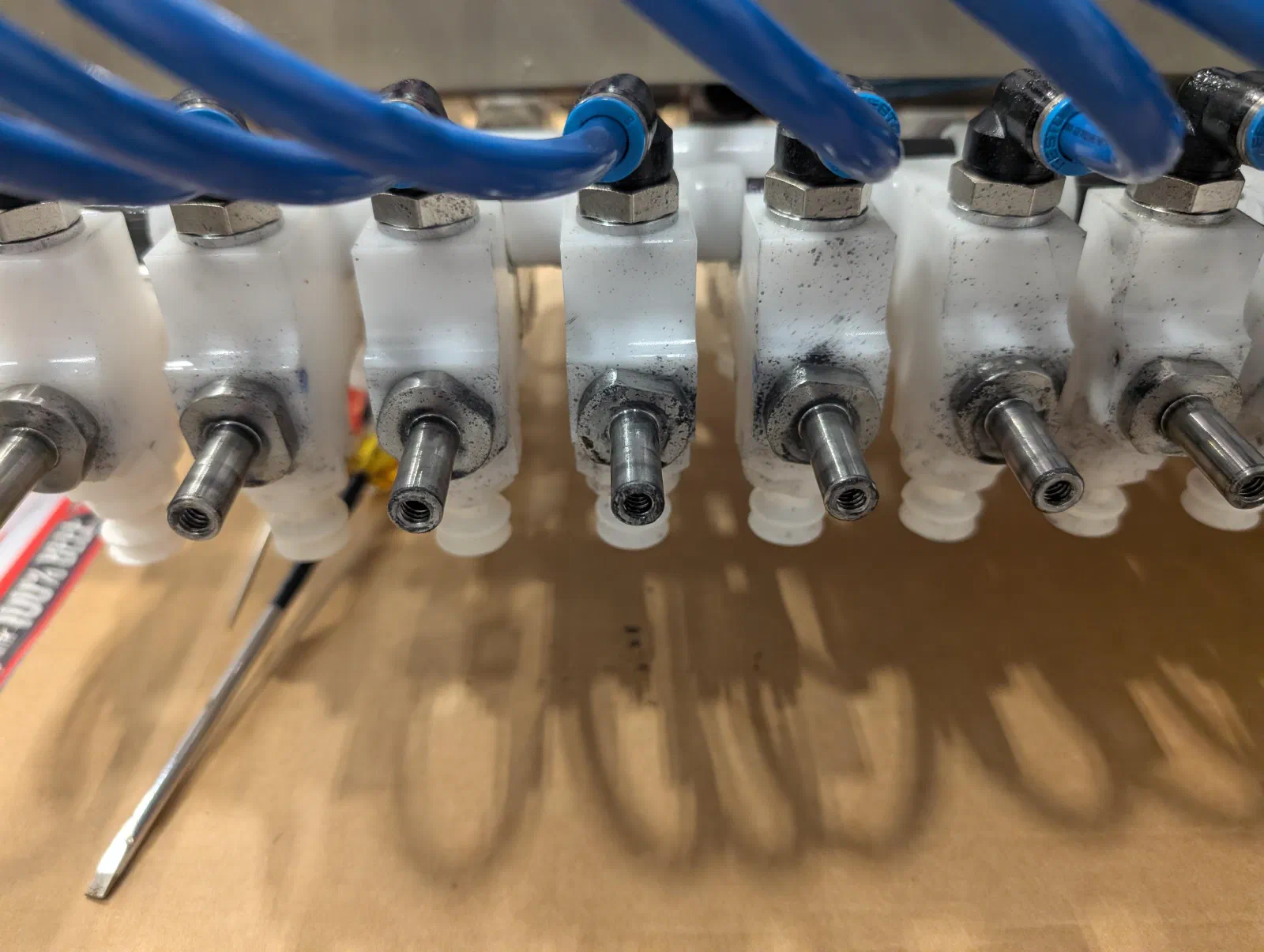
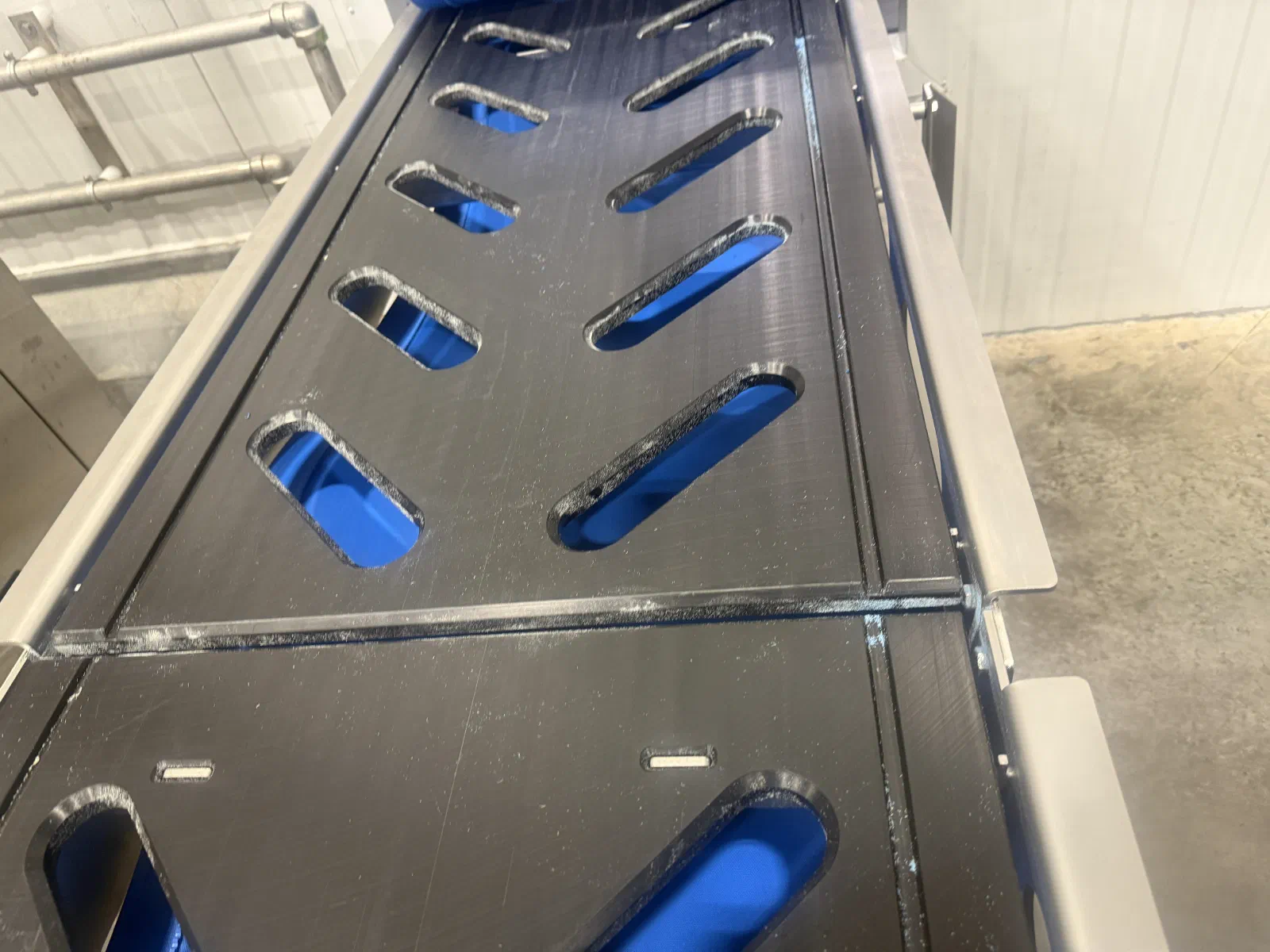
I sized the metering conveyors by working backward from the cartoner’s index time of about 14.5 seconds, which left 12 seconds to singulate each carton, and the belt speeds came out of that. When spacing drifted in the field, I measured belt pitch over 50 and 100 flights and found no measurable stretch. I also measured the spreading tool’s pins and bushings with pin gauges. Wear was uneven across the tool, and every main pin was backing out, which is a worse problem than wear because it gets worse on its own. With two colleagues, I reworked the tool from a scissor linkage to a direct slide linkage to hold pick spacing.
Opportunities and struggles
- Constraints in someone else’s machine: When a loader has to work around a fixed limit in another machine, the upstream steps need to be engineered tighter, or the slack shows up as wasted good product.
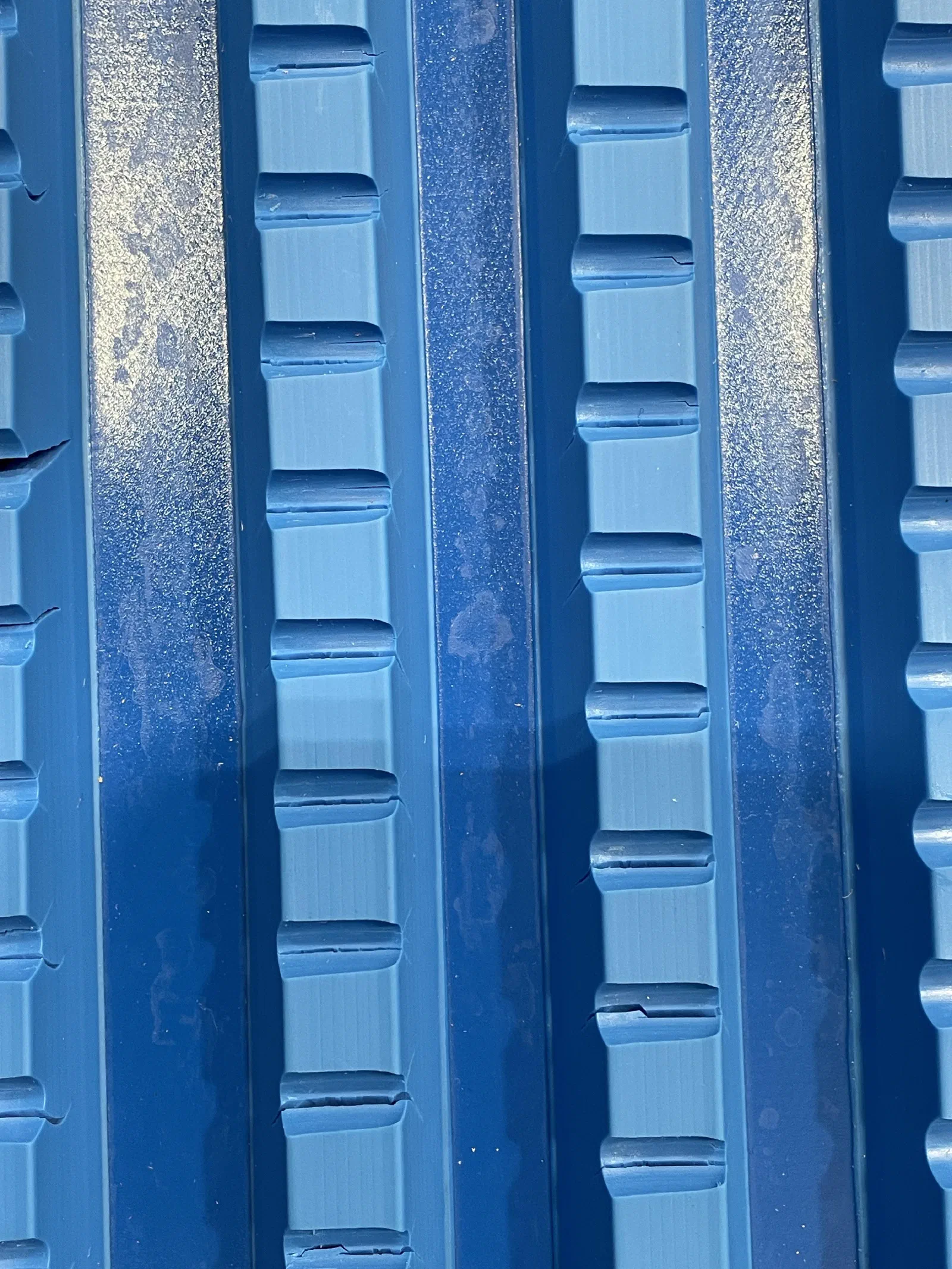
- Knowing when to replace: Conveyor belts kept cracking after a mismatched replacement belt was installed. The fix that held was replacing the whole conveyor instead of patching it again.
- Closing out: No lessons-learned document was ever completed for this job. The field-issue record is the closest thing to one, which is a gap I’d close next time.
Specific skills
- 2D machine layout drafting in DraftSight (AutoCAD)
- belt speed and index timing calculation
- precision measurement of pin and bushing wear
- precision measurement of belt stretch against a wear limit
- requirements capture and scope definition
- robotic cell configuration and layout design
- machine vision integration
- third-party subsystem interface engineering
- cross-discipline coordination
- commissioning and factory acceptance testing
- field troubleshooting and reliability support
- sanitary and washdown design requirements in food production