Snack Stick Collate and Load
Eight robotic lines gang-picking twelve meat sticks per cycle into a thermoformer, proven out with a structured reliability study.
- Employer
- JLS Automation
- Role
- Systems Engineer
- Industry
- Snack food
- Period
- Nov 2025 to Apr 2026
- Scale
- 8 collate-and-load lines gang-picking 12 products per cycle, two SKUs at up to 396 packages per minute
Twelve sticks into twelve pockets
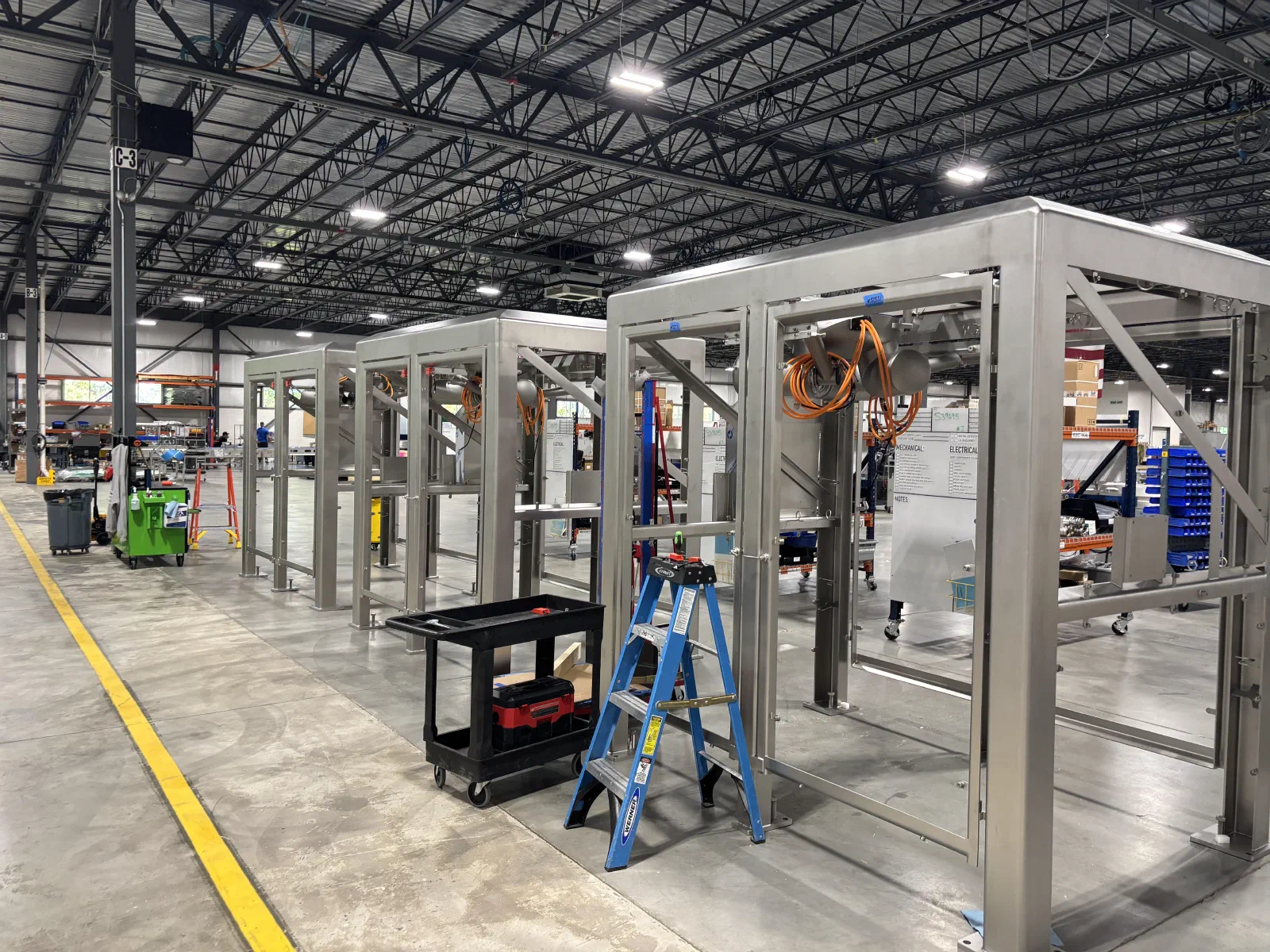
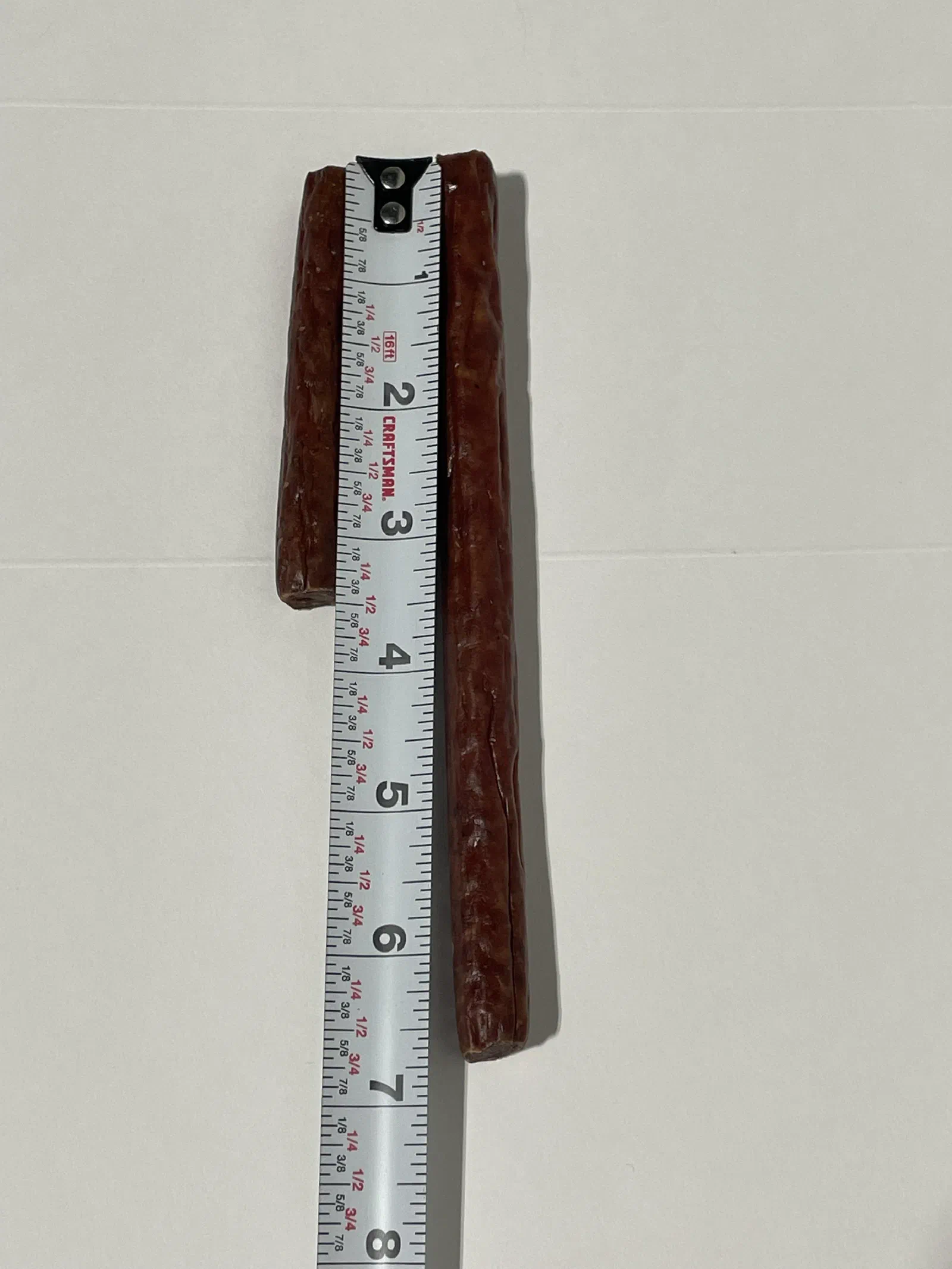
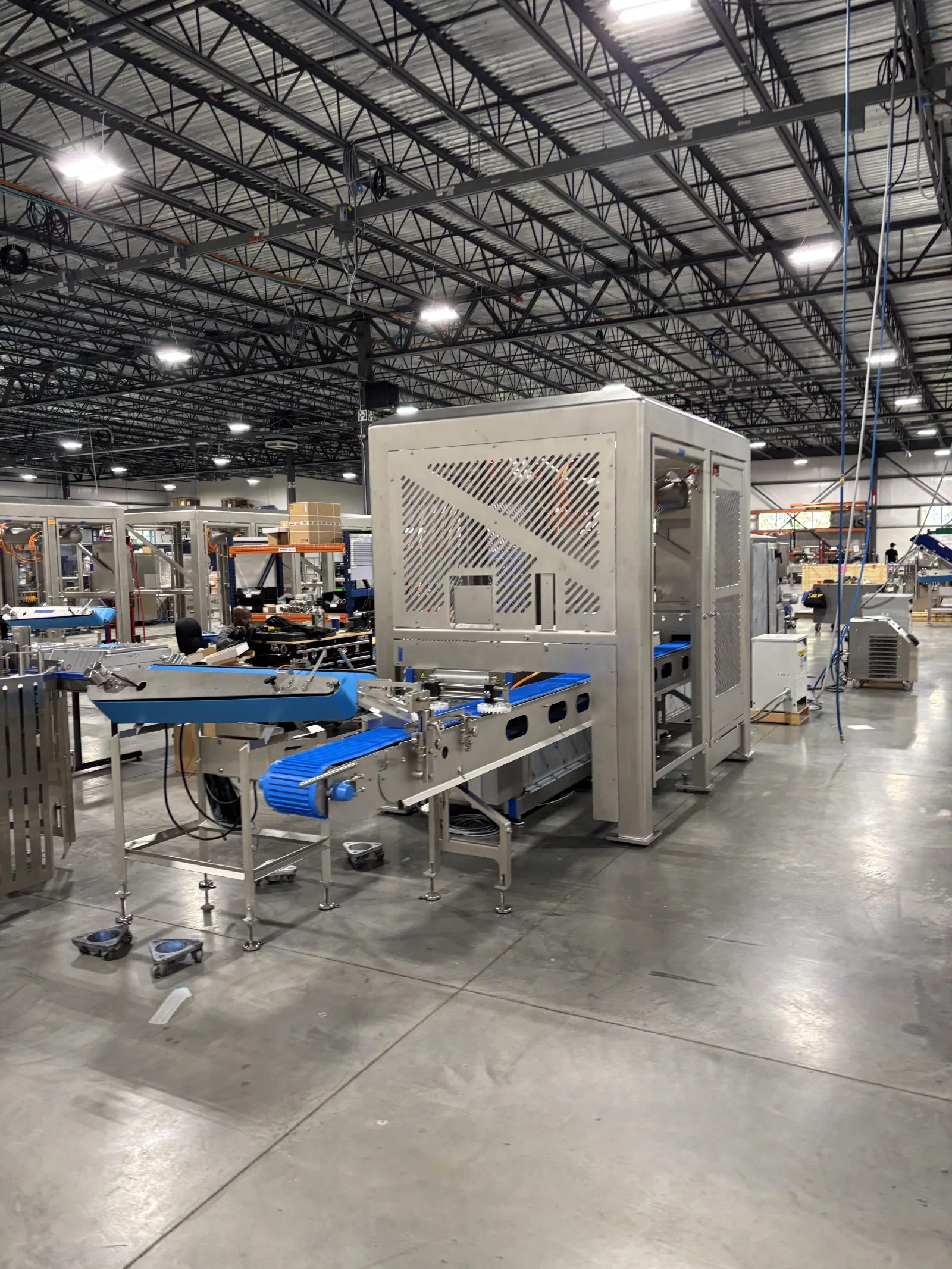
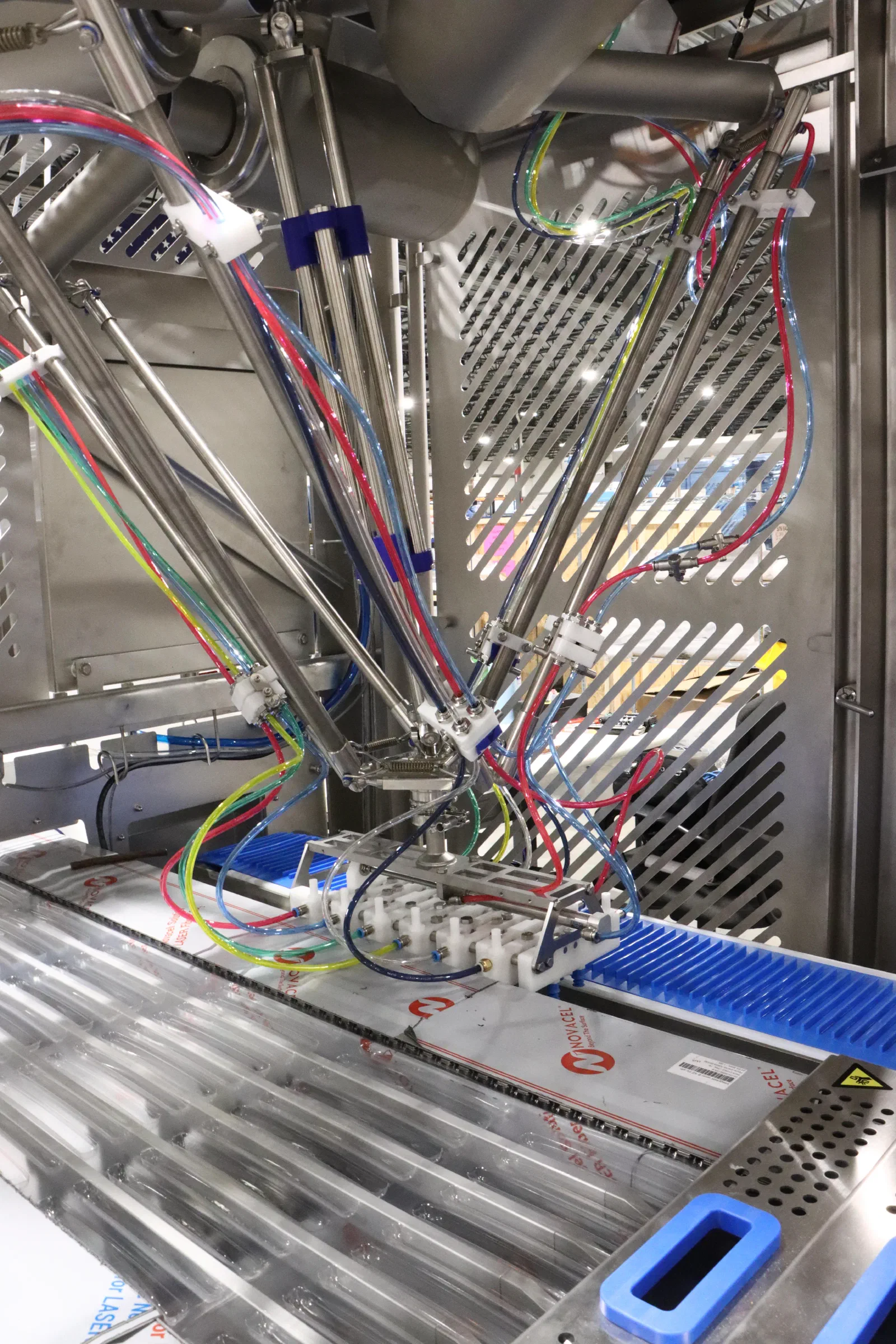
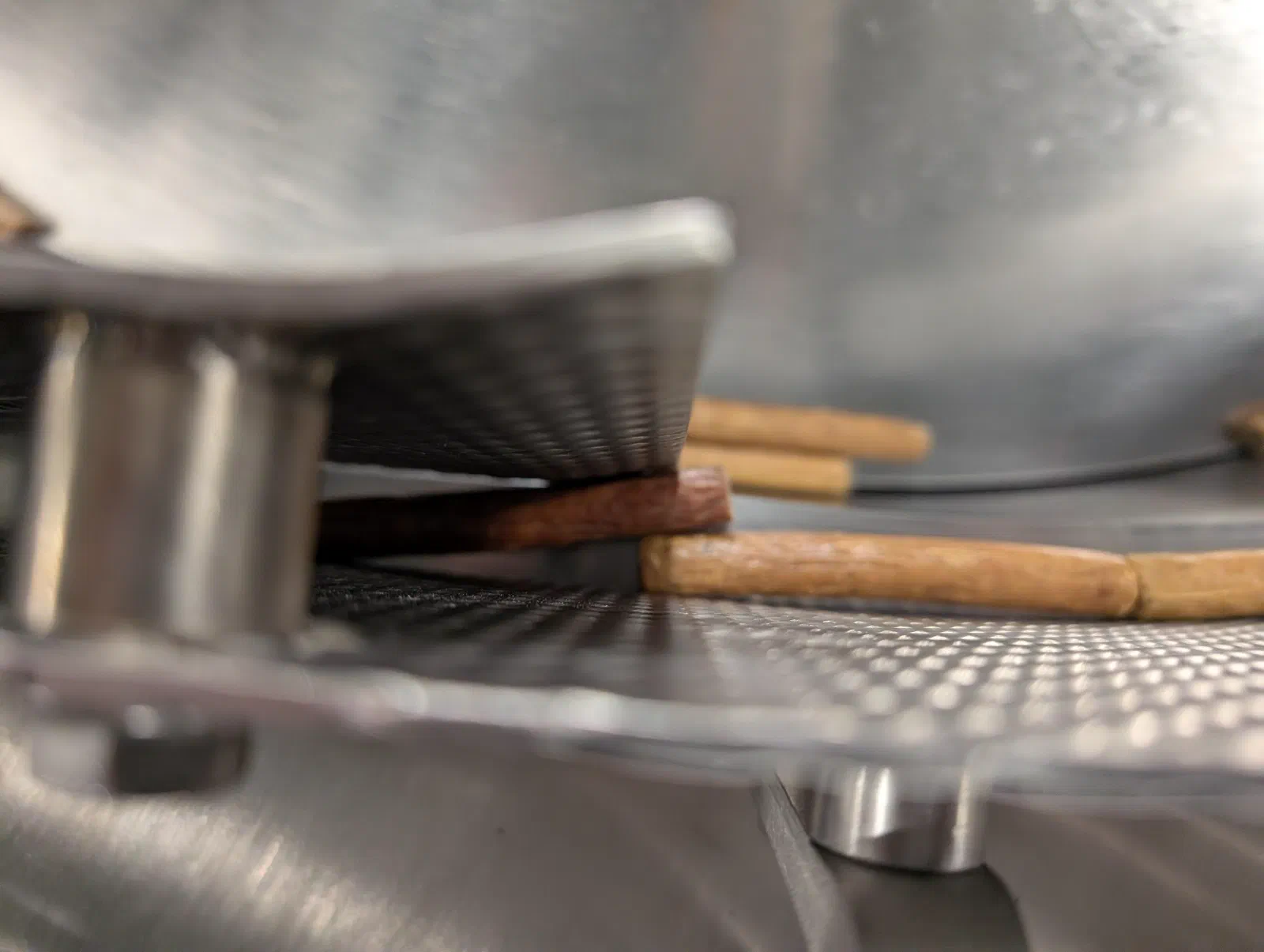
A snack food producer needed meat sticks loaded into a thermoformer twelve at a time, across eight lines, at rates far too high for hand loading. A bowl feeder separates the sticks, an indexing conveyor lines them up, and a delta robot picks twelve at once and spreads them out to match the pocket spacing. The system doesn’t inspect the product itself, so the feed and tooling had to handle bent or uneven sticks on their own. As Systems Engineer, I defined the tooling requirements and coordinated our mechanical and controls teams from design through commissioning on all eight lines.
Getting the tool right
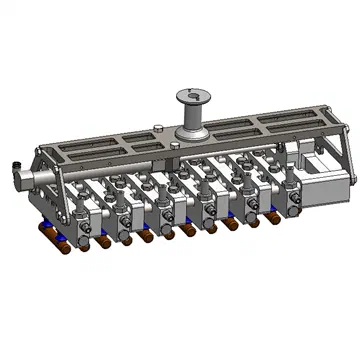
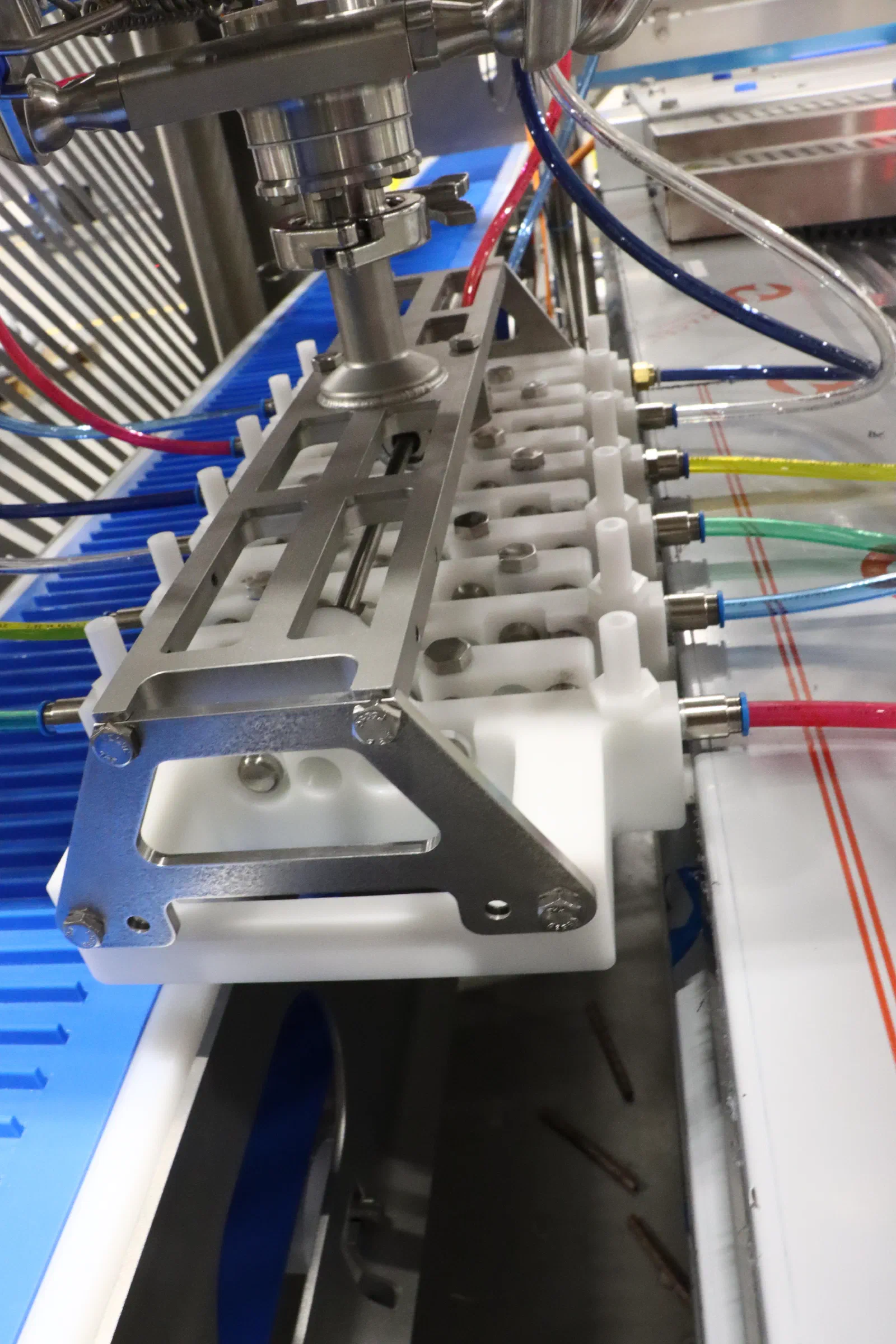
The end-of-arm tool took two design generations. Our first version spread the sticks out from the center and jammed. A one-sided spread fixed the jamming, but it moved the tool’s weight off center, to the point where its inertia nearly limited how fast the robot’s wrist could rotate. We also found four stacked tolerances throwing off the pick spacing, and since the tool body itself was the part that wore, correcting it meant a full teardown.
Proving it with numbers
We qualified the lines with a structured test study, running fixed 15 minute blocks and logging every stoppage by cause and time to clear, with a checklist for each machine before every run. The first runs in December failed on bowl feeder jams, and by February the same recipes were passing at target rate with over 99.5 percent pick and place efficiency. The system went on to complete site acceptance testing.
Opportunities and struggles
- Tooling: Avoid stacking tight tolerances into a single dimension, and keep wear parts small, cheap, and replaceable instead of building them into the tool body.
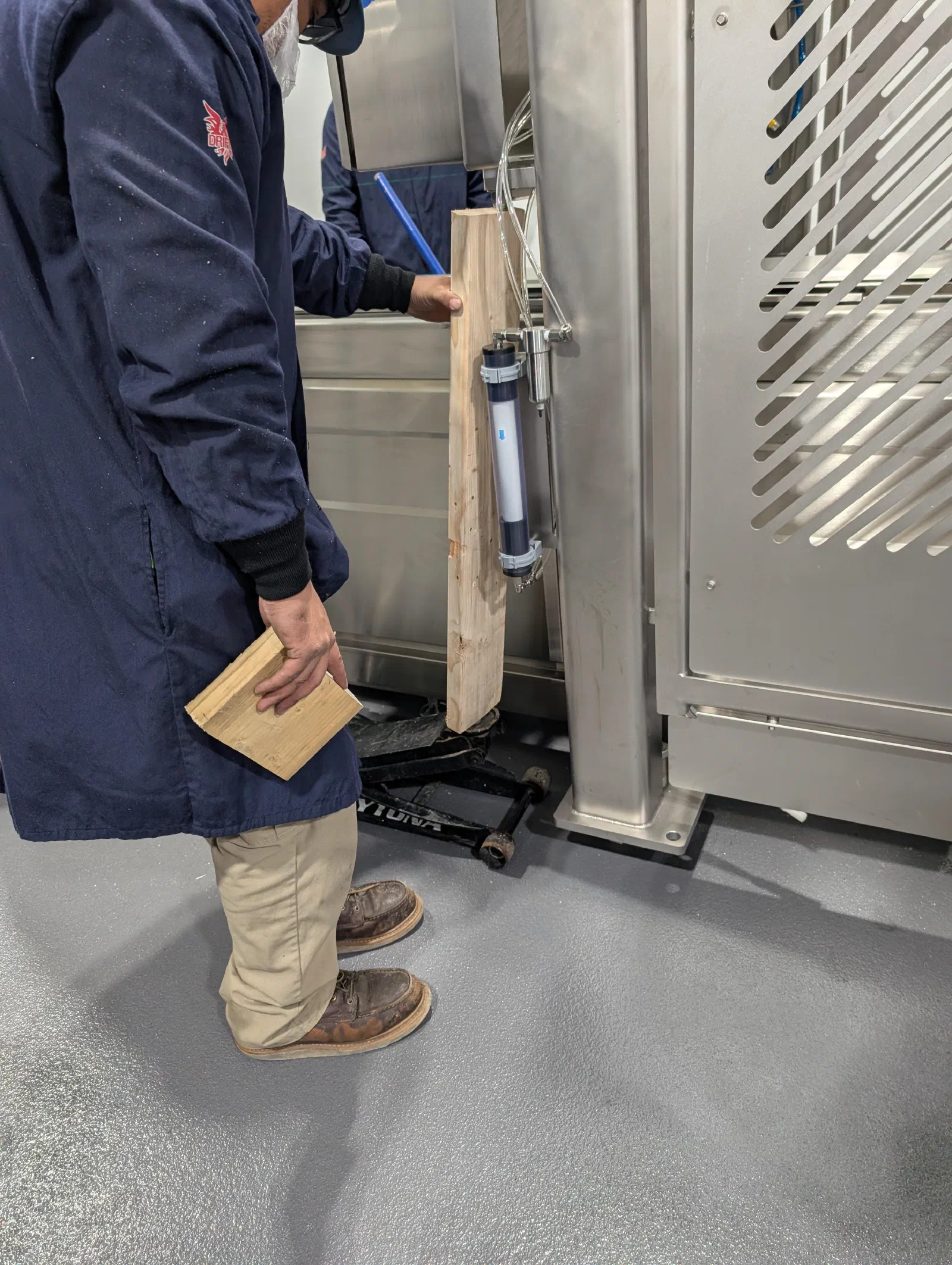
- Conveyors: Model belts where they actually sit under load, and set tensioners at their minimum-tension position when new, since belts only stretch with wear.
- Layout: One cell ended up in front of an egress door, and we didn’t catch it until installation. I now check egress clearances in a layout as carefully as electrical clearances.
Specific skills
- 2D machine layout drafting in DraftSight (AutoCAD)
- structured reliability testing and test data analysis
- downtime and fault rate study design
- requirements capture and scope definition
- robotic cell configuration and layout design
- end-of-arm tooling development
- multi-line system scale-out
- third-party subsystem interface engineering
- cross-discipline coordination
- commissioning and factory acceptance testing
- sanitary and washdown design requirements in food production