UAV-Mounted Meteorological Data Acquisition
A senior capstone replacing single-use weather balloon instruments with a recoverable sensor package on a quadcopter.
- Employer
- Penn State
- Role
- Mechanical design, sole mechanical engineer on a five person team
- Industry
- Atmospheric research
- Period
- 2016
- Scale
- A recoverable atmospheric sounding payload on a small quadcopter
Making the instrument come back
Radiosondes, the instrument packages flown on weather balloons, are rarely recovered, with only around eighteen percent ever coming back. Our senior capstone team put a sensor package on a quadcopter instead. It flies up, gathers data, lands, and can be sent up somewhere else. Nothing is thrown away, one instrument can sample many locations, and since the package comes home, data is simply logged to an SD card with no radio link needed.
What it measured
The package measured temperature, air pressure, ultraviolet radiation, and wind speed. Wind was measured two ways. The first was a conventional pitot airspeed sensor. The second used the aircraft itself: to hold position in wind, the quadcopter has to tilt into it, and an inertial measurement unit reports that tilt angle and direction, from which we calculated wind speed and direction. Having two independent methods let them check each other.
What I designed
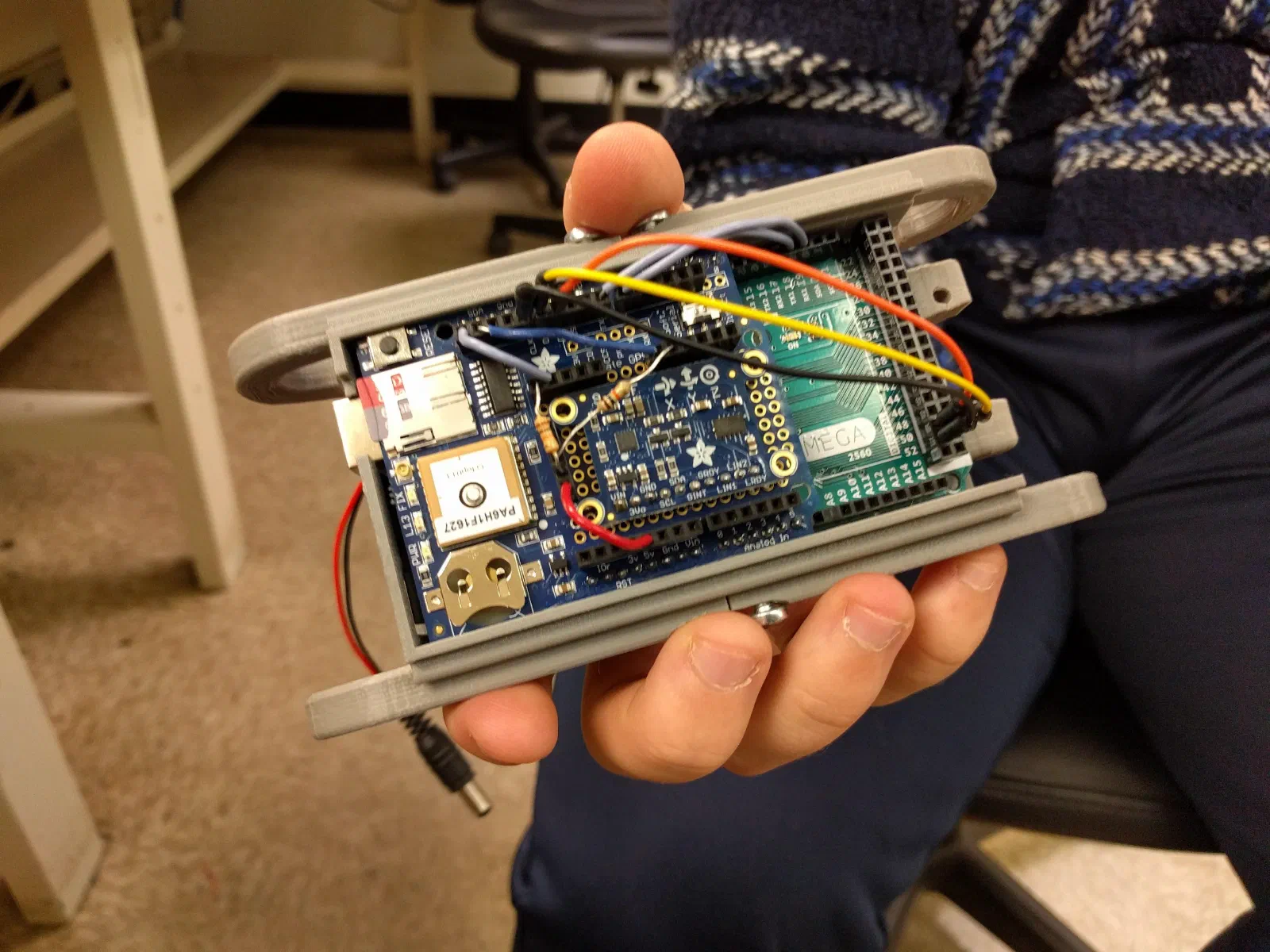
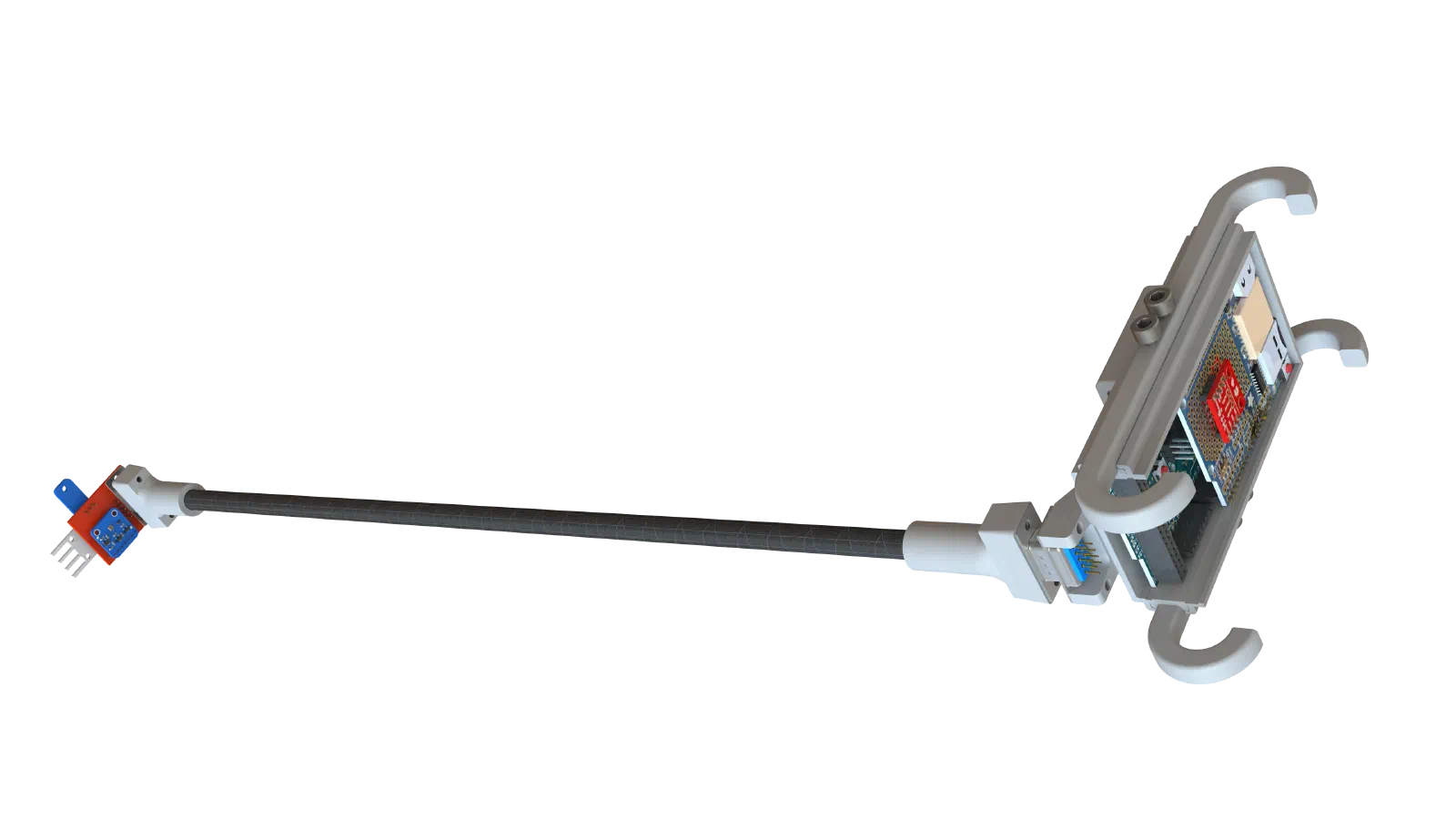
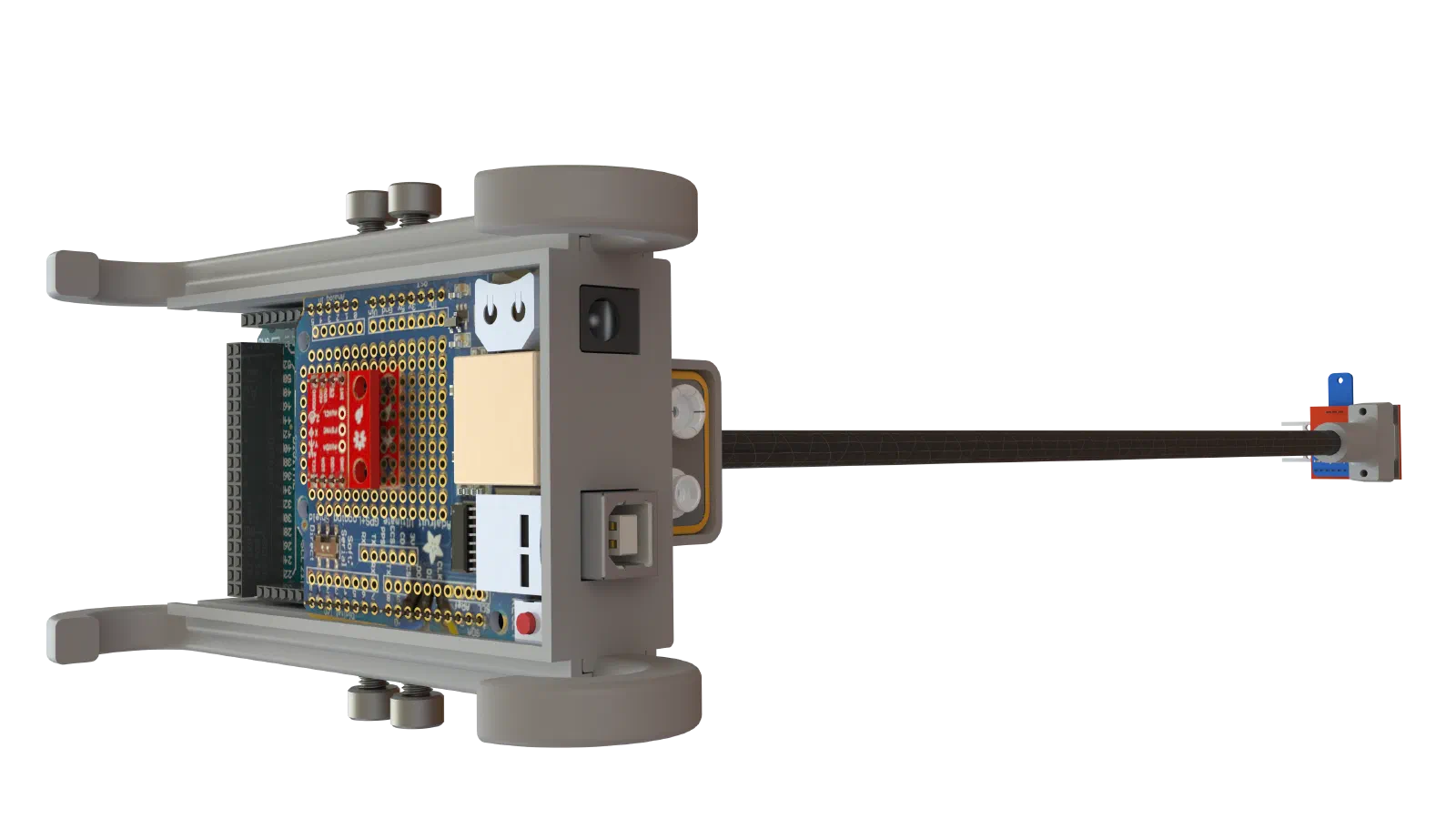
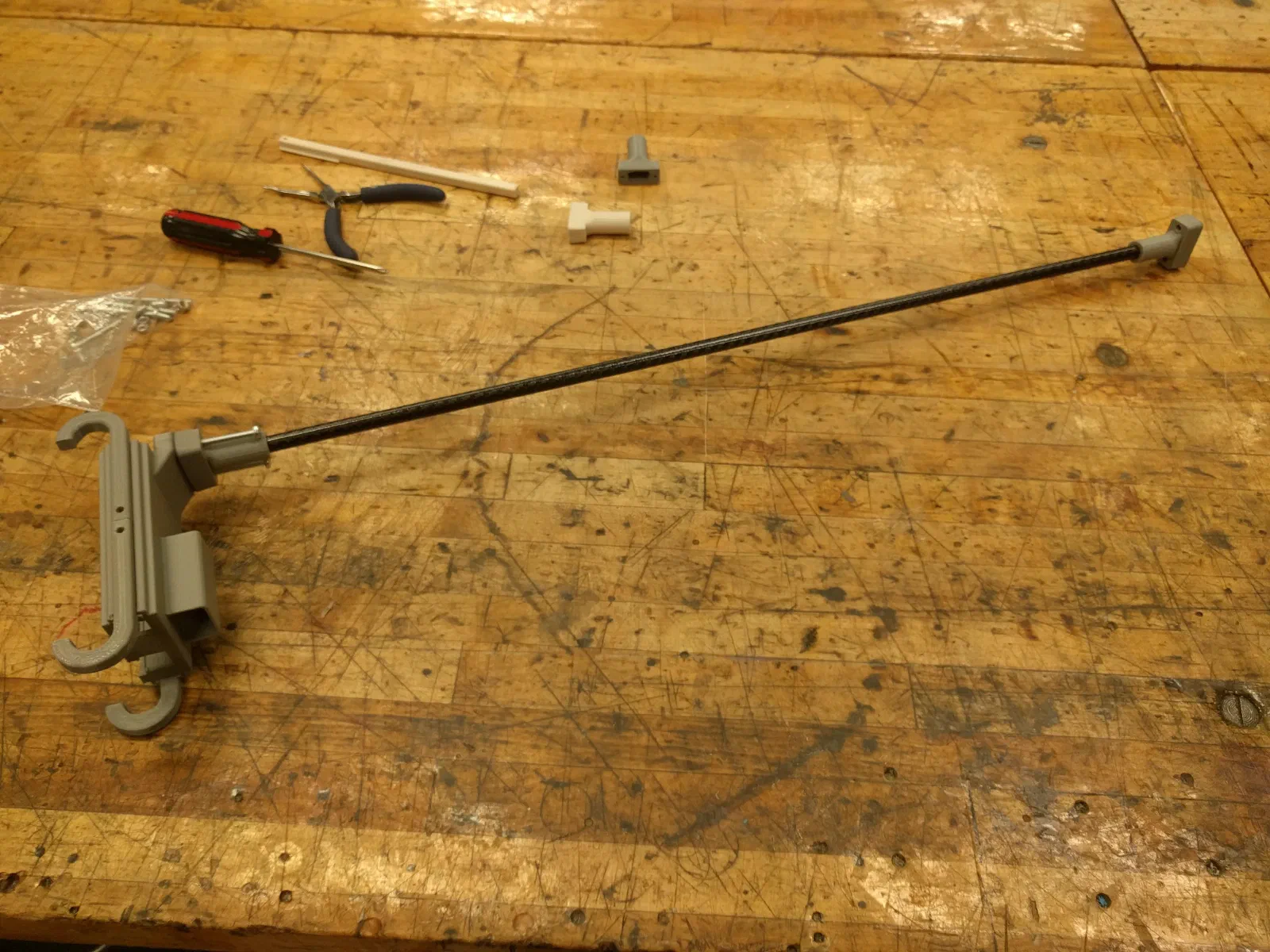
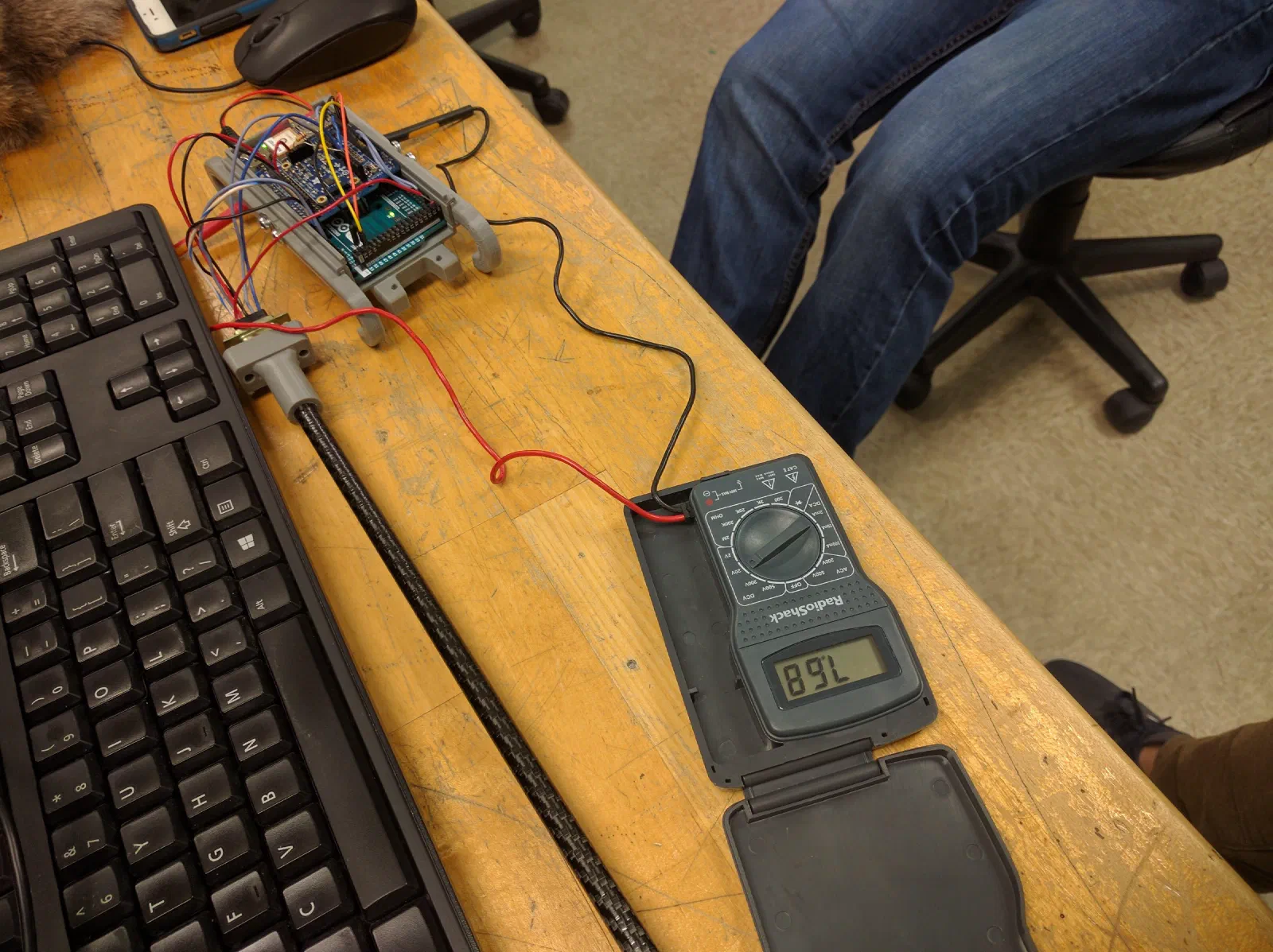
I was the only mechanical engineer on a team of five, alongside electrical and software engineers. I designed the housings for the Arduino and GPS boards, and a carbon fiber extension boom with 3D printed end fittings to hold the sensors. The boom kept the sensors out of the propwash, which would otherwise have measured the aircraft instead of the atmosphere, and helped isolate them from vibration. Carbon fiber kept it stiff without costing much flight time. I also made the renderings for our report and poster.
The electrical engineers specified the components and designed the wiring and sensor board, and the software engineers wrote the code to collect data and calculate wind speed. Looking back, it was my first time coordinating mechanical, electrical, and software work, which is now a big part of my job.
How it went
We ran tests and gathered real data, so it flew and it worked. Our team also won best poster at that year’s presentation competition, largely for the renderings and the illustrations of how we calculated wind speed. The tilt method is hard to explain in a sentence, and the pictures are what made it land.
Specific skills
- SolidWorks
- electronics enclosure design
- carbon fiber boom design
- sensor isolation from vibration and airflow
- 3D printing for functional parts
- rendering and technical illustration
- cross-discipline teamwork with electrical and software engineers