Yogurt Tub Conveyance System
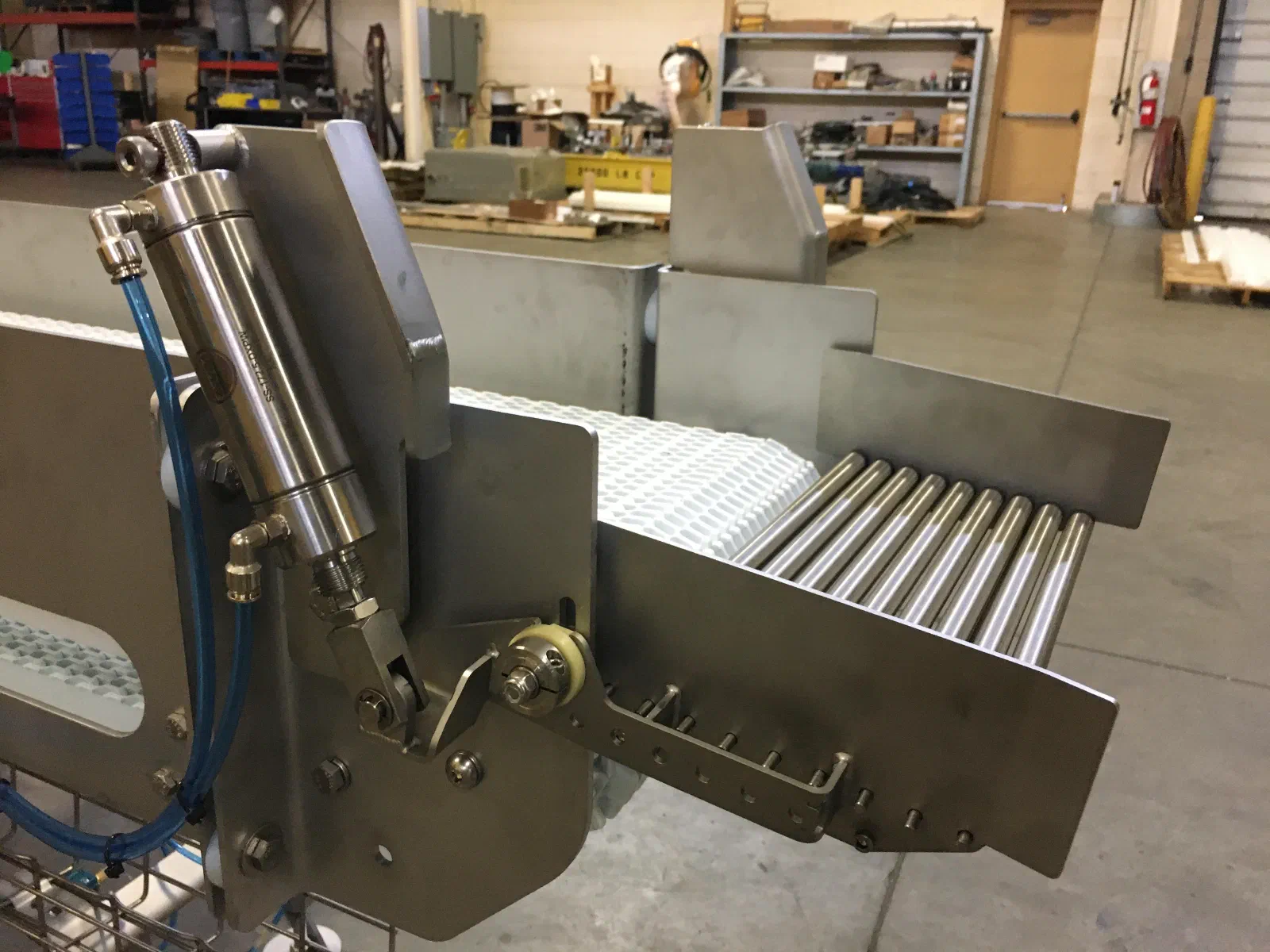
Dairy conveyance with a fail-safe roller gate that lifts on a fire alarm so the fire door can close.
- Employer
- CHL Systems
- Role
- Design Engineer
- Industry
- Dairy
- Period
- 2020 to 2021
- Scale
- Straight, incline, and curved conveyance with a fire-wall roller gate and inline metal detection
The line
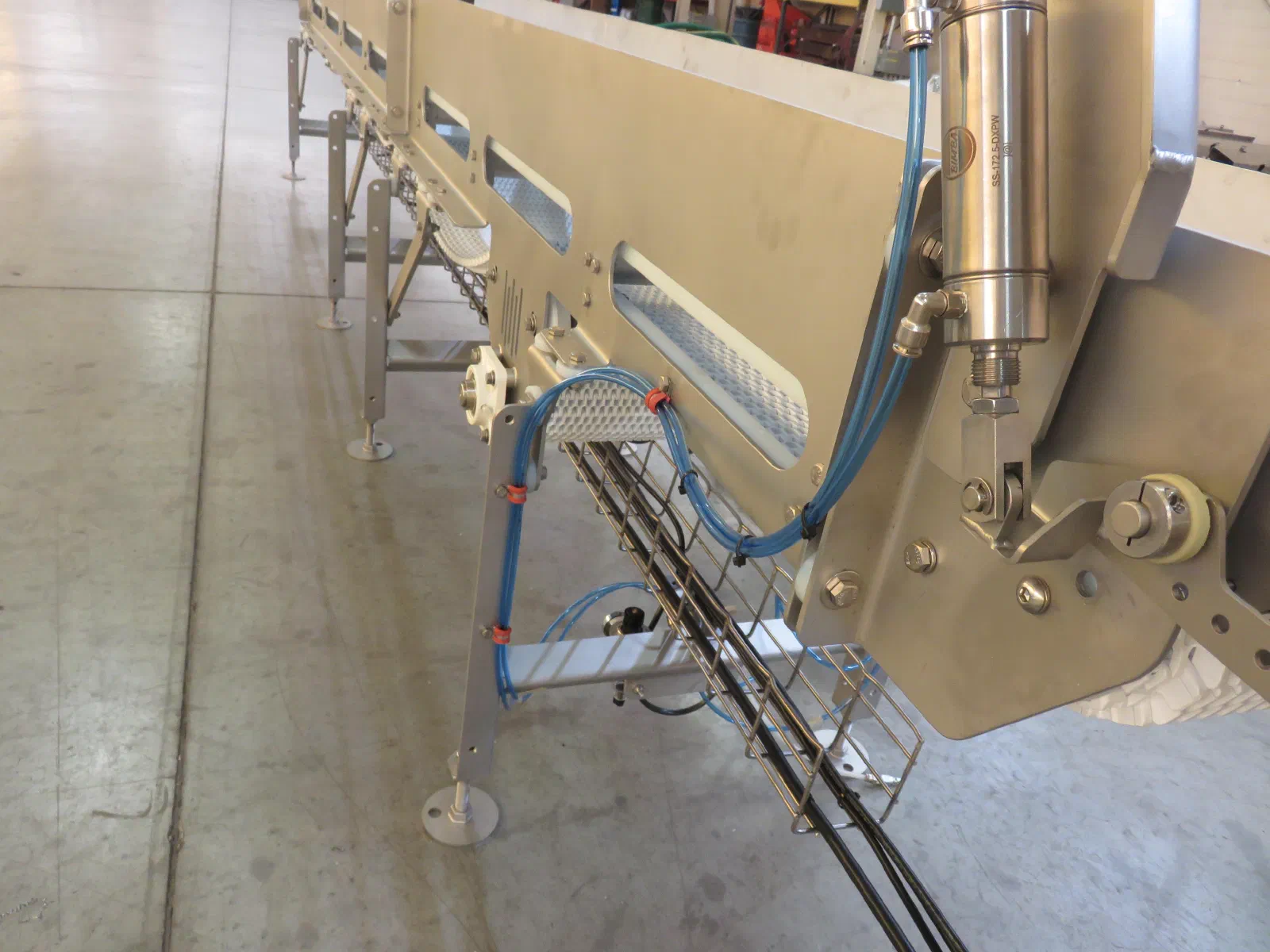
This system moves filled yogurt tubs through a dairy plant on straight, inclined, and curved sanitary conveyor sections, with pneumatic transfers between them and an inline metal detector to make sure no metal fragment ever reaches a customer.
Crossing a fire wall
The interesting engineering was at a wall. The conveyor had to pass through a fire wall, and a fire wall only works if its door can close. I designed a pneumatically actuated roller gate section tied to the fire alarm. When the alarm goes off, the gate lifts, clearing the opening so the fire door can close and seal. The same motion also stops product from continuing down the line, so an evacuation doesn’t end with yogurt tubs piled on the floor where people are trying to leave.
Designing for failure
The gate runs on a double-acting cylinder through a spring-return solenoid valve. When energized, the valve holds the gate in its running position. When de-energized, the spring returns the valve to a state that lifts the gate. That means the safe state is the unpowered state, so the gate also lifts on a power failure, a broken wire, or a failed output card, which is exactly what might happen in a real fire. It does need stored air to move, so it’s fail-safe on loss of power but not loss of air, and I think knowing which failures a design covers is an important part of fail-safe work.
Opportunities and struggles
The gate mechanism was settled early. Getting tubs to cross it reliably took much longer. Rollers spaced too far apart let a tub tip, rollers too small flexed under load, and the wrong incline let tubs stall. Every product size changed the balance, since taller tubs tip more easily and heavier ones flex the rollers more. It took several iterations before the transfer worked across all of them. I learned that making product cross a moving joint in every size a plant runs is often the real work in conveyor design.
Specific skills
- SolidWorks
- collaboration with in-house machine and weld shops
- pneumatic circuit design for fail-safe behavior
- fire barrier penetration design
- fire alarm interlocked equipment
- metal detection integration
- curved and incline conveyor design
- sanitary stainless construction